
Skip to content
OVERNIGHT SHIPPING BEFORE 2PM
30 DAY RETURNS & EXCHANGES

Clip-In vs Tape-In Hair Extensions

When it comes to adding volume, length, and confidence to your hair, two of the most popular options are clip-in extensions and tape-in extensions. It’s no surprise that many people compare clip in vs tape in hair extensions when deciding which method suits them best.

Both options offer beautiful, natural-looking results—but they differ significantly in application, maintenance, and lifestyle compatibility. In this guide, we’ll break down everything you need to know about clip in extensions vs tape in, so you can confidently choose the right option for your hair goals.

Understanding the Difference Between Tape In and Clip In Extensions

The main difference between tape in and clip in extensions comes down to how they are applied, how long they last, and how they blend with your natural hair.

What are clip-in hair extensions

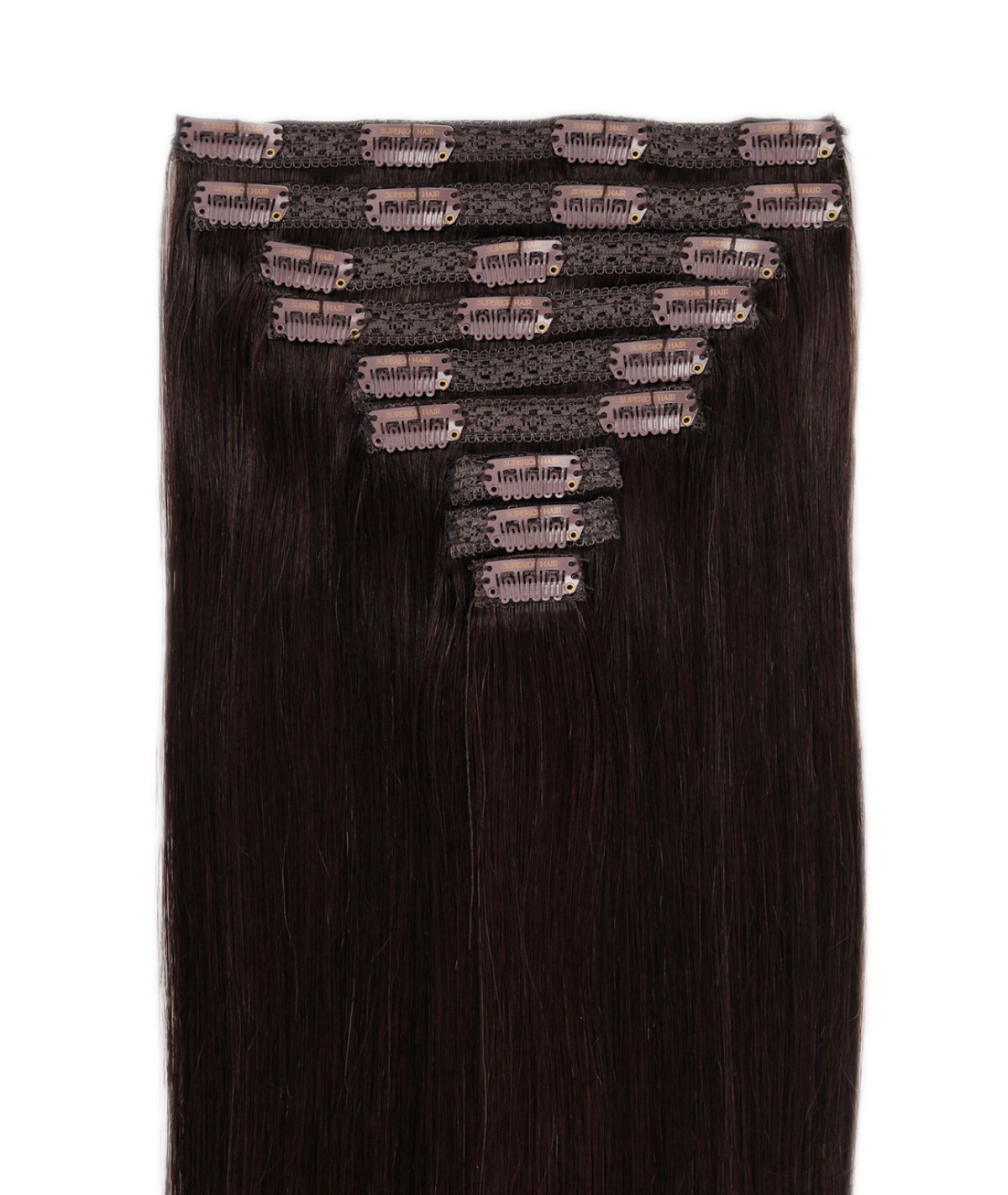
Clip-in hair extensions are temporary wefts of hair attached with small, secure clips. These clips snap open and closed, allowing you to apply and remove them at home within minutes.

They’re ideal for quick transformations—whether you want extra volume for a night out or longer hair for a special occasion. Because they’re removable, they don’t require salon visits or long-term commitment.

What are tape-in hair extensions

Tape-in extensions are semi-permanent extensions that use thin, medical-grade adhesive strips to attach to your natural hair. A stylist sandwiches sections of your hair between two tape wefts, creating a flat, seamless finish.

They are designed to stay in place for several weeks and blend naturally with your hair for everyday wear.

Temporary vs semi-permanent extensions

When comparing clip in hair extensions vs tape in, the biggest distinction is wear time.

  • Clip-ins are temporary and removed daily
  • Tape-ins are semi-permanent and worn continuously for 6–8 weeks

This makes tape vs clip in extensions a choice between flexibility and long-term convenience.

Pros and Cons of Clip-In Hair Extensions

Clip-ins are a popular choice for beginners and those wanting versatility without commitment.

Advantages of clip-in extensions

One of the biggest benefits of clip in vs tape in extensions is flexibility. Clip-ins allow you to:

  • Instantly add volume and length
  • Change your hairstyle whenever you want
  • Apply and remove them without professional help
  • Avoid long-term stress on your natural hair

They’re perfect if you enjoy switching up your look or only need extensions occasionally.

Limitations of clip-in extensions

While convenient, clip-ins do have some limitations:

  • They may feel bulky if not applied correctly
  • Not ideal for very fine or fragile hair
  • Daily application can be time-consuming for some users
  • Not always suitable for all-day, everyday wear

Who clip-in extensions are best for

Clip-ins are ideal for:

  • Beginners trying extensions for the first time
  • Occasional wear (events, weekends, styling)
  • Medium to thick hair types
  • Those who want full control over when they wear extensions

Pros and Cons of Tape-In Hair Extensions

Tape-ins are known for their natural appearance and longer wear time.

Advantages of tape-in extensions

When comparing tape in extensions vs clip in, tape-ins stand out for their seamless finish.

Key benefits include:

  • Lightweight and comfortable
  • Lay flat against the scalp for a natural look
  • Blend beautifully with fine or thin hair
  • Suitable for everyday wear

They provide a more “set-and-forget” solution compared to clip-ins.

Maintenance and upkeep

Tape-ins require more commitment than clip-ins. Maintenance includes:

  • Professional installation
  • Repositioning every 6–8 weeks
  • Careful washing and brushing routines
  • Avoiding oily products near the adhesive

This ongoing upkeep is an important factor in the clip in vs tape in decision.

Who tape-in extensions are best for

Tape-ins are ideal for:

  • Those wanting long-term volume and length
  • People with fine or thin hair
  • Busy lifestyles where daily styling time is limited
  • Anyone seeking the most natural blend

Clip-In vs Tape-In Extensions for Different Hair Types

Choosing between clip in vs tape in hair extensions often depends on your natural hair type and styling habits.

Best option for thin or fine hair

Tape-in extensions are typically the better option for fine hair. Their flat, lightweight design blends seamlessly and avoids the bulk that clip-ins can create.

Best option for thick hair

Thicker hair can support both methods well. Clip-ins work great for adding extra volume, while tape-ins provide a more permanent enhancement.

Lifestyle considerations

Your lifestyle plays a major role in choosing between tape vs clip in extensions:

  • Active lifestyle or gym routine → tape-ins stay secure
  • Occasional styling → clip-ins offer flexibility
  • Low-maintenance preference → tape-ins require less daily effort
  • Frequent style changes → clip-ins are more versatile

Cost Differences Between Tape-In and Clip-In Extensions

Cost is another important factor when comparing clip in extensions vs tape in.

Initial purchase cost

Clip-in extensions typically have a lower upfront cost since you’re purchasing a single set that can be reused.

Tape-in extensions, on the other hand, include both the cost of the hair and professional installation, making the initial investment higher.

Maintenance and salon costs

Clip-ins require little to no ongoing cost.

Tape-ins require:

  • Salon installation
  • Regular repositioning appointments
  • Potential replacement tapes

These maintenance costs add up over time.

Long-term value comparison

While tape-ins cost more upfront and over time, they offer continuous wear and convenience.

Clip-ins may be more cost-effective long-term for occasional use, making clip in vs tape in extensions a balance between budget and lifestyle.

How to Choose Between Clip-In vs Tape-In Extensions

Still deciding between clip in vs tape in? Here’s how to narrow it down.

Consider your hair type

Fine hair generally benefits from tape-ins, while medium to thick hair can work well with both options.

Consider your lifestyle

If you prefer quick, occasional styling, clip-ins are ideal. If you want consistent, everyday volume, tape-ins are the better choice.

Consider your maintenance preferences

Ask yourself:

  • Do you want a low-commitment option? → Clip-ins
  • Are you happy to visit a salon regularly? → Tape-ins

Your answer will guide your decision between clip in hair extensions vs tape in.

Find the Right Hair Extensions for Your Needs

Choosing between tape in extensions vs clip in ultimately comes down to your personal preferences, hair type, and lifestyle. Whether you want flexibility or long-term wear, there’s a perfect option for you.

Shop clip-in hair extensions

Shop for premium clip-in extensions and seamless clip-in options designed for volume and ease. Perfect for both quick styling and special occasions, they allow you to transform your look in minutes—no salon visit required—giving you full control, flexibility, and beautiful results whenever you want them.

Explore tape-in hair extensions

Discover seamless, salon-quality tape-in extensions and ultra-seamless tape ins at Superior Hair. Made for comfort and long-lasting wear, these premium extensions deliver natural movement, invisible application, and beautiful, consistent results—so you can enjoy fuller, longer hair with confidence every day.

Frequently Asked Questions

What is the difference between tape in and clip in extensions

The main difference lies in application and longevity. Clip-ins are temporary and removable, while tape-ins are semi-permanent and worn for several weeks.

Are tape-in extensions better than clip-ins

Neither is universally better—it depends on your needs. Tape-ins are better for long-term wear and natural blending, while clip-ins are better for flexibility and occasional use.

Do tape-in extensions damage your hair

When professionally installed and properly maintained, tape-in extensions should not damage your hair. Incorrect removal or poor maintenance can cause issues.

Are clip-in extensions good for everyday wear

They can be worn daily, but frequent use may feel inconvenient for some users. They’re best suited for occasional or part-time wear.

Which hair extensions last longer tape-in or clip-in

Tape-ins last longer per installation (6–8 weeks), while clip-ins can last longer overall as a product since they are reused and not worn continuously.

News

Nano tip hair extension installation

Introduction to Nano Tip Hair Extensions

Many want semi-permanent extensions, but they can damage the hair if installed incorrectly. Nano tip extensions are changing all that. Read to find out why!

Learn more
Caring for hair extensions with argan or coconut oil

How to Care for Hair Extensions Through Winter

Winter is tough on your hair, and the same goes for extensions. Here are our expert tips on how to look after your hair extensions throughout the cold season.

Learn more
Can I Style Hair Extensions with Heat Tools?

Can I Style Hair Extensions with Heat Tools?

Pondering what heated styling tools are okay for your hair extensions? Here's how you can style hair extensions without damage.

Learn more
Man with natural looking hair

Men’s Hair Topper Style Tips for a Natural Looking Hair System

There are plenty of ways men can tackle thinning hair. One of them is with hair toppers. While wearing a hair topper may seem unnatural initially, the right styling strategies can make yours appear effortless and natural. At Superior Hair, we ensure you never lose self-confidence while wearing our hair toppers.Hair toppers require just as much styling as real human hair. That's why we offer hair replacement systems made from 100% human hair, giving you the flexibility to try many hair topper styles. Here are our top tips for styling our men’s hair topper systems so you can achieve the best, most natural, and discreet hair solution. Stick to air dryingWhile it can be tempting to dry your hair faster after a shower, heated styling tools can damage your hair strands. Whether styling synthetic or natural hair systems, we recommend air drying or using lukewarm water to wet set curls to keep them looking healthy and softer for longer. Use a specialty brush or combMost men manage to go about their day without brushing their hair. But you’d be amazed just by how much brushing can do to bring out your hair’s lustrous shine. Brushing your hair can significantly reduce frizz and improve hair texture. Invest in a specialty brush or comb that effectively smoothens out and detangles hair without pulling. A soft boar bristle brush contains natural sebum, the same oil produced by the scalp, that acts as a natural conditioner you can evenly distribute by brushing your hair.   Invest in good styling productsAfter brushing, you want to make sure the style stays that way. To keep your hair firmly in place and looking fresh for longer is through styling products designed to keep your hair hold its shape! Remember, human hair systems such as hair toppers do not moisturise the same way as your hair. Therefore, choose moisturising and alcohol-free products to prevent unnecessary dryness and damage.   Add some colourIf you want to try something new, why not mix things up by changing your hair colour? Human hair systems are far easier to colour than synthetic hair strands. Plus, synthetic hair strands can only be darkened, not lightened. On the other hand, human hair toppers go through the same hair dying procedure as normal hair so even with a change of colour or variance in colour blending, you can still achieve the most natural-looking coloured hair. Professional stylists can help you dye or colour a human hair system to achieve the best results.   Shop the best hair toppers in NZ at Superior Hair Give yourself the confidence boost you need with high-quality hair systems that make every day a good hair day! At Superior Hair, we offer ready-to-wear hair toppers for men and women that you can wear and style immediately. But we can customise a solution if you struggle with a specific balding area. Our team designs and creates hair systems perfect for nearly any hair type, density, texture, and colour. We will fit the hairpiece for you, cut and style it! For the best hair toppers in NZ, contact Superior Hair!

Learn more
Women with multi-coloured hair extensions

Can I Dye My Hair Extensions?

Hair extensions are great for changing up your look because you can style them in different ways. But can you colour them? Here’s what you need to know!

Learn more
Image of hair extension affected by sunscreen.  Brassy tones evident on the right side  of hair.

A hair extension’s worst enemy? Sunscreen.

Ever wonder why, despite following all the right steps you take for your extensions, they still end up turning into a not so flattering brassy orange or pink? You might want to take a look at your sunscreen. Yup, your sunscreen! While sunscreens are great for your skin, it isn’t the same case for your hair extensions.   What happens when sunscreen comes in contact with your hair?    Most sunscreens contain Avobenzone (Butyl Methoxydibenzoylmethane) and Octocrylene.  Avobenzone works as a very effective protectant against UVB and UVA rays, but only for  approximately 30 minutes as its abilities become degrading once exposed to sunlight. For this reason, Octocrylene is added to the formula as a stabiliser for it to work longer.                                                                          Because they are such active ingredients, when exposed to water, the minerals in the water attach to the broken down cells in the hair extensions, causing a reaction that makes the hair discolour into such brassy tones.   How do you avoid this chemical reaction?   The best way to avoid this reaction, is opting out your regular sunscreen for a mineral sunscreen that does not contain Avobenzone or Octocrylene. This is a tested sunscreen type that not only filters out damaging UVB and UVA Rays, it blocks any unintended reaction towards the skin and hair. It is FDA approved, meaning it is completely safe to use. The Australasian markets tend to mainly sell these anyways, as these sunscreens are typically safer to use around water as they are “reef friendly”, especially considering there is so much marine life around our waters. But is always best to double check, when purchasing, that you are in fact choosing the sunscreens that opt out the Avobenzone and Octocrylene ingredients for a more reef friendly formula. It’s basically a win-win for both your hair and the environment. The more basic habits to incorporate to avoid the discolouration of your hair would be to cleanse your hands of any sunscreen residue before touching your hair. Another solution would be to put your hair up and away from your body. A bun or high ponytail is ideal in avoiding your hair come in contact with your skin.   What can you do if your hair has already come in contact with sunscreen?   If it’s too late and your hair has already come in contact with the sunscreen, the first step would be to use a deep cleansing shampoo, to thoroughly wash out any sunscreen residue left in your hair. Then go in with Malibu C hard water treatment and apply to the affected areas. Follow the instructions on the sachet and leave it in for the recommended amount of time before washing it out. Blonde extensions are lot more affected by discolouration as they are lighter making the discolouration more transparent to the eye. In this case, go in with a purple shampoo and leave it in for 1-2 mins before washing it out, to get rid of any leftover warm pigments. Be wary of leaving it in for too long and turning your hair purple. After you’ve completed these steps, go in with an intensive conditioning mask and heat protector. Then lastly, you may cleanse out your hair and style as normal. If there’s not a significant difference in lifting the discolouration out of your hair extensions you might have to repeat the steps 2-3 times, before you reach your desired results. Keep in mind hair extensions are not your natural hair, they won’t receive the nutrients that comes from your scalp which act as a protective barrier. Therefore, they are much more prone to discolouration, meaning there would be plenty more factors to them harsh pink and brassy tones than just sunscreen. These include but not limited to hard water, sea water, chlorine, and sun exposure. So do keep that in mind, the next time you head out for a nice day at the beach. The best thing you can do is to put your hair up and away in a scarf or other protective headwear. Now it gives your hair protection from the sun and your skin all whilst looking like a stylish bombshell.

Learn more
WHY ARE MY NANO BEADS LOSING THEIR COLOUR?

WHY ARE MY NANO BEADS LOSING THEIR COLOUR?

There are a few reasons why nano beads can lose their colour, causing them to turn copper/gold. If you or your client’s beads turn gold, the following information can help you understand why.  Shampoo ingredients The most common cause of colour loss in nano beads is due to the additives found in shampoos. Even salon quality shampoos, including dry shampoo can contain these additives; affecting beads only after a few washes. The purpose of additives in shampoo is to create a lather, act as a thickening agent or even to keep them from freezing during shipping. If you suspect your shampoo is the cause of the colour loss, you may wish to experiment with another.  Styling Heating tools, such as straighteners, blow dryers and curling irons can all cause nano beads to lose their colour. Frequently touching the beads with these tools will cause the paint to soften and chip away. To prevent this from happening, avoid directly touching the beads with the tool.  Medications Chemicals in certain medications are carried to the hair follicle through the bloodstream, causing nano beads to lose their colour. These toxins can stay in the hair follicle for months and will not wash out. Medications, like antidepressants, birth controls, and acne medications, can induce colour change, as can Vitamin A, and narcotics.  

Learn more
woman travelling with beautiful hair

TRAVEL HAIRSTYLES - EXTENSION EDITION

Craving to travel the world again? Sick of quarantining? Well, we have some travel hairstyles to get you excited for when you get to leave your bubble once again! Half up half down This is the perfect hairstyle for if you've been so busy packing, that you've accidentally forgotten to wash your hair. It's easy, it's trendy, it's comfy...what more could you ask for?! Braids Any type of braid is perfect for a lengthy plane ride. Braiding causes much less damage compared to ponytails and still looks amazing. There are so many braids to choose from to suit your braiding expertise, for example, you could go for just the standard simple yet cute braid, you could test yourself by trying out a fishtail braid or you could show off your skill and rock two Dutch braids! The options are endless :) Use accessories You could add a scarf which will automatically have you looking Instagram ready even if inside you’re really just wanting to get on and off the plane in the most fastest, comfortable way possible. You could even add some clips to really glam it up or just settle for 1 for a cute and easy look!    High pony High ponytails are one of the most common hairstyles to be done around the world. They're easy, they can be kept loose and they get your hair out of the way and sometimes that’s all you wish for. If your extensions allow you to, you could even add in a braid to your ponytail look. Utilise Headbands! Headbands are super cute and super comfortable. They keep your wispies out of your face which is always very helpful! Headbands also make up for our messy hairstyles that take place when you have an early flight, especially messy buns! Beachy wave If you know that you don't want to do much with your hair in advance, you can always quickly put your hair in a braid before you go to sleep, then when you wake up in the morning your hair will be looking as messy pretty as it can get with that gorgeous natural beachy wave.

Learn more
TANGLING AND MATTING OF YOUR HAIR EXTENSIONS, AND WHAT YOU CAN DO ABOUT IT

TANGLING AND MATTING OF YOUR HAIR EXTENSIONS, AND WHAT YOU CAN DO ABOUT IT

Getting down to the root cause. Don’t you hate it when your hair extensions matt and tangle?Even though hair extensions are a beautiful hair solution, sometimes they can tangle and you don’t even know what’s causing it. The following are the most common causes: 1) Not taking good care of your hair extensions. Hair quality of the extensions is important. At Superiorhair, we vow to provide you with the highest tier hair extensions guaranteed. We assure you that you won’t have to worry about those low-quality hair extensions that have been overly processed that would tangle immediately to the exposure of water or poor weather conditions. 2) Low-quality hair products. Hair products can take a toll on your hair extensions. The use of proper hair products makes a huge difference in whether your hair will tangle and matt up or remain soft and manageable. Find out what products work best by doing your own personal thorough research or feel free to ask the crew at Superior Hair. We can’t stress it enough, it’s highly recommended that you don’t risk the condition of your hair for low-quality products. OTHER CAUSES INCLUDE:  3) Hair length. Super long hair is prone to tangling so it’s advisable to trim it in layers. 4) Dryness. Dry hair becomes brittle and can easily tangle up. NOW THAT YOU KNOW THE COMMON CAUSES OF TANGLING AND MATTING, LET’S FIND OUT HOW YOU CAN PREVENT THEM. 1) Regular brushing. It’s that simple! Regularly brushing your hair significantly reduces the chances of your hair tangling down the road.Always start from the ends and work towards the roots, and we advise you to do so when your hair is wet. If you opt to brush your hair when wet, be sure to use a wide-tooth comb. Tangling and knotting tend to happen mostly at the ends when hair is not brushed for days. 2) Use Sulphate-free hair products. We urge you to steer clear of hair products that contain sulphate. Using products containing sulphates can strip your extensions of their natural moisture, leaving them weak and looking dry. After shampooing, apply an appropriate moisturising hair product that would leave your extensions well hydrated. 3) Secure your hair at night Not tying up your hair can cause your extensions to rub against your pillow throughout the night. As a result, friction is created which leads you to wake up with tangled hair. If you’d rather not tie up your hair, it’s advisable to sleep on a satin or silk pillowcase. Protect your hair extensions and prevent tangling at all costs! 4) Detangle, Detangle. We cannot emphasize this enough. Also, please note that detangling is very different from brushing. This is what we mean: Brushing is a preventative measure whereas Detangling is a recovery measure if your hair extensions tangle up, it is important to take your time to detangle them while they’re wet. You can also use your fingers so that there’s less tension and pulling on the strands. Ensure the detangling is done thoroughly!  It’s up to you now! Preventing tangling and matting is not rocket science. All it takes is attention, proper care, and patience. Using proper products and tools go a long way. We hope this blog will help you to prevent tangling, matting, and shedding. Superior Hair hopes that you are now well equipped to handle tangling when it occurs. All the best on your glamourous looks!

Learn more