
Skip to content
OVERNIGHT SHIPPING BEFORE 2PM
30 DAY RETURNS & EXCHANGES

Clip-In vs Tape-In Hair Extensions

When it comes to adding volume, length, and confidence to your hair, two of the most popular options are clip-in extensions and tape-in extensions. It’s no surprise that many people compare clip in vs tape in hair extensions when deciding which method suits them best.

Both options offer beautiful, natural-looking results—but they differ significantly in application, maintenance, and lifestyle compatibility. In this guide, we’ll break down everything you need to know about clip in extensions vs tape in, so you can confidently choose the right option for your hair goals.

Understanding the Difference Between Tape In and Clip In Extensions

The main difference between tape in and clip in extensions comes down to how they are applied, how long they last, and how they blend with your natural hair.

What are clip-in hair extensions

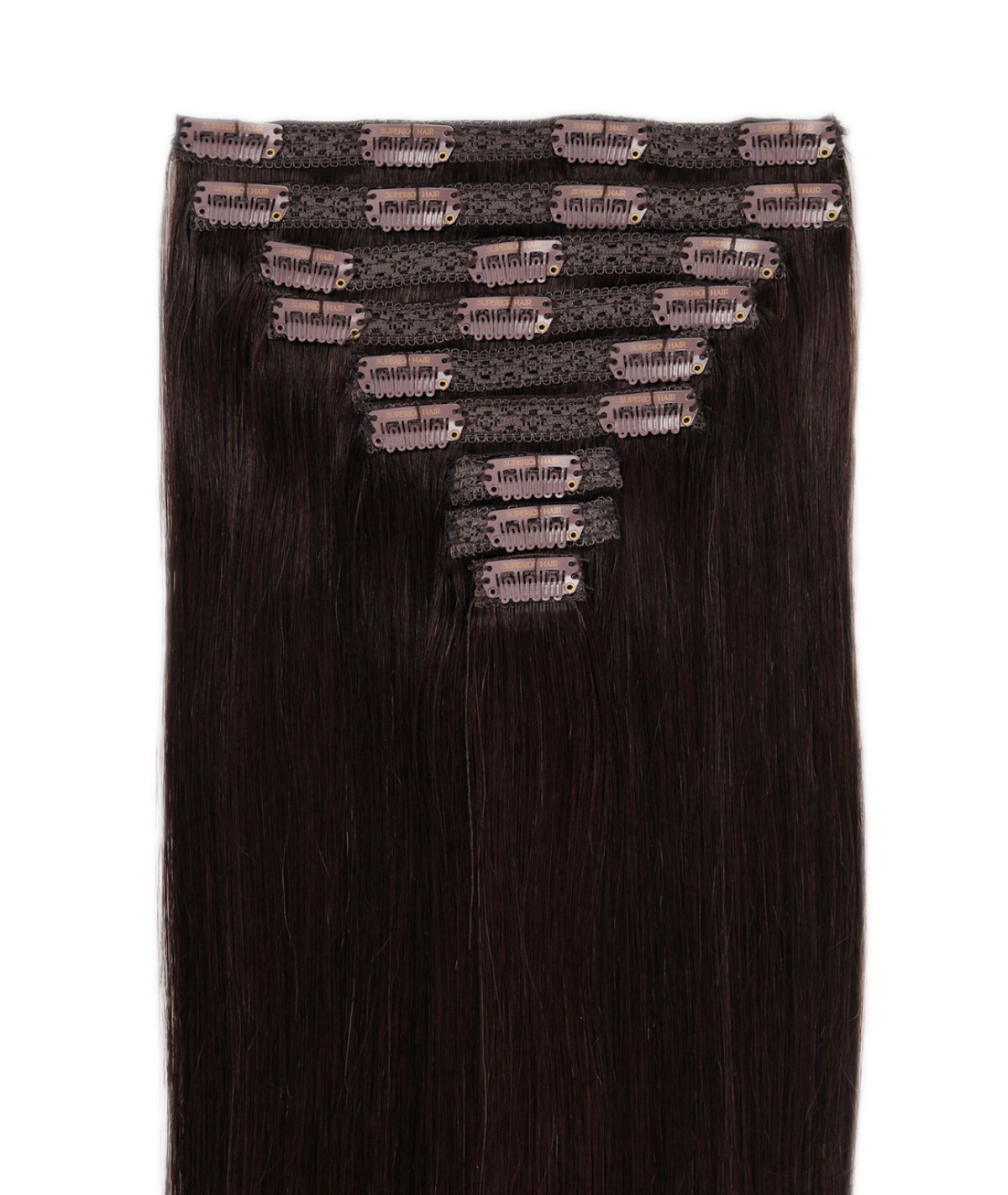
Clip-in hair extensions are temporary wefts of hair attached with small, secure clips. These clips snap open and closed, allowing you to apply and remove them at home within minutes.

They’re ideal for quick transformations—whether you want extra volume for a night out or longer hair for a special occasion. Because they’re removable, they don’t require salon visits or long-term commitment.

What are tape-in hair extensions

Tape-in extensions are semi-permanent extensions that use thin, medical-grade adhesive strips to attach to your natural hair. A stylist sandwiches sections of your hair between two tape wefts, creating a flat, seamless finish.

They are designed to stay in place for several weeks and blend naturally with your hair for everyday wear.

Temporary vs semi-permanent extensions

When comparing clip in hair extensions vs tape in, the biggest distinction is wear time.

  • Clip-ins are temporary and removed daily
  • Tape-ins are semi-permanent and worn continuously for 6–8 weeks

This makes tape vs clip in extensions a choice between flexibility and long-term convenience.

Pros and Cons of Clip-In Hair Extensions

Clip-ins are a popular choice for beginners and those wanting versatility without commitment.

Advantages of clip-in extensions

One of the biggest benefits of clip in vs tape in extensions is flexibility. Clip-ins allow you to:

  • Instantly add volume and length
  • Change your hairstyle whenever you want
  • Apply and remove them without professional help
  • Avoid long-term stress on your natural hair

They’re perfect if you enjoy switching up your look or only need extensions occasionally.

Limitations of clip-in extensions

While convenient, clip-ins do have some limitations:

  • They may feel bulky if not applied correctly
  • Not ideal for very fine or fragile hair
  • Daily application can be time-consuming for some users
  • Not always suitable for all-day, everyday wear

Who clip-in extensions are best for

Clip-ins are ideal for:

  • Beginners trying extensions for the first time
  • Occasional wear (events, weekends, styling)
  • Medium to thick hair types
  • Those who want full control over when they wear extensions

Pros and Cons of Tape-In Hair Extensions

Tape-ins are known for their natural appearance and longer wear time.

Advantages of tape-in extensions

When comparing tape in extensions vs clip in, tape-ins stand out for their seamless finish.

Key benefits include:

  • Lightweight and comfortable
  • Lay flat against the scalp for a natural look
  • Blend beautifully with fine or thin hair
  • Suitable for everyday wear

They provide a more “set-and-forget” solution compared to clip-ins.

Maintenance and upkeep

Tape-ins require more commitment than clip-ins. Maintenance includes:

  • Professional installation
  • Repositioning every 6–8 weeks
  • Careful washing and brushing routines
  • Avoiding oily products near the adhesive

This ongoing upkeep is an important factor in the clip in vs tape in decision.

Who tape-in extensions are best for

Tape-ins are ideal for:

  • Those wanting long-term volume and length
  • People with fine or thin hair
  • Busy lifestyles where daily styling time is limited
  • Anyone seeking the most natural blend

Clip-In vs Tape-In Extensions for Different Hair Types

Choosing between clip in vs tape in hair extensions often depends on your natural hair type and styling habits.

Best option for thin or fine hair

Tape-in extensions are typically the better option for fine hair. Their flat, lightweight design blends seamlessly and avoids the bulk that clip-ins can create.

Best option for thick hair

Thicker hair can support both methods well. Clip-ins work great for adding extra volume, while tape-ins provide a more permanent enhancement.

Lifestyle considerations

Your lifestyle plays a major role in choosing between tape vs clip in extensions:

  • Active lifestyle or gym routine → tape-ins stay secure
  • Occasional styling → clip-ins offer flexibility
  • Low-maintenance preference → tape-ins require less daily effort
  • Frequent style changes → clip-ins are more versatile

Cost Differences Between Tape-In and Clip-In Extensions

Cost is another important factor when comparing clip in extensions vs tape in.

Initial purchase cost

Clip-in extensions typically have a lower upfront cost since you’re purchasing a single set that can be reused.

Tape-in extensions, on the other hand, include both the cost of the hair and professional installation, making the initial investment higher.

Maintenance and salon costs

Clip-ins require little to no ongoing cost.

Tape-ins require:

  • Salon installation
  • Regular repositioning appointments
  • Potential replacement tapes

These maintenance costs add up over time.

Long-term value comparison

While tape-ins cost more upfront and over time, they offer continuous wear and convenience.

Clip-ins may be more cost-effective long-term for occasional use, making clip in vs tape in extensions a balance between budget and lifestyle.

How to Choose Between Clip-In vs Tape-In Extensions

Still deciding between clip in vs tape in? Here’s how to narrow it down.

Consider your hair type

Fine hair generally benefits from tape-ins, while medium to thick hair can work well with both options.

Consider your lifestyle

If you prefer quick, occasional styling, clip-ins are ideal. If you want consistent, everyday volume, tape-ins are the better choice.

Consider your maintenance preferences

Ask yourself:

  • Do you want a low-commitment option? → Clip-ins
  • Are you happy to visit a salon regularly? → Tape-ins

Your answer will guide your decision between clip in hair extensions vs tape in.

Find the Right Hair Extensions for Your Needs

Choosing between tape in extensions vs clip in ultimately comes down to your personal preferences, hair type, and lifestyle. Whether you want flexibility or long-term wear, there’s a perfect option for you.

Shop clip-in hair extensions

Shop for premium clip-in extensions and seamless clip-in options designed for volume and ease. Perfect for both quick styling and special occasions, they allow you to transform your look in minutes—no salon visit required—giving you full control, flexibility, and beautiful results whenever you want them.

Explore tape-in hair extensions

Discover seamless, salon-quality tape-in extensions and ultra-seamless tape ins at Superior Hair. Made for comfort and long-lasting wear, these premium extensions deliver natural movement, invisible application, and beautiful, consistent results—so you can enjoy fuller, longer hair with confidence every day.

Frequently Asked Questions

What is the difference between tape in and clip in extensions

The main difference lies in application and longevity. Clip-ins are temporary and removable, while tape-ins are semi-permanent and worn for several weeks.

Are tape-in extensions better than clip-ins

Neither is universally better—it depends on your needs. Tape-ins are better for long-term wear and natural blending, while clip-ins are better for flexibility and occasional use.

Do tape-in extensions damage your hair

When professionally installed and properly maintained, tape-in extensions should not damage your hair. Incorrect removal or poor maintenance can cause issues.

Are clip-in extensions good for everyday wear

They can be worn daily, but frequent use may feel inconvenient for some users. They’re best suited for occasional or part-time wear.

Which hair extensions last longer tape-in or clip-in

Tape-ins last longer per installation (6–8 weeks), while clip-ins can last longer overall as a product since they are reused and not worn continuously.

News

HOW TO INSTALL YOUR CLIP IN EXTENSIONS PERFECTLY

HOW TO INSTALL YOUR CLIP IN EXTENSIONS PERFECTLY

Hair extensions can be difficult to install at first. But, with enough practice, they should only take up 5 mins of your time in the morning. They’re easy, they make you look gorgeous and do zero damage to your hair. What’s there not to like about them? These are the a step by step guide to how to look flawless with your extensions.   Brushing The process of clip hair extensions starts with brushing your natural hair. Make sure you remove all the tangles using a good quality hairbrush to avoid any issues while using the extensions. Install the longer 4 piece weft. First, you want to install the longest weft. Separate your hair horizontally at the back of your head, around your ears. Make sure the separation is relatively straight, clip it up, and clip in your longest weft. This should be your 4 clip weft. Brush it out and start with the next longest piece. Install the next longest piece Your next longest piece could be a 3 clip or 4 clip, depending on your set of extensions. Separate your hair horizontally just above your ears and your first weft installed. Clip it up, and clip your extensions in. Work your way up until you only have the 1 clip/2 clip wefts left. Side wefts Your smaller wefts can be installed on the sides of your hair, and are adjustable to how you want your extensions to look.  Protect and Style Take out all of your holding clips, and brush it out. Spray on a heat protectant, and style it however you want!

Learn more
HOW TO MAINTAIN YOUR CLIP IN HAIR EXTENSIONS

HOW TO MAINTAIN YOUR CLIP IN HAIR EXTENSIONS

If we talk about current hairstyle trends, most girls are likely to have a love for thick and bouncy hair. Though not possible for all to have such growth, hair extensions are one such alternative that could help you reach your styling goals.However, the maximum number of women who get clip in hair extensions are likely to face a common issue and it is clipping and blending them. Today, we have brought you a thorough guide on the use of hair extensions when you need to flaunt your hair at your friend’s wedding or maybe your workplace event. Let’s start. The process of clip hair extensions starts with brushing your natural hair. Make sure you remove all the tangles using a good quality hairbrush to avoid any issues while using the extensions. Once you are done with your hair, all you need to do is pick the weft with maximum clips either it is 3 or 4. Also, you should get off any tangles in the weft before clipping into your hair. The next step which you need to take is to get a measure of the weft to find the perfect spot for clipping the extensions. However, make sure you keep your hair the way you normally comb them either middle or side partition. Once you are done brushing your hair the desired way, consider using a hair clip to hold the hair at partition. For instance, if you keep a bigger portion of your open at the back, use a 3 clip weft and hook it into the hair either directly or into the small sections created with the use of rubber bands. Once you are done clipping, you can form another section above the extension to tie another weft for extra thickness. When done with the bigger extensions, you could move to the side hair. This needs you to repeat a similar process where you have to separate the sections of your actual hair using the hair elastics. Then you can start with clipping of 2 weft or 1 weft hair extensions as per your requirement to bring volume in the hair. Actually, the use of hair elastic could help in securing the grip of the clips reducing any chances of falls. When done with clipping all the weft into your hair, you could simply remove the clips holding your natural hair to cover the extensions. Go for a good blend of the hair extensions in your hair using your fingers and you are all set to style according to your will. All the best!

Learn more
HOW TO CARE FOR YOUR HAIR EXTENSIONS AND WIGS

HOW TO CARE FOR YOUR HAIR EXTENSIONS AND WIGS

It is important that you take care of your hair extensions and wigs on a regular basis. While hair extensions and wigs made out of real human hair are easy to style and maintain, they require a certain level of care to lessen the growth of bacteria or fungus, prevent the build-up of dandruff and minimize any other negative effect it might have on your scalp.  Below are some simple yet effective ways for you to take care of your hair extension and wig. 1. Wash your Hair Extensions and wigs regularly: Everyday your hair extensions and wigs are exposed to a variety of elements as you go about your daily activities. To lessen or prevent the build-up of dirt or debris you need to practice proper hair care. You need to wash your hair extension every 2 to 3 days if they are permanently or semi-permanently attached to your head. If they are clipped in temporarily, then you need to wash your hair 1 to 2 times per month.  Additionally, you have to use the right hair care products and routine to prevent damage. This way, your hair will remain in good condition, look great and last longer. 2. Pack your hair before sleeping, exercising or swimming: It is extremely important that you pack your hair properly before sleeping, exercising or swimming. Your hair can tangle and form tight knots that are difficult to loosen during these activities. This can lead to hair damage and breakage as you try to fix the problem. Simply brushing your hair before braiding or making a ponytail will keep your hair in place & prevent any surprises. Remember, to dry your hair properly before you brush, style and braid your hair. This will not only protect your hair but make things easier and leave you with a sleek looking hair extension. 3. Avoid Excess Heat: Constant use of heated tools such as a hot roller or iron can damage the bonds or clips of your synthetic hair. To prevent hair damage and breakage, be sure to use a heat protection spray or allow your hair to air dry. Be sure to use your heating tools at the appropriate heating temperature to straighten your hair and limit any side effects whatsoever.    4. Use a conditioner regularly: Your hair extensions and wigs do not benefit from the moisturizing and protective benefits of the natural oils (sebum) your scalp produces. To prevent dryness you have to regularly apply restorative conditioner to your hair extensions and wigs, at least two to three times before shampooing. 5. Avoid Chemicals in your Hair Products:  The content of your hair care products also matters a lot. Chemicals like sulphates and parabens can strip your hair extensions and wigs from its oil, moisture and infiltrate your body. Hair Care Products that are sulphate, paraben and sodium chloride-free will leave your hair extensions in perfect condition while protecting you from any harmful side effects.

Learn more
COMMON HAIR EXTENSION MYTHS DEBUNKED

COMMON HAIR EXTENSION MYTHS DEBUNKED

In the past decade, hair extensions have become more accessible to women. Hair extensions are available in all kinds of textures, colours and types. One can use them to fake a bang, salvage a haircut that went wrong or elevate their daily look. However, there have been several concerns amongst the topic of hair extensions, making some of us hold back on exploring them. The following are the most common myths about hair extensions. 1. Hair Extensions are Very Expensive Many people believe those hair extensions, especially those that are made of 100% human hair, would be too expensive to be afforded by the average person. Let us assure you that this may have been true several years ago when only celebrities could afford human hair extensions. Nowadays, you don't have to rob a bank to get a reasonably priced hair extension of excellent quality. Human hair extensions may be a bit pricier than their synthetic counterparts, but they make up for it through their duration and quality. What's more, they perfectly blend with natural hair, and if taken good care of, last a long time. 2. Hair Extensions Damage Natural Hair This is probably one of the main reasons why most women steer clear of installing hair extensions. However, professionally installed extensions don't affect your hair at all. The installation method and type of hair you go for also matters. If natural extensions are installed professionally, not only will they last longer, but they will also be comfortable and will allow your hair to grow. 3. Hair Extensions are Hard to Maintain Hair extensions save you from the stress of having to rush to your stylist every morning. If correctly installed, your hair extensions should not require professional care regularly. They are easy to take care of. For starters, patience is vital. Once you are well knowledgeable on how to apply and take care of them after installation, maintenance is a walk in the park! 4. Questionable Source of Human Hair Extensions For the longest time in history, people around the world have been donating their hair. Quality human hair extensions sold in reputable shops, Superior Hair included, are sourced from healthy regular people. What makes our extensions last is the fact that they aren't swept from the floors of temples and salons. Instead, they are sourced from donors with long, thick ponytails. 5. Hair Extensions Limit Your Workout Exercise Installing hair extensions does not mean you can't lead a healthy fit life. Taking precautions such as the use of correct products and tools should have you rocking your favourite style, even to the gym! If you are looking for a carefree option, then clip-ins will be your go-to. Not only are they unbelievably easy to install, but they also come in handy when you wish to sweat it out in the gym and not have to worry about how your hair looks. Long, healthy hair goals shouldn't be a farfetched dream anymore. Be sure to purchase your hair extensions from a trusted seller, and you can be assured of their quality. At Superior Hair, we strive to make your hair dreams a reality!

Learn more
What is Balayage?: Everything You Need to Know

What is Balayage?: Everything You Need to Know

  Balayage, ombré, highlights, sombre. The hair world loves a French word. They also love using them all interchangeably, even when they mean completely different things.  So, what is balayage? You know how, when you were younger, your hair would go lighter from being in the sun; well, balayage gives off that exact sun-kissed, natural sandy blonde looking hair colour! We cover the meaning of balayage hair, how it differs from ombré and highlights, and how to find the right shade match for your hair so you can pull off the summer look even in the dead of winter. At a Glance: Balayage is a French hair colouring technique meaning "to sweep", where colour is hand-painted onto the hair for a soft, sun-kissed finish It's not the same as ombré (which is a look, not a technique) and grows out far more naturally than traditional foil highlights Balayage extensions come pre-coloured with that same dimensional finish already built in  They're available across every extension method: clip-ins, tape-ins, wefts, nano rings, and keratin bonds Not sure which shade suits you? Superior Hair offers 45+ shades, colour matching, and in-person consultations at our Auckland salon What is the Difference Between Balayage, Ombré, and Highlights?  Balayage Balayage is a technique. Meaning “to sweep”, this French freehand colouring technique was developed in the 1970s, where colour is applied by hand rather than using the traditional foiling or cap highlighting techniques. This results in soft, multi-tonal highlights that blend naturally into your base colour. Because the colour sits away from the roots and fades gradually down the hair as it grows out, it's become a staple for anyone who wants great colour without living at the salon. Ombré ombré is a look. Coming from the French word for “shadow”, it is the process in which the hair is dyed in a gradation from dark to light. ombré results in a lighter colour transition going from the mid-shaft of your hair to the ends and with darker hair from your roots to the mid-shaft. Unlike balayage, the hair moves from one colour to another in the most even transition possible. It's bolder and more defined than balayage, and the colour shift is intentional rather than organic. This creates the final result of being a seamless blend of the highlights and your natural hair colour. Highlights Highlights are something else entirely. When you're weighing up balayage vs highlights, the application is where they differ: a stylist sections the hair, wraps those sections in foil, and saturates the full strand with colour from root to tip. The result is brighter and more uniform than either balayage or ombré, but it also shows regrowth faster and needs more regular touch-ups to stay sharp. Balayage Ombré Highlights Technique Hand-painted freehand Graduated colour blend Foil sections, root to tip Finish Soft, dimensional, natural Bold, smooth gradient Uniform, defined, bright Dark pieces at the ends? Yes, adds depth No, lighter throughout Depends on placement Regrowth visibility Low, grows out naturally Low, roots stay dark High, visible line every 6–8 weeks Maintenance Touch-up every 4–6 months Touch-up every 4–6 months Touch-up every 8–10 weeks Best for Natural, lived-in colour Bold colour transformation All-over brightness Available as extensions? Yes Yes Yes Balayage Hair Extensions: The Easiest Way to Try the Look Getting balayage colour applied at a salon takes time, money, and chemical processing on your own hair. With balayage hair extensions, the colour is pre-done and stays consistent the entire time you’re wearing them, giving you the full dimensional finish from the moment you put them in. Clip-Ins These are the natural starting point if you’ve never worn extensions before. Simply put them in and take them out without the need for adhesives. Whether you go for balayage or ombré clip-in extensions, both come pre-coloured and ready to wear straight out of the box. With proper care, a good set lasts one to two years. Tape-Ins These sit flat against the scalp and are virtually undetectable, making them a popular choice for those with fine or thin hair. A stylist applies them in rows using a medical-grade adhesive, usually taking under an hour, and they're moved up every six to eight weeks as your hair grows. Wefts These wefts of hair are sewn or bonded onto a row of small beads by a stylist. They're brilliant for adding serious volume and work especially well for thicker hair types.  Nano Rings and Tips As the most discreet semi-permanent options, individual strands are attached one by one using either a tiny metal ring (nano rings) or a keratin bond (nano tips), which means the extensions move and blend exactly like your own hair.  Nano rings and tips are the longest-wearing method and the most versatile for styling, but they do take longer to apply. Not sure which method is right for you? That's exactly what our Auckland consultations are for, or you can browse the full balayage hair extension range online and filter by method.   Reasons to get Balayage Coloured Extensions: You Get the Colour Without the Commitment Getting balayage done at a salon means toner, processing time, and a bill to match. Balayage extensions give you the same result without any of that touching your own hair. It doesn't fade or change the way chemically treated hair does. Just remember to get your extensions maintained every 6-8 weeks for the best results! They're Made for Summer  There's a reason balayage has always been the go-to look heading into the warmer months. If you're heading into spring and want your hair to reflect it, balayage will add a natural glow and lighter tone to your hair, giving off the idea that you’ve been soaking up that hot summer sun for weeks!  It Adds Serious Dimension to Curls and Waves If you are looking for a hair technique that amplifies the long, loose curl or glamorous beach look, then balayage hair colour will certainly glam up your style. With your favourite look and balayage combined, you’ll be able to see the colour variations spiralling smoothly through to the ends of your hair.  They Work With Your Natural Hair, Not Against It Balayage extensions don't need your hair to be a specific colour to blend well. Because the darker root of the extension mirrors your natural base and the lighter ends fade away from it, they integrate cleanly whether your hair is dark brown, light brown, or somewhere in between.    How to Match Balayage Extensions to Your Hair There are a few things worth knowing about before you order. Get these right and your extensions will blend like they grew out of your head. Get them wrong and you’ll definitely be able to tell. Match to Your Mid-Lengths and Ends Balayage hair colour sits away from the roots, which is why you should hold the extension against your mid-lengths and ends, not your scalp. Match to your roots and the extensions will sit too dark through the ends, causing the blend to fall apart. Consider Your Undertone A warm brunette in cool ash extensions is going to look off no matter how close the depth is. Two shades can look almost identical on a swatch and completely different once they're in your hair.  Warm hair leans golden, caramel, or honey, while cool hair leans ash, beige, or silvery. Check yours in natural light to determine your undertone.  Create a Noticeable Contrast Balayage only looks like balayage when the lighter ends are actually lighter. Aim for at least two to three shades of difference between the darker root and the lighter ends of the extension. Too close together and you lose the whole dimensional effect. Go for the Lighter of Two Shades Lighter blends more forgivingly than darker. An extension that's slightly lighter than expected will still blend, while a darker one tends to sit heavy and obvious through the ends.   Frequently Asked Questions Do balayage hair extensions work on dark hair? Yes, as long as you choose the right shade. A chocolate brown balayage extension, for example, pairs a deep brown base with lighter caramel or honey ends. The darkest tone in the extension should be close to your natural base colour, with the lighter ends sitting two to three shades above it. The contrast is what creates the balayage effect. Can I heat style balayage extensions? Yes. Our extensions are 100% human hair, so they can be curled, straightened, and blow-dried just like your own hair. Always use a heat protectant first, and keep the temperature reasonable to protect the colour. I’m a stylist. Can I stock balayage extensions through Superior Hair? Absolutely. Superior Hair supplies salons and independent stylists with trade accounts, wholesale pricing, and the option to white-label products under your own brand. With products stocked across thousands of salons worldwide and a factory-direct supply chain, get in touch with us to discuss what works for your business. Ready to Try Balayage Hair Extensions? Now you know the difference between balayage, ombré, and highlights. And more importantly, you know exactly what to look for when it comes to finding the right extensions for your hair. The rest is pretty straightforward. Superior Hair's balayage extension range comes in 45+ shades, uses 100% human hair, and ships fast across New Zealand and beyond. Whether you're after a clip-in set to try the look for summer, a semi-permanent method for something longer lasting, or a ponytail extension for a touch of flair, it's all there. Not sure where to start with shade matching? Book a consultation to come in and see us. Our Auckland salon on Symonds Street does colour consultations in person. We'll match you up properly and make sure you leave with exactly the right shade, length, and method for your hair.

Learn more
10 things you didn’t know about hair

10 things you didn’t know about hair

Do you have a nightly skin care routine? Of course you do. How about a hair care regime before bed?  Taking care of your hair is just as important as your nightly skincare routine. In fact, treating your hair at night time will help you make the most of your beauty sleep and achieve your hair goals. Hair care is even more important if you have invested money in quality hair extensions from Superior Hair Extensions because you know they need TLC to lengthen their lifespan. So let’s take a look at how you can change up your night-time hair care for the better. WHAT NOT TO DO We’re all guilty of going to sleep without much thought of our hair health. But there are some habits you should definitely break if you want to wake up with beautiful hair. DON’T GO TO BED WITH WET HAIR There are several reasons not to go to bed with wet hair – it can cause severe hair breakage, encourage bacteria growth on your pillow, cause hair loss, make you feel cold, and make your hair appear dull and harder to style.  If you do need to shower before bed, make sure you dry your hair before your head hits the pillow – we recommend using heat protectant and hair dryer to dry your hair.  DON’T LEAVE YOUR HAIR TIED UP Leaving your hair tied up in a tight ponytail or bun can cause damage to your hair while you sleep, leaving you with broken hair around the area of the hair tie.  No one likes hair breakage, so if you do need to sleep with your hair tied up, make sure it’s in a braid, secured with bobby pins or wrapped in a loose bun.  DON’T GO TO BED WITH HAIRSPRAY IN Going to sleep with hairspray, gel or other styling product in your hair can result in transfer to your pillow, which overtime can build up and get on your face, ultimately blocking your pores and resulting in acne and pimples. WHAT TO DO There are a few simple changes you can make to your bed time routine to have your hair looking fresh and luscious throughout the day. INVEST IN A SATIN OR SILK PILLOWCASES Silk and satin pillowcases sound a little fancy, but you will be impressed with how sleeping on a satin or silk pillowcase can help to keep your hair tame throughout the night and make it more manageable in the morning. BECOME BESTIES WITH BRAIDS Not only do braids help you achieve effortless and heatless beachy waves overnight, they also keep your hair a bit more protected while you sleep. Braids work great to tame your tape hair extensions while you sleep. SCALP MASSAGE FOR THE WIN We all know how good it feels when you’re at your hair salon, head back in the basin and your hair dresser starts with the scalp massage – HEAVEN. But did you know that regularly massaging your scalp is a great way to stimulate hair growth.  Try giving yourself a scalp massage as you apply hair serums or treatments to make the most of your hair care. KEEP MOISTURISED Moisturising plays a key part andof skin care hair care. Keep your hair hydrated by applying a deep hydrating conditioner, leave-in hair serum or restorative hair treatment once a week. MAKE SURE TO GET YOUR BEAUTY SLEEP Getting enough sleep seems to be the answer for most issues, but that is because sleep is an essential function to your entire body – from repairing muscles to caring for your hair.  Follow your hair care routine, climb into your pyjamas, and aim for a minimum of 7 hours of quality sleep each night. ACHIEVE BEAUTIFUL HAIR WITH SUPERIOR HAIR EXTENSIONS One way to achieve beautiful hair every day is with high quality hair extensions from Superior Hair Extensions.  We offer a range of hair extensions, including some of the best quality tape hair extensions and ponytail extensions in Australia. Stuck on which type of hair extensions to purchase or just want to know more about how extensions can benefit you?  With 24/7 customer support, you can contact our team at Superior Hair Extensions today via live chat, social media or our website enquiry form to start your journey to your dream hair.

Learn more