
Hair Extensions for Curly Hair and Wavy Hair in NZ: How to Get a Blend That Actually Works
Quick answer
The best hair extensions for curly hair match your curl pattern, not just your colour. Pre-curled tape-ins suit defined curls and need a stylist to fit them. Wavy hair often blends well with straight 100% Remy clip-ins that you wave with a wand. Always buy longer than you want, because curls shrink.
Hair extensions for curly hair are harder to get right than straight ones, and most guides skip over why. A straight weft sitting under a head of spirals looks like exactly what it is. The good news is that wavy and curly hair can blend beautifully with the right texture, the right length and an aftercare routine that respects both your own curls and the extension hair.
In this guide
- Why texture matching matters more than colour
- What curl or wave type do you have?
- The best extension methods for curly and wavy hair
- Pre-curled extensions vs straight hair you style yourself
- Choosing length, weight and shade for curly hair
- Aftercare for curly hair extensions
- The honest tradeoffs before you buy
- FAQ
Why texture matching matters more than colour

With straight hair, a close shade match does most of the work. With curls, texture is the first thing the eye reads. If your hair forms ringlets and the extension hair hangs in a soft, loose bend, the line between the two shows up within an hour, usually at the back where you cannot see it yourself.
Texture also changes how hair behaves through the day. Curly hair frizzes in humidity and moves in clumps rather than strand by strand, so extension hair that behaves differently drifts out of formation as your curls expand or tighten. In a damp Auckland summer or a windy Wellington afternoon, that difference becomes obvious fast.
So for curly and wavy hair, decide texture first, then length, then colour.
What curl or wave type do you have?

Stylists commonly sort natural texture into a few broad groups. Knowing roughly where you sit narrows your options fast.
- Loose waves (often called 2A to 2B): an S-shape that starts below the ears, often flat at the root. This texture is the easiest to match.
- Defined waves (2C): stronger S-waves from closer to the root, with some frizz and volume.
- Curls (3A to 3C): springy ringlets, from loose loops to tight corkscrews. Shrinkage becomes a real factor here.
- Coils (4A to 4C): very tight zig-zag or spring patterns with heavy shrinkage. These need a texture specifically produced to match, which is a different conversation from the curly ranges covered here.
Check your hair on a wash day, left to dry without heat or product. That is your true pattern. Plenty of people with waves blow-dry them straight daily and end up buying the wrong set.
Wavy hair? Start here
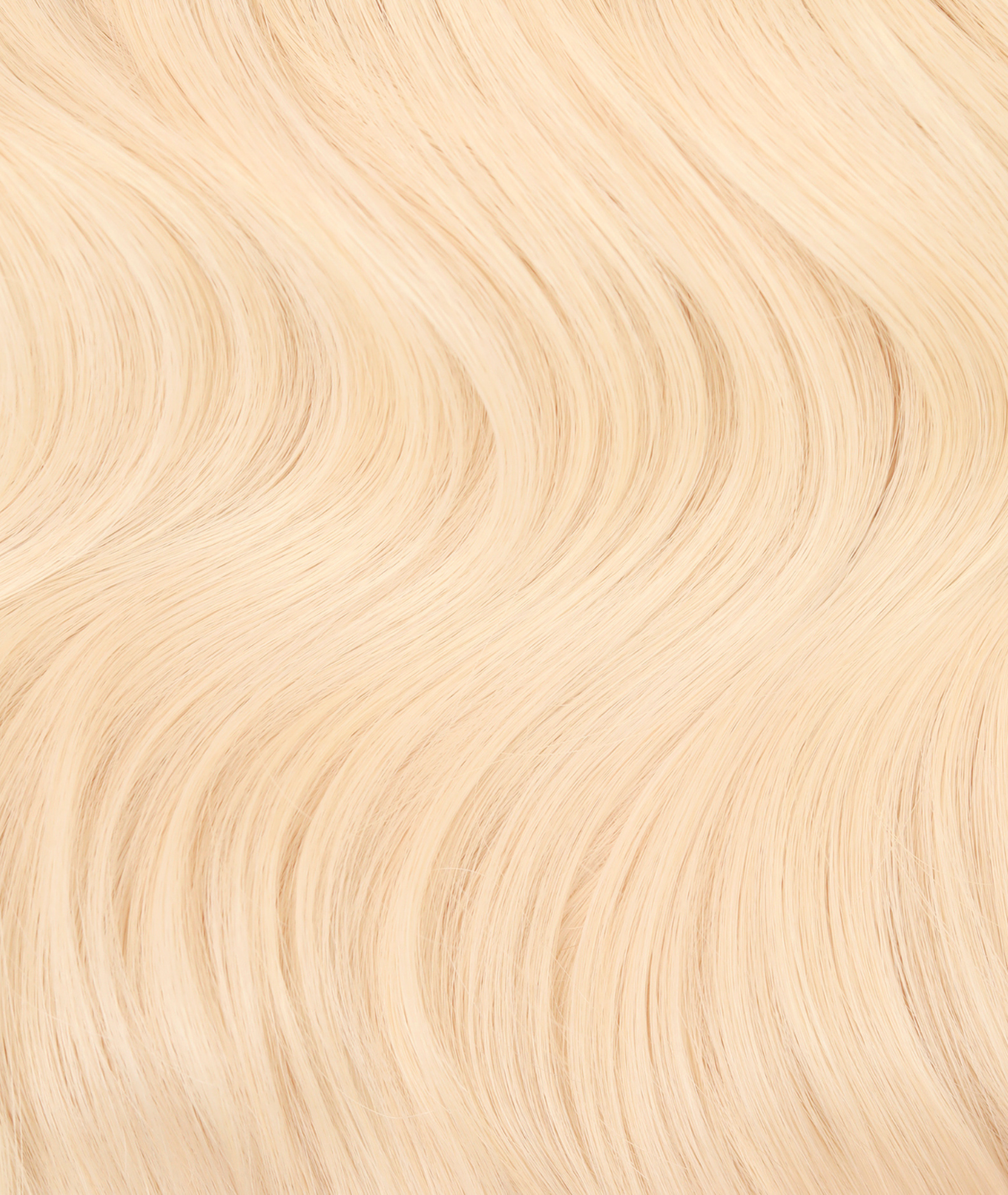
Straight 100% Remy clip-ins can be waved with your own tools to match a loose to medium wave, then clipped out at night. It is the lowest-commitment way to try extensions with natural texture.
Browse classic clip-in hair extensions →The best extension methods for curly and wavy hair
No single method suits every curl. It depends on how often you wear extensions, how much your curls rely on conditioner, and whether you will book regular salon appointments.
| Method | Who fits it | Best for | Watch out for |
|---|---|---|---|
| Straight clip-ins, styled | You, at home | Loose and defined waves, occasion wear | Needs restyling each wear; hard to match tight curls |
| Pre-waved clip-ins | You, at home | Wavy hair that wants texture straight out of the box | Permed hair, shorter lifespan, limited stock |
| Pre-curled tape-ins | A trained stylist | Curly hair worn curly every day | Conditioner near the tape weakens the bond |
| Bead or weft methods | A trained stylist | Dense, thick curls that need volume without bulk | Bonds can tangle with tight curls if not maintained |
Clip-ins for wavy hair
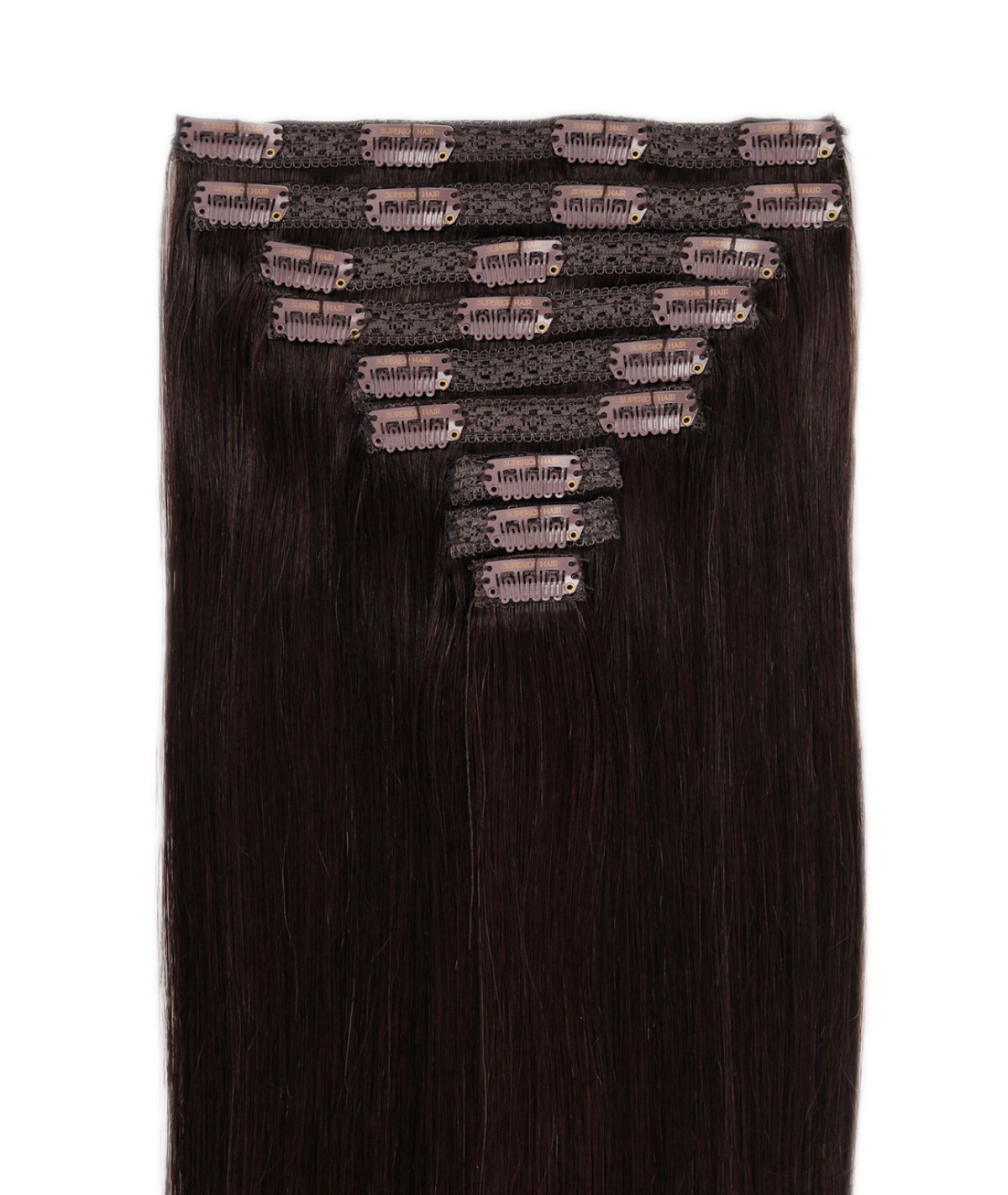
Clip-ins are the easiest entry point. You put them in for an event, take them out at night, and your natural hair never carries the weight full time. Superior Hair's classic clip-ins come smooth out of the box and, because they are 100% Remy human hair, they can be curled and waved with hot tools. For loose waves, a large barrel wand usually gets you a convincing match in a few minutes. Our guide on how to curl hair extensions walks through barrel sizes and technique.
Tape-ins for curly hair worn every day
If you wear your curls out daily and want length that stays in for weeks, a semi-permanent method makes more sense. Tape-ins sandwich a fine section of your own hair between two tape wefts and lie flat against the head, so they hide well under volume. They are a salon method. Installation takes around an hour and should be done by a professional to avoid tension damage.
Bead and weft methods for dense curls
Thick, dense curly hair can hide bonds and wefts well, but it also tends to tangle around them. If your curls are coarse and heavy, read our piece on extensions for thick and coarse hair before you book, then talk the options through with your stylist.
Pre-curled extensions vs straight hair you style yourself
Pre-curled extensions arrive with the texture already set. Superior Hair's curly range starts as Premium Grade 100% Remy human hair, which is then professionally permed to create the curl. That extra chemical processing is what holds the pattern, but it also means the hair can feel drier and coarser than unpermed extension hair, and it will not last as long. The upside is that you can wash and wear it as curly hair with no heat at all. The wavy clip-in range is the at-home version of this, though it is clearance stock with limited shades and lengths.
Straight extensions you style keep the softer, less processed feel of unpermed Remy hair and generally last longer. The tradeoff is heat. Every time the extension hair is washed, the wave drops out and you have to style it again. That works for occasion wear and loose waves. It works badly for tight curls, because you would be curling a full set by hand every few days, and heat on that schedule shortens the life of any hair.
A simple rule: if your natural texture is a loose wave and you wear extensions now and then, style straight hair. If you have defined curls and wear them out most days, pre-curled is usually the better match.
Not sure of your shade?
Curly hair shows colour differently through the lengths and the ends, so a photo-based colour match helps you pick the right shade before you commit, especially on final sale ranges.
Get your colour matchedChoosing length, weight and shade for curly hair
Buy for shrinkage
Curly extension length is measured before the hair is permed. Once curled, it sits noticeably shorter, just as your own curls do. If you want curls that fall to your shoulder blades, choose a longer length than you would for straight hair. Stretch one of your own curls, then let it spring back, to see roughly how much length you lose.
Weight and wefts per set
Curly hair adds visual volume, so you often need fewer grams than you expect. For reference, Superior Hair's curly ultra seamless tape-ins come as 10 wefts (5 sandwiches) per pack, with 4cm wide wefts, and pack weight rising with length from 22g at 14 inches to 35g at 26 inches. Your stylist will work out how many packs you need from your density and the look you want.
Shade and dimension
The outside of each curl catches light and the inside sits in shadow, so curly hair often looks deeper than the same shade worn straight. If you are between two shades, the slightly darker one usually blends better in curls. Blended and balayage shades can also help, because the dimension disguises small mismatches. You can see this on curly tape-in shades like #1B Off-Black curly tape-ins next to the balayage options in the same range.
Aftercare for curly hair extensions
Curly extension hair does not get the natural oils your scalp provides, and permed hair is drier to begin with. Aftercare is what decides whether a set lasts or turns into a frizzy mat.
- Use sulphate-free, alcohol-free products. Both strip moisture that curls cannot spare.
- Keep conditioner away from tape bonds. This is the biggest clash with a typical curly routine. Condition the mid-lengths and ends heavily, but keep it off the roots and tapes, or the adhesive will loosen.
- Avoid coconut oil-based products on tape-ins. Argan oil products are fine.
- Never brush wet hair. Detangle gently once the hair is dry or nearly dry, with a brush made for extensions, working from the ends upward.
- Wait 24 hours after a tape-in fit before washing, and do not tie your hair up tightly in the first week while your roots adjust.
- Braid loosely or gather into a low pony for bed. Curls tangle fastest against a pillow.
- Wash clip-ins sparingly, roughly every 10 to 15 wears, and take them out before swimming or sleeping.
Do not try to straighten pre-curled extensions or chemically change their texture. The curl pattern is set by the perm, and fighting it damages the hair. Superior Hair's hair care guide covers the full routine for each method.
The honest tradeoffs before you buy
A few points are better known up front.
Permed hair has a shorter life. The chemical process that creates a lasting curl also lowers the hair's resilience. Expect more dryness, more natural variation from weft to weft and fewer months of wear than with unprocessed premium semi-permanent hair. If maximum softness and longevity matter most, a premium straight range styled by your stylist may suit you better.
The current curly ranges are final sale. Superior Hair's curly tape-ins sit in the Value Grade collection and the wavy clip-ins are clearance stock, and both are listed as final sale. Check your shade carefully, use the colour match service, or contact the team before ordering.
Tape-ins are not a DIY job. Curly tape-ins must be fitted by a salon professional and need regular repositioning as your hair grows. Factor those appointments into the real cost. If you want someone to fit them for you, Superior Hair offers professional hair extension installation.
Tight coils need a different solution. The curly ranges here are a permed curl, which suits loose to medium curls. If your natural pattern is a tight coil, or you simply are not sure, a virtual consultation will tell you more than a product page can.
Wear your curls out, with more length
Pre-curled 100% Remy tape-ins give curly hair everyday length with no heat styling, fitted by your stylist.
Shop curly tape-in extensions →FAQ
Can you get hair extensions for curly hair?
Yes. Hair extensions for curly hair work well when the extension texture matches your natural curl pattern. You can choose pre-curled extensions, which are permed to hold a curl and can be worn without heat, or straight 100% Remy extensions that you curl yourself. Pre-curled suits daily wear, while styled straight hair suits loose waves and occasional wear.
What are the best extensions for wavy hair?
For loose to medium waves, straight 100% Remy clip-ins styled with a large barrel wand are usually the easiest and most flexible option, because you control the wave and can remove them at night. For stronger waves worn every day, pre-waved or pre-curled extensions save restyling time but are permed and have a shorter lifespan.
Do curly hair extensions shrink?
Yes. Curly extension length is measured before the hair is permed, so once curled it sits shorter, much like natural curls. Choose a longer length than you would for straight hair to land where you want. Stretching one of your own curls and letting it spring back gives a rough sense of how much length you will lose.
Can I straighten curly hair extensions?
It is not recommended. Pre-curled extensions get their pattern from a perm, and straightening or chemically altering them can damage the hair and ruin the curl. If you want to switch between straight and curly looks, straight 100% Remy extensions that you curl with hot tools give you that flexibility, with heat protection used every time.
Are tape-in extensions good for curly hair?
Tape-ins can suit curly hair because the flat wefts hide well under volume. The main catch is conditioner, which curly routines use heavily and which weakens tape adhesive if it reaches the bonds. Condition the mid-lengths and ends only. Tape-ins must be fitted and repositioned by a trained stylist, never applied at home.
How do I care for curly hair extensions?
Use sulphate-free and alcohol-free products, keep conditioner off the roots and bonds, and never brush the hair while wet. Detangle gently from the ends up, braid loosely for sleep and avoid coconut oil-based products on tape-ins. Take clip-ins out before swimming or bed, and wash them only every 10 to 15 wears.