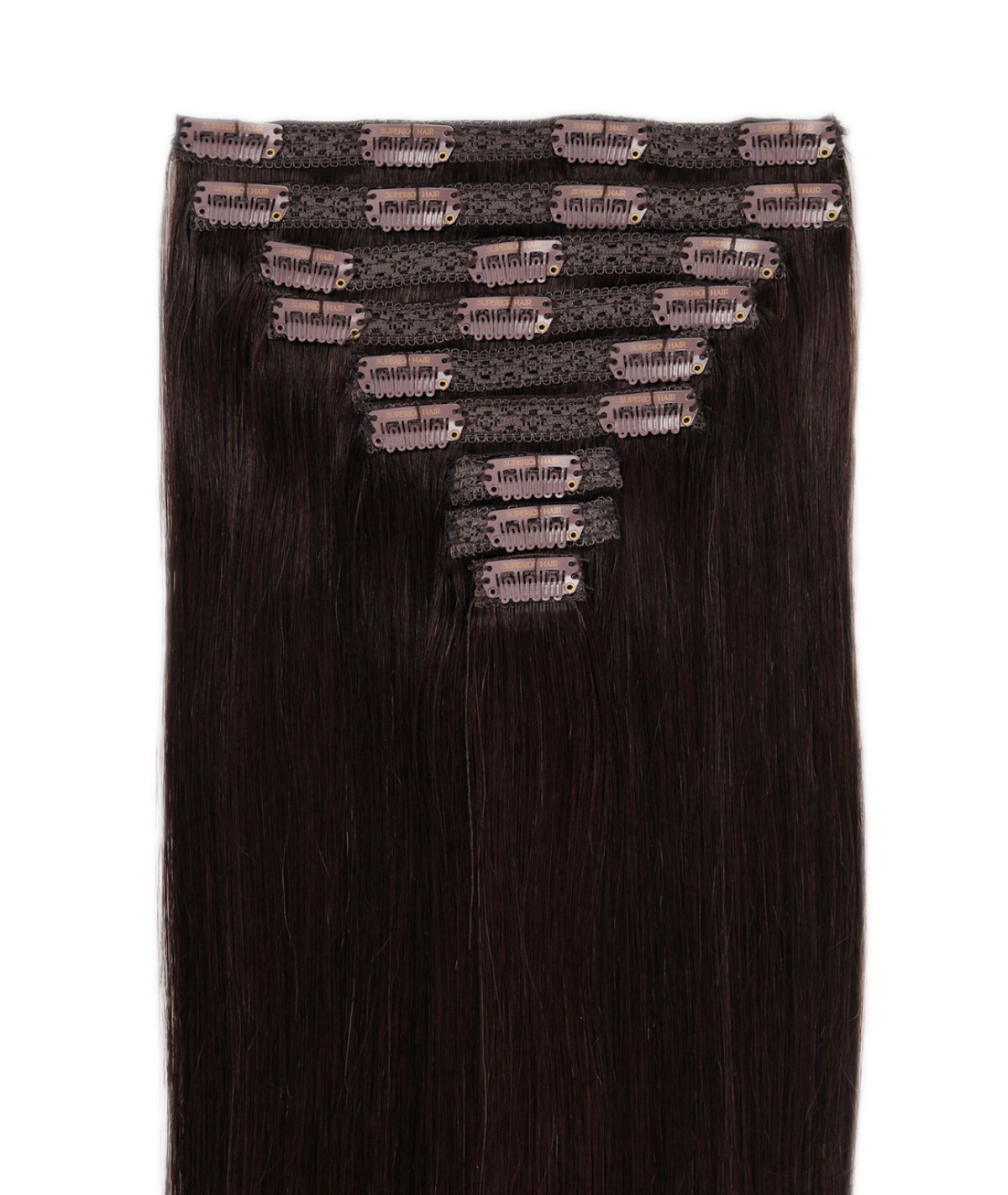

Tape-In vs Weft Extensions: Cost, Comfort and Wear Time Compared
Quick answer
Choosing tape in vs weft extensions comes down to your hair density and how often you can get to the salon. Tape-ins sandwich your hair between two thin adhesive panels and suit fine to medium hair. Wefts are beaded or sewn along a row, carry more weight, and suit thicker hair wanting real volume.
Two clients can sit in the same chair, ask for the same look, and need completely different methods to get there. The difference is usually density at the root, not length at the ends. This guide covers what each method does to your hair, how they feel to live in, how long a set lasts, and what each costs across a year rather than on the day.
In this guide
- Tape in vs weft extensions: the short version
- How tape-in extensions attach
- How weft extensions attach
- Comfort: weight, tension and what you feel at the root
- Wear time, move-ups and how long the hair itself lasts
- Cost over a year, not cost on the day
- Which method suits your hair
- Frequently asked questions
New to semi-permanent hair?
Tape-ins and wefts both sit on the professional side of the range, applied by a stylist and worn for months. Seeing the full method list side by side is the fastest way to work out where you fit.
Browse the semi-permanent professional range →Tape in vs weft extensions: the short version
Both methods are semi-permanent. Both are installed by a trained stylist, stay in through washing and sleeping, and get moved up as your hair grows. Neither is a home job, and any guide telling you to fit your own is setting you up for slippage and breakage.
Where they split is the attachment. A tape-in is a small pre-taped panel of hair, typically around 4cm wide, applied in pairs so your own hair sits in the middle. A weft is a continuous strip attached along a row, either beaded onto sections or sewn onto a beaded track. That one structural difference drives everything else: weight distribution, appointment length, move-up interval, and total spend across a year.
| Tape-ins | Wefts | |
|---|---|---|
| Attachment | Adhesive panels sandwiching your hair | Beaded or sewn along a horizontal row |
| Best for | Fine to medium hair, subtle blending | Medium to thick hair, heavier volume |
| Move-up interval | Roughly every 6 to 8 weeks | Roughly every 8 to 10 weeks |
| Appointment length | Shorter to apply, adhesive removal adds time | Longer to install, faster to take down |
| Flat at the root | Very flat, near invisible in a ponytail | Flat with genius and butterfly wefts, bulkier with traditional |
| Reusable | Yes, once re-taped | Yes, refitted with new beads or thread |
How tape-in extensions attach

Your stylist takes a fine horizontal section, places one taped panel underneath, lays your own hair across the adhesive, then presses a second panel on top. Heat or a clamp sets the bond. Rows are built up the head, away from the hairline so nothing shows when your hair is up.
Because the bond is a flat panel rather than a knot or bead, the join sits almost flush with the scalp. That is why tape-ins are the go-to for fine hair: nothing to feel through a thin section, nothing to see through a light density. Superior Hair's ultra seamless tape-in range uses a thinner, more flexible panel again, keeping the transition soft where your hair is finest. The invisi tape skin weft line goes further, with a clear base that disappears against the scalp under parting.
The trade-off is chemistry. Adhesive does not love oil, silicone or heavy conditioner near the root, and it softens under prolonged heat. So: sulphate-free washing, conditioner from mid-length down only, no straightener passing over the bond.
How weft extensions attach

A weft has no adhesive at all. Your stylist builds a track across the head, usually micro beads clamped onto small sections of your own hair, then attaches the weft strip to it. Traditional wefts are sewn on with needle and thread. Newer flat wefts bead directly through the top edge, which is faster and sits closer to the head.
Superior Hair carries three weft styles and they behave differently in the hand. Genius wefts have no return hair and no thick seam, so they cut to any width without unravelling and lie remarkably flat. Invisi butterfly wefts are thinner again through the seam. Traditional wefts are the sturdiest and most forgiving on very thick hair, with a machine-sewn seam that holds shape through repeated refits.
Because a weft spreads its weight along an entire row rather than concentrating it on individual sections, one well-placed row carries a lot of hair without any single point taking the strain. That is the case for wefts on thick or coarse hair, where tape-ins would need a very high panel count to keep up.
Before you pick a method
Method matters less than shade. A perfect tape-in application in the wrong tone reads as extensions instantly, while a well-matched weft disappears. Get your colour confirmed first, then choose the attachment.
Get your colour matchedComfort: weight, tension and what you feel at the root
Comfort is what most people actually mean when they ask which method is better. It comes down to two things: how much weight hangs off each section of your own hair, and how much you feel the attachment when you lie down.
Tape-ins
The panel is flat and soft, so there is little to feel, and most clients stop noticing them within a day or two. The risk is not the bond, it is overloading: too much hair on too little natural density puts steady downward tension on fine sections, and that is where traction damage starts. A good stylist caps the panel count rather than giving you every gram you ask for.
Wefts
Beads are harder than adhesive, and you feel a row of them for the first few nights, particularly if you sleep on your back. Genius wefts and the invisi butterfly weft range reduce this because the seam is slimmer. The bigger factor is bead tension: clamped too tight and you get a pulling sensation across the track, clamped correctly and the row moves freely with your scalp.
Neither method should hurt. Persistent soreness, tenderness at one point, or shedding at a bond means the application is too heavy or too tight, and needs adjusting at your next appointment rather than waiting out.
Wear time, move-ups and how long the hair itself lasts
Two separate timelines get mixed up constantly. The move-up interval is how long before the attachment has grown too far down the shaft and needs resetting. The lifespan of the hair is how many of those cycles you get before the set is spent.
Tape-ins generally need moving up every 6 to 8 weeks. Wefts stretch further, typically 8 to 10 weeks, because a beaded track tolerates more growth before it becomes visible or starts to swing. Faster-growing hair sits at the short end of both ranges. Our guide to how long tape-in extensions last goes deeper into what shortens that window.
The hair itself is where quality shows. Superior Hair uses 100% Remy human hair with the cuticle intact and running in one direction, which is why a set can be washed, heat styled and refitted repeatedly without matting at the ends. Non-Remy hair has its cuticles stripped or mixed in direction, and it tangles from the first month on. You can read how the hair is selected on the our hair page.
With good aftercare, both methods reuse the same hair across multiple move-ups: tape-ins are re-taped, wefts get new beads or thread. What ends a set is almost always the condition of the ends, not the attachment. Heat above 180C, sulphate shampoos and brushing from the root down age a set fastest.
Cost over a year, not cost on the day
Comparing the price of a tape-in set against a weft set tells you little, because the two methods spend money on different things. Work it out across twelve months instead.
The hair. Priced by weight and length in both cases. Longer lengths cost more because the donor hair is rarer, worth checking against the hair length guide before you commit to a length you do not need.
The application. Charged by your stylist, usually by time. Wefts take longer to install because the track has to be built. Tape-ins are quicker to apply, but the removal step at every move-up adds that time back, so across a year the labour difference narrows.
The move-up frequency. The component people underestimate. A 6 week tape-in cycle is roughly eight or nine appointments a year. A 10 week weft cycle is closer to five. Even with a longer appointment each time, fewer visits usually wins on total salon time.
The consumables. Replacement tape at each tape-in refit, replacement beads or thread at each weft refit.
There is a grade decision underneath all of it. Superior Hair runs premium lines alongside value-grade options in the same methods, which shortens a set's practical lifespan but lowers the entry point. If you are trialling extensions and not certain you will maintain them, a value grade is a reasonable way to find out first. Work the numbers through with your stylist rather than a headline price, because your density changes how many panels or rows you need.
Which method suits your hair
Choose tape-ins if your hair is fine to medium, you want length and subtle thickness rather than dramatic volume, you wear your hair up often and need the flattest join, or you are new to semi-permanent extensions and want something quick to remove if you change your mind.
Choose wefts if your hair is medium to thick, you want genuine density rather than length alone, you would rather sit for one longer appointment less often, or you have found tape-ins slipping because your scalp runs oily.
Consider something else if you are dealing with thinning through the crown or a widening part. Neither method adds coverage where there is limited hair to attach to, and adding weight to compromised sections makes things worse. A topper covers that area without loading the surrounding hair. If your shedding is sudden, patchy or new, see a doctor before a stylist: coverage is cosmetic, not a treatment.
Plenty of clients end up running both: a row of wefts through the back for weight, tape-ins around the sides where the hair is finer, blended so the join never shows. Our overview of the professional installation methods shows how the lines are typically combined.
Ready to book your application?
Tape-ins and wefts are both stylist-applied, and the right call depends on what your hair can carry. Book an installation and have the method chosen for you in the chair.
Book a hair extension installation →Frequently asked questions
Which is less damaging, tape-ins or wefts?
Neither is inherently more damaging. Damage comes from weight and tension, not from adhesive or beads. Tape-ins overloaded onto fine hair cause traction at the panel, and beads clamped too tightly cause it at the track. Applied within your hair's capacity by a trained stylist and moved up on schedule, both methods are equally safe to wear long term.
Can I fit tape in vs weft extensions myself at home?
No. Both are professional application methods. Sectioning, panel placement, bead tension and weight distribution all need trained hands, and mistakes show up as slippage, visible bonds or breakage weeks later. If you want extensions you can fit yourself, clip-ins or a halo are the correct choice and need no appointment at all.
How often do wefts need to be moved up compared to tape-ins?
Tape-ins generally need a move-up every 6 to 8 weeks, wefts every 8 to 10 weeks. The difference is that a beaded track stays discreet for longer as your hair grows, while a tape panel starts to lift and become visible sooner. Fast-growing hair sits at the shorter end of both intervals.
Can the same hair be reused at each move-up?
Yes, with both methods. Tape-ins are removed, cleaned and re-taped with fresh adhesive strips. Wefts are unclamped or unpicked and refitted with new beads or thread. Because Superior Hair uses 100% Remy hair with aligned cuticles, a well-cared-for set survives several cycles. What usually ends a set is dryness through the ends rather than any failure of the attachment.
Are wefts too heavy for fine hair?
Traditional wefts often are, because the seam adds bulk and the row needs enough natural hair to anchor to. Genius and butterfly wefts change that calculation, since the seam is much slimmer and the weft can be cut narrow. Fine hair can sometimes carry a short flat-weft row, but tape-ins remain the safer default at low density.
Do tape-ins or wefts show more in a ponytail?
Tape-ins are marginally flatter, so they hide best in a high ponytail or a sleek updo. A flat weft placed correctly is very close behind. Either way, placement is what decides it: rows set too high or too close to the nape are what show when hair goes up, which is why an experienced stylist maps the sections before applying anything.