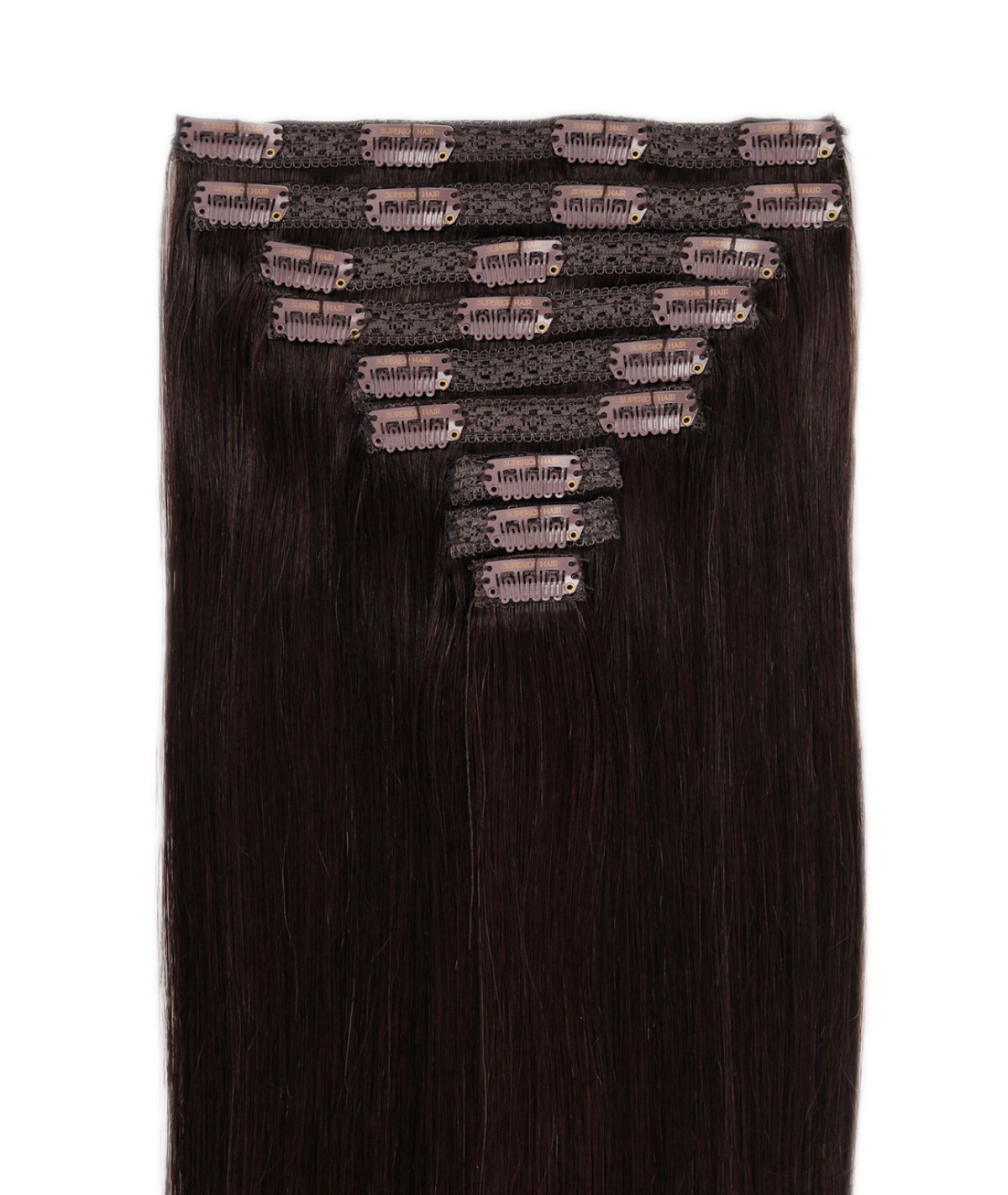

Invisi Butterfly Weft Extensions: The New Flat-Lay Weft
Quick answer
Invisi Butterfly Weft extensions are a flat-lay weft built on Superior Hair's Invisi tape base, with pre-punched butterfly holes that a stylist threads onto silicone-lined microbeads. No sewing, glue or tape. The weft flips over to hide the beads, sitting flat against the scalp. Install takes about 15 minutes.
Flat wefts have been the quiet obsession of the extensions world for a few years now, and for good reason. They spread weight over a wider band instead of loading it into a few bonds. The Invisi Butterfly Weft is Superior Hair's newest take on that idea, and the change is not cosmetic. It swaps the base the original butterfly weft was built on, which alters how it sits, how flat it lies, and how it grows out.
In this guide
- What an Invisi Butterfly Weft actually is
- Invisi base vs the original Genius Butterfly Weft
- How the 15-minute install works
- Who flat-lay wefts suit, and who they don't
- Lengths, grams and getting the colour right
- Aftercare that actually protects the investment
- Reuse, move-ups and cost over a year
- Frequently asked questions
New to semi-permanent hair?
Wefts, tape-ins, nano tips and U-tips all attach differently and last different lengths of time. Seeing the full professional range side by side is the fastest way to work out which one your hair can carry.
Browse the semi-permanent professional range →What an Invisi Butterfly Weft actually is

Invisi Butterfly Weft extensions are a flat, flexible band of hair with small holes punched through the base at regular intervals. Those holes are the whole idea. Your stylist threads a section of your own hair through two of them, clamps a silicone-lined microbead over it, and moves along the row. The weft is then flipped over so it lies face down against the head, which puts the beads underneath the hair rather than on top of it.
Two holes per bead is the detail worth understanding. It spreads the pull across two anchor points instead of one, so the tension at the root is lower and better distributed along the band. That matters most for fine or fragile hair, where a single overloaded bond is the thing that causes trouble six weeks down the track.
Nothing is sewn and nothing is glued. There is no tape tab, no thread, no keratin. The bead is the only attachment, which also means removal is mechanical rather than chemical: open the beads, slide the weft out, done. The hair itself is 100% Remy human hair with the cuticle intact and running in one direction, which is why it behaves like hair instead of shedding its shine after a few washes.
Invisi base vs the original Genius Butterfly Weft

Superior Hair already made a butterfly weft. The Genius Butterfly Weft, sometimes called a butterfly hole weft or invisible silk hole weft, uses the same hole-and-bead principle but is built on a Genius weft base. The new version keeps the mechanics and changes the foundation to the Invisi tape skin weft base, reworked after customer feedback into a smoother, stronger and lower-profile band.
In practice the difference shows up in three places: how close the weft sits to the scalp, how the edge feels under fingers, and how obvious the row is when hair is tied up. A thinner, smoother base means less of a ridge. It is the same reason people who move from a standard tape-in to an Invisi tape-in usually notice the change before they can explain it.
| Invisi Butterfly Weft | Genius Butterfly Weft | |
|---|---|---|
| Base | Invisi tape base, re-engineered | Genius weft base |
| Attachment | Silicone-lined microbeads only, two holes per bead | Silicone-lined microbeads only, two holes per bead |
| Install time | Around 15 minutes | Around 15 minutes |
| Profile at the root | Flatter and smoother, beads hidden under the flipped weft | Flat, beads hidden under the flipped weft |
| Lengths | 20 inch and 24 inch | See the collection for current options |
If you already wear the Genius Butterfly Weft and love it, there is no reason to switch mid-cycle. The upgrade is worth considering at your next fresh set, particularly if your hair is fine enough that you have ever felt the row when lying down.
How the 15-minute install works
This is a professional method. It is not a DIY job, and a badly beaded row causes more damage than any other mistake in extensions. What a stylist does, roughly, is this: section a clean horizontal parting, pull small pieces of your natural hair through two adjacent butterfly holes using a loop or hook needle, slide a silicone-lined microbead over the section, clamp it with pliers, repeat along the weft, then flip the band down so it lies flat and the beads disappear underneath.
Fifteen minutes is realistic in trained hands, which is fast for a semi-permanent method. Compare that to a full head of individual bonds and the appeal is obvious. The tools involved are a hook needle, a loop needle, pliers, silicone-lined microbeads, hair grips and a set of croc clips to keep stray hair out of the way. Beads should be matched to your root colour, not your extension colour, so they vanish at the parting.
Turn up to the appointment with clean, product-free hair. Silicone and oil residue makes beads slip, and a slipping bead is a bead that will move before the six week mark. If you are weighing this method against tape-ins, nano tips or U-tips, our breakdown of the semi-permanent installation methods we offer covers how each one attaches and what maintenance looks like. Superior Hair also runs in-house extension installation appointments if you would rather have the set fitted by the team who made it.
Who flat-lay wefts suit, and who they don't

Flat wefts are strongest for people who want length and thickness with a low-profile attachment and a clean grow-out. Because the load is spread across a band rather than concentrated in bonds, the method is comfortable for fine hair that cannot carry heavy individual attachments. Wearers who tie their hair up often also tend to prefer wefts, because a flipped weft hides its own hardware.
They are less suited to a few situations, and it is worth being honest about them. If your hair is very short, there may not be enough length above the row to cover it. If your density is genuinely sparse rather than fine, a weft row can be difficult to conceal and a topper or a method chosen specifically for thinning hair is often the better answer. And if you want to be able to take your hair out at the end of the night, this is the wrong category entirely; clip-ins exist for that. Readers who like the Invisi base but want an even lighter attachment sometimes land on Invisi tape-ins instead.
Not sure of your shade?
The butterfly weft line runs across more than 40 shades, including highlighted and mixed tones that read very differently in daylight than they do on screen. The colour guide shows each one against real hair before you commit to a set.
See the butterfly weft colour guideLengths, grams and getting the colour right
Invisi Butterfly Wefts come in two lengths. The 20 inch weft is 50g and the 24 inch weft is 60g, both on a 36cm width. How many wefts you need depends on your own density and the look you are after, which is a conversation for your stylist rather than a number you can guess from a website. A single weft adds a subtle row of thickness; several build real length and body.
Colour is where most sets are won or lost. Two things to keep in mind. First, extension hair does not lift, so you match to your ends and mid-lengths rather than your root, and let your natural root shadow do the blending at the top. Second, screens lie. A shade that looks ashy on a phone can read warm in a mirror. If you are between two options, get a professional match rather than gambling on a set you cannot recolour later, because these extensions should not be bleached, lightened or re-coloured at home.
Bead colour matters too, and it is the step people forget. Beads are matched to your natural root, so a dark bead on a blonde root is visible at the parting no matter how well the weft is placed.
Aftercare that actually protects the investment
Extension hair has no blood supply and no way of repairing itself, so everything you do to it is cumulative. The rules that matter most for a beaded weft are these. Wash with a sulphate-free shampoo and keep conditioner away from the root and bead area, since slip at the bead is what loosens a row. Do not wash daily; dry shampoo between washes is the standard advice for a reason. Never brush wet hair, and use an extensions-friendly brush when it is dry, working from the ends upward.
Heat needs a protectant every time, and heat should stay off the root and bead area entirely. Alcohol-based styling products dry the hair out. Coconut oil based products break down the base over time, though argan oil is fine. Sleep with hair loosely braided or tied, avoid tight ties for the first week after install, and keep the set out of pools, because chlorine and salt water are hard on both the hair and the attachment. Our full hair care guide goes through the routine week by week.
Reuse, move-ups and cost over a year
Each install lasts 4 to 6 weeks before it needs moving up. That interval is not arbitrary. As your natural hair grows, the row travels down the head, the weft gets further from the scalp and the tension changes. Leaving a row in past six weeks is how matting starts at the bead.
The hair itself can be reused a minimum of three times, and with careful handling and on-time maintenance a set can give you a year of wear or more. That is the number to run your budget on. The cost of the hair is spread across the whole life of the set, and the recurring cost is the move-up appointment. People who stretch their appointments to save money usually spend more, because a matted or damaged weft cannot be reinstalled.
Book the next move-up before you leave the chair. It is a small thing that keeps a set on schedule.
Ready to see the new flat-lay weft in your shade?
100% Remy human hair, 20 and 24 inch, over 40 shades, and a 15-minute install with no glue, tape or sewing.
Shop Invisi Butterfly Weft extensions →Frequently asked questions
How long do Invisi Butterfly Weft extensions last?
Each install lasts 4 to 6 weeks before the weft needs moving back up to the scalp. The hair itself can be reused a minimum of three times, and with proper care and maintenance appointments kept on schedule, one set can give a year of wear or more. Stretching past six weeks risks matting at the bead.
Can I install Invisi Butterfly Weft extensions myself?
No. This is a professional method. Bead placement, section size and tension all need a trained hand, and an over-tight or overloaded row is the fastest way to damage your own hair. A stylist installs the weft using a hook needle, loop needle, pliers and silicone-lined microbeads in about 15 minutes.
What is the difference between the Invisi Butterfly Weft and the Genius Butterfly Weft?
Both use the same butterfly hole and microbead system with no sewing or glue. The original is built on a Genius weft base. The Invisi Butterfly Weft is built on Superior Hair's Invisi tape base, re-engineered from customer feedback to be smoother, stronger and lower profile, so the row sits flatter and more discreetly against the scalp.
What lengths and weights do Invisi Butterfly Wefts come in?
Two lengths. The 20 inch weft weighs 50g and the 24 inch weft weighs 60g, both on a 36cm width, in over 40 shades. How many wefts a full head needs depends on your natural density and the length you are matching to, so it is best confirmed with your stylist or through a colour match.
Are Invisi Butterfly Wefts suitable for fine hair?
Generally yes. Threading two butterfly holes per bead spreads the weight across two anchor points and along the band rather than loading it into single bonds, which lowers tension at the root. Very sparse hair is a different question, and a topper or a method chosen for thinning hair may cover better than a weft row.
Can I colour or bleach Invisi Butterfly Weft extensions?
No. Superior Hair extensions should not be bleached, lightened or re-coloured, so the shade you buy is the shade you wear. Match to your mid-lengths and ends rather than your root, and use a professional colour match if you are between two options, since screen colour is unreliable.