
Skip to content
OVERNIGHT SHIPPING BEFORE 2PM
30 DAY RETURNS & EXCHANGES

Semi-Permanent Hair Extensions NZ vs Ready-to-Wear: Which Commitment Suits You?

Quick answer

Semi-permanent hair extensions in NZ, such as tape-ins, nano tips and keratin U-tips, are fitted by a stylist and stay in day and night for months, with regular salon maintenance. Ready-to-wear clip-ins, halos and ponytails go in and come out at home in minutes. Choose semi-permanent for everyday length, ready-to-wear for flexibility.

Most people researching semi-permanent hair extensions in NZ are really weighing up something bigger than a method: how much of their week they want their hair to take up. One option gives you length you never have to think about. The other gives you length only when you want it. This guide walks through both, honestly, so you can pick the commitment that fits your hair, your routine and your budget.

What is the difference between semi-permanent and ready-to-wear?

The split comes down to two things: who puts the hair in, and how long it stays there.

Semi-permanent extensions are attached to your own hair close to the root, using tape, tiny beads, keratin bonds or a beaded or sewn weft. A trained stylist fits them, and they stay in while you sleep, shower, work out and wear your hair up. You leave the salon with the length, and you keep it until your next maintenance appointment.

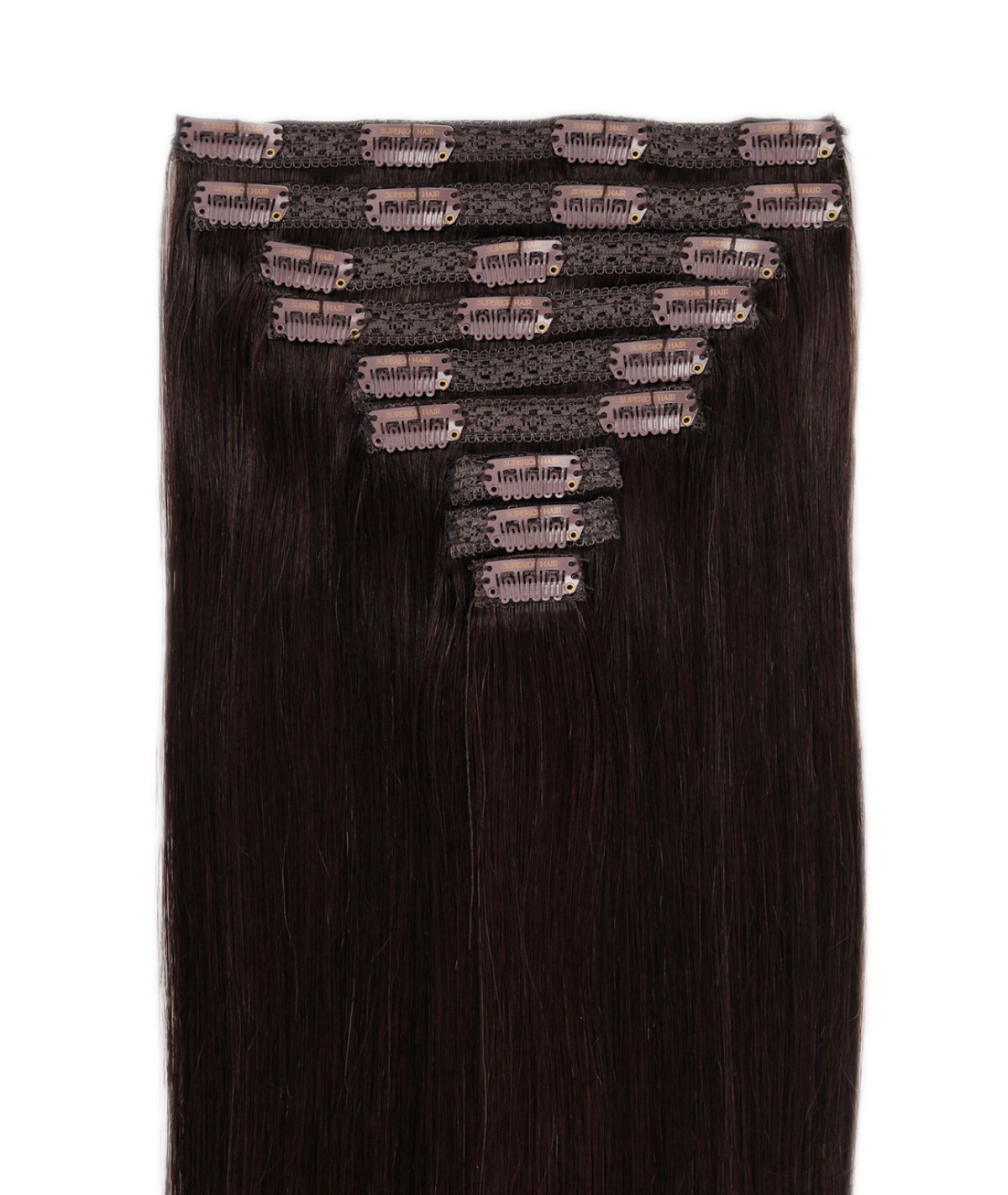
Ready-to-wear extensions (often called temporary extensions) attach with small clips, a fine invisible wire or a wrap, and you put them in yourself. They come out at night. Between wears, your own hair carries no extra weight at all.

Neither is better across the board. Both Superior Hair lines use 100% Remy human hair, with every cuticle running root to tip in the same direction, so the hair sits flat, tangles less and heat styles like your own.

Curious about the salon route?

See every stylist-fitted method side by side, from ultra seamless tape-ins and invisi tape skin wefts to nano tips, butterfly wefts and keratin U-tips, all in 100% Remy human hair.

Explore semi-permanent professional extensions →

Semi-permanent hair extensions in NZ: the methods explained

"Semi-permanent" covers several attachment methods, and they feel quite different to live with. Here is what each one actually involves, including the install times quoted by Superior Hair's own Auckland salon.

Tape-ins

Thin, flat wefts are pressed together on either side of a fine section of your own hair. A full install takes about an hour, which makes tape-ins the quickest semi-permanent method to fit. As your hair grows, the tapes are repositioned every 6 to 8 weeks, and because the hair itself is re-taped and reused, a well cared for set of ultra seamless tape-in extensions typically lasts 6 to 12 months. Tape-ins lie very flat, so they suit fine to medium hair that would show bulkier attachments.

Nano tips

Each strand ends in a tiny tip that is threaded through a very small bead and clamped onto a matching section of your hair. There is no glue and no heat involved. The trade-off is time: an install takes 2 to 3 hours, and you will be back every 6 to 8 weeks to have the beads moved up. Superior Hair's nano tip extensions generally give around 4 to 6 months of wear.

Keratin bond U-tips

Keratin-tipped strands are fused to your hair with a heated tool. Placement is very flexible, which makes U-tips popular with people who wear high ponytails and updos. Expect 2 to 3 hours in the chair and roughly 3 to 6 months of wear. Removal must be done by a professional with a bond remover, so this is not a method to pick out yourself when it starts to grow out.

Wefts: genius, butterfly and traditional

Rows of hair are beaded or sewn along a track, which is ideal when you want serious volume through thicker hair. Depending on the weft type and how many rows you need, fitting runs anywhere from 30 minutes to 3 hours.

All four are stylist-installed. The damage people blame on extensions usually comes from uneven root tension, sections too small for their weight, or bonds pulled out at home, and a trained installer controls all three.

Ready-to-wear options: clip-ins, halos and ponytails

The ready-to-wear hair extensions range is built for people who want the choice every morning. Nothing stays attached, and nothing needs a salon to come off.

Clip-ins

A set of wefts in different widths, each with small pressure clips that snap onto a section of your hair. The first few attempts take a while. After a handful of goes, it becomes part of getting ready rather than a project. Superior Hair makes both classic and seamless clip-ins, and the seamless style is the one to look at if you want the wefts to lie as flat as possible. Depending on how often you wear them, a set lasts 3 to 12 months.

Halos

A single weft sits on an invisible wire that rests around your crown, and your own hair is pulled over it to hide the line. There are no clips gripping the root, which is why classic halo extensions are often the first suggestion for very fine or fragile hair. With proper care, a halo can last 12 months or more.

Ponytails and buns

These wrap or clip around a base ponytail or bun for an instant occasion look. They add nothing to hair worn down, but for weddings and long event days they are hard to beat.

If your main concern is thinning on top rather than length, a topper often suits better than a full set. If the loss is sudden or patchy, see your GP first.

Side by side: fitting, upkeep and lifespan

Here is how the main methods compare at a glance. Lifespans assume Remy human hair and proper aftercare.

Method Who fits it Upkeep Typical lifespan Best for
Tape-ins (semi-permanent) Stylist, about 1 hour Move-up every 6 to 8 weeks 6 to 12 months, hair reused Fine to medium hair, everyday length
Nano tips (semi-permanent) Stylist, 2 to 3 hours Move-up every 6 to 8 weeks Around 4 to 6 months No glue, no heat attachment
Keratin U-tips (semi-permanent) Stylist, 2 to 3 hours Professional removal 3 to 6 months Flexible placement, updos
Clip-ins (ready-to-wear) You, at home Remove nightly, wash occasionally 3 to 12 months, depending on wear Events, weekends, testing length
Halo (ready-to-wear) You, at home Remove nightly 12 months or more Fine or fragile hair, no root grip

One caveat: semi-permanent hair works 24 hours a day, while ready-to-wear hair only wears when you do. A clip-in set worn twice a week far outlasts one worn daily.

Not sure of your shade?

Whichever commitment you choose, colour is what makes the blend believable. Send the team a photo in natural light, book an in-store consultation, or order a colour ring to compare shades at home.

Get your colour matched

Which commitment suits your hair and your week?

Ask how you actually live, and how healthy your hair is at the root right now.

Semi-permanent is likely your fit if

  • You want the same length every day, including first thing in the morning and at the gym.
  • You often wear your hair up and want the extensions to stay hidden in a ponytail.
  • You are happy to book a salon visit roughly every 6 to 8 weeks and keep to it.
  • Your own hair is in good condition at the root and can carry a little extra weight.

Ready-to-wear is likely your fit if

  • You love your natural hair most days and want extra length or volume for events, weekends or photos.
  • Your hair is very fine, fragile or recovering from colour damage, and you want nothing attached between wears.
  • You have never worn extensions and want to test a length and shade before committing.
  • Regular salon appointments do not suit your schedule or where you live.

You can also do both

Plenty of people wear tape-ins day to day and add a clip-in ponytail for a wedding. Others spend a few months in clip-ins, learn exactly which length and shade they love, then move to a semi-permanent method with total confidence. If you are stuck between the two most popular choices, our breakdown of clip-in vs tape-in hair extensions goes deeper on that specific decision.

What does each option cost over time?

Ready-to-wear is a single purchase. There is no fitting fee and no maintenance appointment, so the more often you wear a set, the lower its cost per wear becomes. Your ongoing spend is mostly sulphate-free shampoo, conditioner and a good brush.

Semi-permanent has more moving parts: the hair itself, the installation, a maintenance appointment every 6 to 8 weeks, eventual removal, and aftercare products. Tape-ins soften this, because the same hair is re-taped and reused across several move-ups rather than replaced each time. Methods with shorter wear, such as keratin U-tips at 3 to 6 months, mean buying new hair more often.

To compare fairly, total everything over six months, appointments included, and ask for an installation quote at a consultation rather than guessing. For a fuller picture of how wear time differs by method, see how long hair extensions usually last.

Care decides whether you land at the top or the bottom of every lifespan range above. Wash with sulphate-free products, keep conditioner on mid-lengths and ends and away from tapes, bonds and beads, brush from the ends upward, and use a heat protectant with styling tools kept at moderate temperatures, ideally under 180°C. The Superior Hair care guide covers the routine step by step.

Getting the colour and blend right either way

A great method in the wrong shade will always look like extensions. Three things make the difference.

Match to your ends, not your roots. The extension hair sits alongside your mid-lengths and ends, so that is the colour it has to disappear into. If your colour shifts from root to tip, a balayage, ombre or rooted shade usually blends better than a single flat colour. The semi-permanent range comes in more than 40 shades, including blondes, brunettes, reds, greys and blended options.

Be realistic about length. Semi-permanent lengths run from 14 to 26 inches, and ready-to-wear from 12 to 26 inches. The further you go past your own length, the more hair (in grams) you need for the ends to look full rather than wispy, and the more a short or blunt cut will need blending in by a stylist.

Respect your density. Fine hair needs less weight per section, whatever the method. More hair is not automatically more natural.

Ready to try semi-permanent extensions?

Book a free consultation at the Superior Hair salon in Eden Terrace, Auckland, and a stylist will assess your hair, match your shade and recommend the right method.

Book your installation →

Frequently asked questions

How long do semi-permanent hair extensions last?

It depends on the method and your aftercare. Tape-in hair typically lasts 6 to 12 months because it is re-taped and reused at each move-up every 6 to 8 weeks. Nano tips usually give around 4 to 6 months, with bead move-ups every 6 to 8 weeks, and keratin U-tips last roughly 3 to 6 months before removal.

Can I put in semi-permanent extensions myself?

No. Tape-ins, nano tips, keratin U-tips and wefts should be fitted and removed by a trained stylist. Getting the section size and tension right at the root is what protects your own hair, and that is very hard to judge on your own head. If you want extensions you can manage at home, choose a ready-to-wear method such as clip-ins or a halo.

Are ready-to-wear extensions gentler on my hair?

Generally yes, because they come out every night and your hair carries no weight between wears. They are not risk free, though. Clipping into the same spots daily, wearing a set that is too heavy for fine hair, or sleeping in clip-ins can all cause stress. A halo puts no grip on the root at all, which makes it the gentlest option.

Where can I get semi permanent hair extensions in NZ?

Superior Hair installs tape-in, nano tip, weft and keratin U-tip extensions at its salon at 201 Symonds Street, Eden Terrace, Auckland. Consultations are free, and you can book online or by phone. Weekday appointments are often available within a few days, while weekend slots can book out further ahead.

Should I try clip-ins before committing to semi-permanent extensions?

It is a smart way to start if you are unsure. Wearing clip-ins or a halo for a few weeks shows you which length, shade and volume you genuinely enjoy, with no appointment or removal to plan. Once you know what you love, moving to tape-ins or nano tips becomes a much easier and more confident decision.


News

Traditional Machine Weft Extensions: Still the Salon Workhorse

Traditional Machine Weft Extensions: Still the Salon Workhorse

Traditional Machine Weft Hair Extensions: Still the Salon Workhorse Quick answer Machine weft hair extensions are a continuous machine-sewn track of Remy human hair that a stylist beads and stitches into the natural hair. Superior Hair's traditional weft comes in 20 inches, 50g, with a 50cm track. It sits for 4 to 6 weeks per application and can be reused up to three times. Every few seasons a new bond type arrives and someone declares the traditional weft finished. It never quite happens. Machine weft hair extensions are still the method a lot of experienced stylists reach for when a client wants real density fast, and the reason is boring and practical: one track covers ground that sixty individual strands would take an afternoon to cover. This is a working look at where the machine weft still wins, where it genuinely loses to a newer line, and how to install and maintain it so it holds for the full cycle. In this guide What a machine weft actually is Why it is still the salon workhorse Which clients suit it, and which do not The install: chair time, beads and tension Machine weft vs genius, butterfly and tape-in Colour matching and customising the track Longevity, reuse and aftercare Frequently asked questions Stocking wefts this season? Superior Hair's traditional weft runs in over 30 colours, all 100% Remy human hair, all cut from the same premium grade as our professional lines. Browse the traditional weft collection → What a machine weft actually is A machine weft is a length of hair sewn into a continuous seam by machine rather than knotted by hand. That seam is the defining feature. It is stronger and more uniform than a hand-tied return, it will not unravel under normal handling, and it is also thicker, which is the tradeoff you carry into every consultation. Superior Hair's traditional weft is supplied at 20 inches, 50g per bundle, with a 50cm width per track. One track is enough to cover a full row across most heads, and you cut to fit rather than building the row out of segments. The hair itself is 100% Remy, taken from our top premium virgin grade with the cuticles intact and running in one direction, which is what keeps a reused weft from matting at the mid-lengths in month three. If you want the detail on grading and cuticle alignment, it is set out on the Our Hair and Factory page. Machine wefts are a professional-only method. They are secured with silicone-lined beads and traditional stitching, in whichever combination the client's hair calls for, and they are not a product a client can fit at home. Why machine weft hair extensions are still the salon workhorse Three things keep this method in rotation. Coverage per unit of chair time. A full traditional weft install runs around 2 to 3 hours. Delivering the same weight in individual bonds means placing and clamping dozens of strands one at a time. For a client who wants obvious density rather than a few face-framing pieces, the weft is simply the faster route to the result. Reuse economics. A machine weft can be reused up to three times, and with good aftercare a set will last up to a year. That changes the conversation at the consultation. The client is not repurchasing hair every move-up, they are paying for your time to refit hair they already own. Bonded methods get reused too, but a weft is one piece to clean, re-stitch and refit rather than 25 or 50 separate strands to re-tip. Customisation. You control row placement, row count and track length. That is real design freedom for corrective work, for building weight through a heavy one-length cut, or for adding a single lower row on a client who only needs length at the back. Our rundown of permanent extension installation methods sets the weft alongside the bonded lines if you want the wider comparison. Which clients suit machine wefts, and which do not This is where honesty saves you a redo. Because the machine-sewn seam is larger than a hand-tied or tape base, the traditional weft is suited to medium and thick hair. In genuinely fine or sparse hair it can show, particularly at the crown, in a high ponytail, or in direct sun. Nothing about your row placement fixes a track that the client's own density cannot cover. Good candidates are clients with medium to thick density who want length plus weight, who are comfortable with a salon maintenance cycle, and who wear their hair down or in low styles most of the time. Clients with fine, fragile or thinning hair are better served by a smaller base. The genius hand-tied weft gives you a far smaller track for thin to medium hair, and the Invisi Butterfly Weft sits on a flat tape-style base with butterfly holes that distribute weight across the beads, which reduces tension on finer sections. Say that out loud in the consultation. A client who is told why she is being steered to a different weft trusts the recommendation far more than one who is sold the method you happen to have in stock. The install: chair time, beads and tension Book 2 to 3 hours for a full set and have the client arrive freshly washed with no product through the lengths or at the scalp. Residue at the root is the most common reason beads slip in week one. The anchor row is built from silicone-lined micro beads set along a clean horizontal section, then the track is stitched to that row. Keep sections even and keep bead tension consistent: a bead clamped tight enough to feel secure in the chair is usually tight enough to ache by evening and to stress the follicle over six weeks. The weft should move when the client moves her head. Placement rules that hold up across most heads: stay well below the occipital bone on the lowest row, leave a finger's width of natural hair above each row so the track has cover, keep rows clear of the temples and the nape hairline where hair is finest, and taper track length at the sides so the ends do not poke through in a half-up style. Seal or fold cut ends of the machine seam so the seam holds once you have trimmed to width. Sharpen your weft work Our training academy covers sew-in and bead technique, sectioning, tension control and move-ups, so you can add weft services with confidence and charge for them properly. See the Hair Extension Training Academy Machine weft vs genius weft, butterfly weft and tape-ins The specs below are Superior Hair's own line data, so you can quote them straight to a client in the consultation. Method Base and size Install Best suited to Traditional machine weft 20 inches, 50g, 50cm track Beads plus stitching, 2 to 3 hours Medium to thick hair wanting density Genius weft 20 inches 50g or 24 inches 60g, 80cm wide, very fine track Sew-in, cuts anywhere on the seam without unravelling Thin to medium hair, custom row work Invisi Butterfly Weft 20 inches 50g or 24 inches 60g, 36cm width, flat tape base Silicone-lined microbeads only, around 15 minutes, no sewing Fine or fragile hair, clients wanting a fast fit Ultra seamless tape-in 4cm wefts, 2.2g to 3.5g each, 10 wefts per pack Sandwiched tape bonds, reusable up to four applications Almost all hair types, least damaging option Read that table as a fitting tool rather than a ranking. The machine weft is not the most discreet option on the list and was never meant to be. It is the most robust, the most reusable per piece, and the quickest way to put serious weight into hair that can carry it. If your client is on the fence between sew-in styles, our piece on the genius weft explains the hand-tied difference in client-friendly language. Colour matching and customising the track The traditional weft runs in over 30 colours, including balayage and highlighted blends. Match in natural light against the mid-lengths and ends rather than the root, because that is where the weft will actually sit. If the client has a deliberate root shadow, match to the lengths and let her own regrowth carry the shade at the top. For blended or dimensional colour, two shades in one row read more naturally than a single flat block, especially on a client who has lived-in balayage. Work from the traditional weft colour guide when you are ordering rather than matching from a screen, since monitors shift ash and gold badly. One firm limit: do not bleach or lighten the hair. Extension hair has already been through a chemical process, and lifting it costs you the integrity that makes a weft worth reusing. If the shade is not there, order the shade rather than creating it. Longevity, reuse and the aftercare that protects it Plan on 4 to 6 weeks per application before a move-up. Beyond that the rows drop with natural growth, the tension changes, and matting risk at the bead line climbs. Book the next appointment while she is still in the chair, because a client who lets a weft run to eight or nine weeks is the client who arrives with tangling you now have to cut out. Across those cycles the weft can be reused up to three times, and with proper care the set lasts up to a year. What protects that investment is home care, so send her away with the rules rather than hoping: Sulphate-free shampoo and alcohol-free styling products only. No conditioner at the roots or through the bonds, only mid-lengths and ends. Never brush wet hair, and use an extensions-friendly brush on dry hair. No daily washing. Dry shampoo between washes is fine. Argan oil is fine, coconut oil based products are not, as they loosen bonds. Heat protectant every time, and keep tools off the root area and the track itself. Braid loosely or tie back gently at night, and leave hair down for the first week after fitting. Those seven lines are the difference between a set that comes back to you three times and a set the client replaces after one cycle and blames on the hair. Stock Superior Hair wefts at trade pricing Open a trade account to buy traditional wefts, genius wefts and butterfly wefts at professional rates, with free colour matching behind you. Apply for a trade account → Frequently asked questions How long do machine weft hair extensions last? Each application sits for 4 to 6 weeks before a move-up is needed, as natural growth drops the rows away from the scalp. The hair itself can be reused up to three times, and with sulphate-free washing and correct brushing a set can last up to a year before replacement. Are machine wefts suitable for fine hair? Usually not. The machine-sewn seam is larger than a hand-tied or tape base, so it may be visible in thin hair at the crown or in a ponytail. Clients with fine or fragile hair are better matched to a genius hand-tied weft or an Invisi Butterfly Weft, both of which use a much smaller base. How long does a full weft install take? Allow 2 to 3 hours for a full traditional weft set. The client should arrive with freshly washed hair and no product through it, as residue at the root makes beads slip. Move-up appointments are shorter, since you are refitting existing hair rather than building rows from scratch. Can a client install machine wefts at home? No. Traditional wefts are a professional-only method, secured with silicone-lined beads and stitching that require correct sectioning and tension control. A home install risks traction damage and visible rows. Clients who want to fit their own hair should look at clip-in or halo options instead. What size is a Superior Hair traditional weft? The traditional machine weft is supplied at 20 inches in length, 50g per bundle, with a 50cm width per track, in over 30 colours. It is made from 100% Remy human hair from our premium virgin grade, with the cuticles intact and aligned in one direction. Machine weft or tape-in for a first-time extensions client? It depends on density. A first-timer with thick hair who wants noticeable weight will get there faster with a weft. A first-timer with average or finer hair is usually better in ultra seamless tape-ins, which use a 4cm weft at 2.2g to 3.5g each and are the least damaging semi-permanent option we carry.  

Learn more
Hot Fusion Keratin U-Tip Extensions: Application to Removal

Hot Fusion Keratin U-Tip Extensions: Application to Removal

Keratin Bond Hair Extensions NZ: Hot Fusion U-Tips From Application to Removal Quick answer Keratin bond hair extensions in NZ, also called hot fusion U-tips, are individual 1g strands attached to the natural hair with a keratin tip melted by a fusion tool. Superior Hair U-tips come 25 strands per pack in 18 and 22 inch lengths, wear up to three months, and are applied and removed by a stylist. U-tips are the method stylists either swear by or avoid entirely, and the difference is usually technique rather than the hair. Get the sectioning, bond size and removal right and a client walks out with three months of movement and no visible attachment. Get them wrong and you are dealing with matting at the root and a difficult take-down. This guide walks the full cycle. In this guide What a hot fusion U-tip actually is Which clients suit U-tips, and which do not U-tips against the other semi-permanent methods Consultation, colour matching and prep Application, section by section The aftercare brief your client leaves with Maintenance intervals and realistic wear Removal without damaging the natural hair Frequently asked questions What a hot fusion U-tip actually is A U-tip is a single strand of hair finished at one end with a moulded U-shaped keratin tip. You thread a small section of the client's natural hair into the curve of the U, then close the tip with a heated fusion connector so the keratin softens and wraps the section. As it cools it hardens into a bond roughly the size of a grain of rice. Because the attachment sits on a strand rather than a weft, the hair moves through a full 360 degrees. Clients can wear a high ponytail, part it anywhere, and sleep on it without feeling a panel across the back of the head. The Superior Hair hot fusion U-tip range runs 25 strands per pack at 1g per strand, so 25g a pack, in 18 and 22 inch lengths across more than 30 shades. All of it is 100% Remy human hair, and the premium grade line uses virgin hair with the cuticle intact and running in one direction, which is what stops a strand method tangling at the bond line. Grading and cuticle alignment are documented on Superior Hair's Our Hair and Factory page. Fitting U-tips in your salon? See the full keratin bond range, including both lengths and the shade spread you can blend across a single head. Browse hot fusion U-tip extensions → Which clients suit U-tips, and which do not U-tips reward density. Medium to thick natural hair gives you enough sections to distribute weight and enough coverage to hide bonds in every parting. Be more careful with: Very fine hair. A 1g bond on a section that cannot carry it is how you get traction breakage. Fine hair does better on a lighter strand method or a flat attachment. Oily scalps. Keratin softens with oil and heat, and clients who wash daily will work bonds loose faster. Recently processed hair. Elasticity has to be there before you add load. If a strand stretches and does not spring back, postpone. Clients wanting to reuse the hair. U-tips are single use. Once the keratin is broken down, the strand is finished. Say this at consultation rather than after the fact. Clients accept a method change far better before the hair is ordered, and the wider semi-permanent professional range gives you somewhere to redirect them. U-tips against the other semi-permanent methods Method Attachment Typical wear Best for Hot fusion U-tip Keratin tip melted onto a strand Up to 3 months Medium to thick hair, long gaps between appointments, full 360 movement Nano tip Bead clamped, no heat, no adhesive Move-ups roughly every 6 to 8 weeks Clients avoiding heat and glue, reusable hair Tape-in Adhesive panels sandwiched on a section Move-ups roughly every 6 to 8 weeks Fast application, fine to medium hair, flat finish Genius or butterfly weft Weft sewn to a braid or bead row Move-ups roughly every 6 to 8 weeks Heavy volume builds, thick hair, fewer attachment points The honest trade-off is chair time. Strand by strand is slower than tape or weft work, and you should price the appointment for it. What you get back is the longest wear in the range and a client who is not in your chair every six weeks. Superior Hair covers the full line-up in its guide to permanent hair extension installation methods. Consultation, colour matching and prep Because U-tips are individual strands, you are not locked into one shade. Mixing two or three colours through a head is standard practice and it is what makes the work disappear. Run a deeper shade through the nape and occipital, then the lighter shades through the top and face frame where the light hits. Match in daylight, on dry hair, against the mid-lengths rather than the root. Roots are almost always deeper than the length, and matching to the root is the most common reason a set reads as wig-like. The U-tip colour guide shows every shade side by side so you can plan the blend before you order. Prep the hair properly on the day: Hair arrives freshly washed, with no product, conditioner or oil through the roots. Blow dry completely. Keratin will not bond to damp hair. Any colour work happens at least 24 hours before, and the next colour service no sooner than 48 hours after. At 25 strands a pack, a full head commonly lands between four and six packs, depending on density and length. Want certification before you offer it? The Superior Hair training academy runs a keratin bond U-tip course covering application, blending and cutting, with practice hair and removal tools included. See the training academy courses Application, section by section Work in horizontal rows from the nape upward, clipping the rest out of the way. Start the first row about two finger widths above the nape hairline so bonds are never exposed when the hair is up. Section size decides everything The section of natural hair must be proportionate to the 1g strand you are attaching. Too small and the bond carries more weight than the hair can hold, which is where traction damage starts. Too large and the bond bulks up and sits proud of the scalp. Keep section width consistent across a row so the set sheds evenly. Distance from the scalp Leave a few millimetres of clearance between scalp and bond. Flush to the skin and the client feels every bond on the pillow. Too far down the shaft and the bonds show through a parting within a fortnight of growth. Heat, seal and shape Bring the connector to the temperature your fusion tool specifies, close it on the keratin just long enough to soften the tip, then roll the bond between your fingers while it is still pliable. That roll gives you a slim, rounded bond instead of a flat tab. Use a scalp protector template near the hairline, and finger cots so you are not testing keratin temperature with your fingertips. Connectors, pliers and scalp templates all sit in the Superior Hair extension tools range. Cut and blend once every bond is in and cooled, dry, with the client upright. Point cutting through the join removes the shelf. For practice heads or budget-sensitive clients, the value grade U-tip collection is previous-generation semi-permanent hair at a reduced price, with slightly more variation in texture and longevity. The aftercare brief your client leaves with Most U-tip complaints trace back to the first fortnight. Send the rules home in writing, because nobody remembers a verbal list while admiring new hair in the mirror. First 48 hours: no washing for 24 hours, no colour or chemical service for 48 hours, and no tying the hair up for the first week while the roots settle. Ongoing: Sulphate-free shampoo and alcohol-free styling products. Conditioner from the mid-lengths down only, never over the bonds. No coconut oil based products near the bonds. Argan oil is fine. Wash every second or third day, not daily. Dry shampoo covers the gap. Never brush wet hair, and blot dry rather than rubbing with a towel. An extensions-friendly brush, worked from the ends upward. Heat protectant every time, irons below 180C, and no heat on the bonds or roots. Loosely braid or tie into a low ponytail before bed. Superior Hair's hair care guide covers the routine in more depth and is worth sending the day after the appointment. Maintenance intervals and realistic wear Hot fusion U-tips wear up to three months with proper care, the longest run of any method Superior Hair carries. That is the ceiling, not a guarantee. Fast-growing hair, an oily scalp or heavy gym use brings it forward. Book a check at around six weeks even though no move-up is due. Five minutes tells you whether bonds are migrating, whether the client is brushing to the root, and whether shed hair is wrapping a bond. One matted bond at six weeks is a two minute fix. Twelve of them at twelve weeks is a difficult removal and an unhappy client. Unlike bead or weft methods, U-tips are not moved up. At the end of the wear you remove the full set and apply new hair, because the keratin cannot be reset once broken down. Removal without damaging the natural hair Removal is where reputations are made. Done properly it is slow, unremarkable and leaves the natural hair intact. Rushed, it pulls hair out with the bonds. Work the same rows, nape upward, on dry hair. Saturate the bond with a keratin bond remover. The Superior Hair U-tip remover gel is an alcohol gel base, non-acid, and needs roughly 30 seconds to start softening the keratin. Once the bond gives, crack it with removal pliers. You are breaking keratin, not levering hair. If it resists, it needs more remover, not more force. Slide the strand out along the shaft rather than pulling it down and away. Reapply remover to any keratin residue, then comb through gently. Shampoo and condition to clear the gel. The alcohol base evaporates, leaving the hair clean enough to re-install the same day. Budget one bottle of remover for every two to three full-head removals. Expect some shed hair to come away with the bonds. Hair sheds daily and that shed is trapped at the bond rather than lost, so a small amount at removal is normal, not damage. Explain that before you start, not while the client watches the pile grow. The beginner's guide to pre-bonded extensions is a useful primer for junior staff assisting on their first U-tip appointment. Stock keratin bond U-tips at trade pricing Superior Hair has supplied salons for over 15 years. Open a salon account for trade rates across the U-tip range, tools and remover. Become a salon professional → Frequently asked questions How long do keratin bond hair extensions last in NZ salons? Superior Hair hot fusion U-tips wear for up to three months with correct aftercare. Unlike tape-ins or nano tips, they are not moved up at six to eight weeks. At the end of the wear the full set is removed and new hair applied, because the keratin bond cannot be reset once it has been dissolved. Can U-tip extensions be reused? No. Hot fusion U-tips are single use. Removing them means breaking down the keratin tip with a remover gel, and once that tip is gone the strand cannot be reattached. Clients who want to reuse their hair between fittings are better suited to a weft or tape-in method, where the hair is retained and refitted. How many packs of U-tips does a full head need? Superior Hair U-tips come 25 strands per pack at 1g per strand, so 25g a pack, in 18 and 22 inch lengths. A full head commonly works out to four to six packs depending on the client's natural density and the length you are matching. Longer lengths and thicker hair sit at the upper end of that range. Do keratin bond extensions damage the natural hair? The risk sits in technique rather than the method. Sections that are too small for a 1g strand, bonds placed flush to the scalp, and rushed removal are what cause traction damage. Proportionate sections, a few millimetres of clearance, and a fully dissolved bond at removal keep the natural hair intact. Can clients apply keratin bond hair extensions themselves? No. Hot fusion U-tips require a heated fusion tool, accurate sectioning at the back of the head and professional removal, so they are installed by a stylist only. Clients wanting a method they can fit at home should look at clip-ins, halos or other ready to wear options instead. What removes keratin bonds without leaving residue? An alcohol gel based keratin remover. Saturate the bond, wait around 30 seconds for the keratin to soften, then crack it with removal pliers and slide the strand along the shaft. Reapply to any residue and shampoo through. One bottle covers roughly two to three full-head removals, and the hair is ready for re-installation the same day.  

Learn more
Nano Tip Hair Extensions NZ: A Complete Guide to Bead Methods

Nano Tip Hair Extensions NZ: A Complete Guide to Bead Methods

Nano Tip Hair Extensions NZ: A Complete Guide to Bead Methods Quick answer Nano tip hair extensions are single strands of 100% Remy human hair finished with a clear acrylic tip, threaded through a silicone-lined bead and clamped onto a small section of your own hair. No glue, no heat. Superior Hair's nano beads measure 3.0 x 1.5 x 2.0mm, and a set sits for six to ten weeks before it needs repositioning. Bead methods have taken over the fine hair end of the market, and nano tips are the smallest version of the idea. If you have been told your hair is too fine for tape-ins, or you have watched bonds peek through your part, this is the next conversation with your stylist. Nano tip hair extensions in NZ are sold as a professional method for good reason, and knowing how the attachment works makes the appointment easier to plan. In this guide What nano tip extensions actually are Nano beads vs micro beads: the size difference How a nano tip installation works Who nano tips suit, and who they do not Nano tips vs tape-ins vs hot fusion U-tips Colour matching, bead shade and length Maintenance, longevity and aftercare Frequently asked questions New to semi-permanent hair? Nano tips are one of several stylist-applied methods, and the right one depends on your hair density and how often you want to sit in the chair. Browse the semi-permanent professional range → What nano tip extensions actually are A nano tip is a single strand of hair with a small, clear, flexible acrylic tip moulded onto one end, sized to sit inside a matching nano bead. Your stylist threads a tiny section of your own hair through the bead, slides the nano tip in beside it, and closes the bead with pliers. Pressure holds it together. No adhesive, no heat, anywhere in the process. Superior Hair supplies nano tip extensions at 25 strands per pack across three lengths: 14 inch packs weigh 20g at roughly 0.8g per strand, and 18 inch and 22 inch packs weigh 25g at about 1g per strand. Your stylist sets the pack count at consultation based on your density and the length you are adding, which is why a quoted full head varies so much. The hair is 100% Remy, virgin grade for the nano line, with the cuticles intact and running in the same direction. Cuticle direction is the biggest quality difference between premium extension hair and cheap hair sold at the same length, and it is why a good set brushes out cleanly for months instead of matting after six weeks. The Superior Hair care guide covers what to wash it with. Because each strand attaches on its own, the hair moves 360 degrees. Wear a high ponytail, part it anywhere, and the set follows your head rather than sitting in rows. Nano beads vs micro beads: the size difference People use these two names interchangeably. They are not the same hardware. Superior Hair's silicone-lined nano beads measure 3.0 x 1.5 x 2.0mm and come 500 to a container in seven root shades, from jet black through to light blonde. Micro beads, used for I-tip strands and bead-and-weft installs, measure 5.0 x 3.0 x 3.0mm and come 100 to a container in five shades. The nano bead is roughly 90% smaller than a traditional micro ring, which is the whole point of the method. Size matters for two reasons. A smaller bead takes a smaller section of natural hair, so less weight hangs off each attachment point. It also sits closer to the hairline and the part without showing, which is exactly where fine haired clients need coverage. Both bead types are silicone lined. The lining grips without crushing, which stops the bead sliding down the hair shaft between appointments while still letting it open cleanly at removal, with nothing chemical involved. If the bead colour starts looking obvious after a few weeks of wear, that is usually a shade or oxidation issue rather than a fitting problem, and it is worth reading why nano beads lose their colour before you assume the install went wrong. How a nano tip installation works Nano tips are a professional application, not a DIY method. Sectioning, tension and bead placement are the difference between a set that wears well and one that drags on your roots. The sequence runs like this. Beads are loaded onto a loop needle, a section of your hair is pulled through the loop, and the bead is drawn down onto it. The nano tip slides in alongside your hair and pliers clamp the bead shut. Repeat, strand by strand, in rows up the head. A full head takes one to three hours depending on strand count. Arrive with freshly washed hair and no product in it, because residue stops the bead gripping, and do not colour or chemically treat your hair in the 24 hours beforehand. If you are colouring to match, book it earlier in the week. Removal runs in reverse. The pliers open the bead, the strand comes out, your hair is combed through. No solvent, no heat, no cutting, which is a real advantage over bonded methods. The technique sits alongside the others in Superior Hair's semi-permanent installation methods. Who nano tips suit, and who they do not Nano tips suit very fine hair better than almost anything else available, because the attachment disappears where a tape or keratin bond would show. They work in thick hair too, for a different reason: strand placement lets a stylist build density exactly where you want it rather than in rows. They are also the best choice for hair close to your face and hairline, since the bead fits where other methods cannot go. The tradeoffs are worth hearing first. Strand by strand is slower than weft or tape application, so you pay for chair time. Beads need a move-up every five to eight weeks, so if you travel constantly or hate salon appointments, a longer-wearing method may suit you better. And if your hair is fragile from bleaching, or you have noticed unusual shedding, talk it through with a stylist before committing to any semi-permanent set. If budget is the sticking point rather than suitability, the value grade nano tip range uses the same bead system at a lower price point. Not sure of your shade? The nano line runs to more than 30 colours. Compare them against your own mid-lengths before you order. See the nano tip colour guide Nano tips vs tape-ins vs hot fusion U-tips All three are stylist-applied and use the same 100% Remy hair. What separates them is how the hair attaches, how long it stays put, and whether you get it back for a second run. Method How it attaches Before repositioning Reusable Best suited to Nano tips Acrylic tip clamped inside a silicone-lined bead. No heat, no adhesive. 6 to 10 weeks Up to 3 applications Very fine hair, hairline and face-framing placement Ultra seamless tape-ins 4cm wefts sandwiched above and below a section with a thin tape bond. 8 to 10 weeks Up to 4 applications Most hair types, faster full-head coverage Hot fusion U-tips Keratin bond melted onto the hair with a fusion tool. Up to 3 months No Longer gaps between maintenance appointments For invisibility in fine hair, nano tips win. For speed and reuse economics, the ultra seamless tape-in range gets four applications out of a set and covers a head faster. To stretch appointments out furthest, and if you do not mind rebuying hair, keratin bonds hold longest. Colour matching, bead shade and length Bead methods have two colour decisions, not one, and people routinely get the second one wrong. The hair is matched to your mid-lengths and ends, where it sits against your own hair. The nano line runs to over 30 shades including solids, highlighted blends, balayage, ombre and rooted options, so a stylist can usually match without custom work. The bead is matched to your root colour instead. A dark brown bead in dark blonde roots reads as a visible dot on the scalp, while a correctly matched one vanishes. It is also why regrowth changes things: lift your roots two shades between appointments and the bead shade you started with may no longer be right. Nano tips come in 14, 18 and 22 inch. Fourteen inch is about density rather than drop, thickening a bob or a shoulder-length cut. Eighteen inch adds length. Twenty-two inch gives the biggest change and needs the most blending, so factor a cut into the appointment. Superior Hair offers free colour matching if you are ordering before you book in. Maintenance, longevity and aftercare A set stays comfortable for six to ten weeks before repositioning, and Superior Hair recommends an in-salon maintenance appointment every five to eight weeks. The reason is mechanical. You shed hair daily, and in a bead set that shed has nowhere to go, so it collects at the attachment point and knots around the bead. That is what people mean when they say bead extensions matted their hair. At a move-up the stylist opens the beads, combs the shed out, and re-clamps the same strands higher. With proper care the hair is reusable for up to three applications, so the ongoing cost is mostly labour and fresh beads rather than a new set of hair each time. Over a year, that is worth pricing against methods you have to rebuy. The aftercare that actually matters Superior Hair's guidance for nano tips is specific, and most of it comes down to what touches the bond. Wash with a sulphate-free shampoo and use alcohol-free products. Keep conditioner off your roots and bonds. It belongs on the mid-lengths and ends. Argan oil products are fine. Coconut oil based products are not, as they loosen bonds. Never brush wet hair. Use an extensions-friendly brush when it is dry. Do not wash daily. Use a dry shampoo between washes instead. Keep heat and styling tools off your roots and bonds, and use a heat protectant elsewhere. Braid loosely or gather into a soft ponytail at bedtime. Do not tie hair up tightly in the first week, and avoid swimming in your extensions. Do not bleach or lighten the hair. It has already been through a colour process, so further chemical work is at your own risk. Bonds loosen from oil and tension. Tangles form from wet brushing and overnight friction. Get those right and a bead set behaves. Ready to have nano tips fitted? Nano tips need a trained stylist, the right bead shade and a proper sectioning plan. Book a hair extension installation → Frequently asked questions How do I get nano tip hair extensions in NZ? Order the hair in your matched shade, then book a stylist to fit it. Superior Hair sells nano tip extensions in 14, 18 and 22 inch across more than 30 colours, offers free colour matching, and runs extension installation appointments. If you already have a stylist who works with beads, buy the hair and the matching nano beads and take both to your appointment. Do nano tip extensions damage your hair? Nano tips use no heat and no adhesive, and the silicone-lined bead is designed to hold without crushing the hair shaft. The risks that do exist come from poor technique and neglected upkeep: sections taken too large, beads clamped too tight, or move-ups left past eight weeks so shed hair tangles at the bead. Fitted and maintained properly, the method is among the gentler semi-permanent options. How long do nano tip hair extensions last? A fitted set sits for six to ten weeks before the beads need repositioning, with an in-salon maintenance appointment recommended every five to eight weeks. The hair itself is reusable for up to three applications with proper care, so most people get close to a year out of one set of nano tips before buying fresh hair. Can I install nano tip extensions myself? No. Nano tips are a professional method. The tools are sold for professional use, and the outcome depends on sectioning, tension and bead placement that take training to judge. A full head takes a trained stylist one to three hours. Fitting your own is the most common cause of slipping beads, uneven density and stress on the roots. What is the difference between nano rings and micro rings? Size and what they attach. Nano beads measure 3.0 x 1.5 x 2.0mm and hold nano tip strands. Micro beads measure 5.0 x 3.0 x 3.0mm and are used for I-tip strands and bead-and-weft installs. Nano beads are roughly 90% smaller than traditional micro rings, which is why they can be placed nearer the hairline without showing. Are nano tips suitable for very fine hair? Yes, and it is the method's strongest use case. Superior Hair's nano tips are rated for all hair types from very fine to very thick, and the small bead stays undetectable in hair where a larger bond would show through. Fine haired clients also benefit from strand placement, which lets a stylist build density around the part and hairline rather than in fixed rows.  

Learn more
Genius Weft Extensions: Cut-Anywhere Wefts That Never Unravel

Genius Weft Extensions: Cut-Anywhere Wefts That Never Unravel

Genius Weft Extensions: Cut-Anywhere Wefts That Never Unravel Quick answer Genius weft extensions are thin, machine-woven wefts of 100% Remy human hair that a stylist can cut anywhere along the seam without it unravelling. They combine the flat, discreet track of a hand-tied weft with the customisable width of a machine weft, sit comfortably on thin to medium hair, and last up to a year with good care. For years, weft extensions forced a trade-off. Hand-tied wefts sat beautifully flat but could not be cut, while traditional machine wefts could be trimmed to size but left a thicker seam that was harder to hide. Genius weft extensions were designed to end that compromise. This guide explains how the seam works, who it suits, how many packs you need, and how to make a set last. In this guide What are genius weft extensions? How the cut-anywhere seam works Genius weft vs hand-tied vs traditional machine wefts Who genius wefts suit, and who should choose something else How a stylist installs genius wefts Length, weight and how many packs you need Aftercare that protects the seam How long genius weft extensions last Genius weft FAQs What are genius weft extensions? A weft is a long strip of hair stitched or woven along a single seam, called the track. Wefts are installed in horizontal rows, usually attached to a line of small beads, so one row adds a lot of hair at once. Genius weft extensions are a newer style of weft made with a tighter machine-weaving method. The result is a track that is dramatically thinner than a standard machine weft, yet strong enough to be cut at any point without the hair working loose. Superior Hair's genius wefts are made from 100% Remy human hair, using its top premium grade with the cuticles intact and aligned in one direction, which is what keeps the hair smooth and tangle-resistant through repeated washing. Each pack is one bundle, and each weft is 80cm wide. That width matters: your stylist cuts it down into pieces sized for each row of your head, so nothing is folded, doubled or wasted. Comparing long-wear methods? Genius wefts sit alongside tape-ins, nano tips, U-tips and butterfly wefts. See every salon-installed option side by side. Browse professional semi-permanent extensions → How the cut-anywhere seam works (and why it doesn't unravel) The "genius" part is all in the seam. On a traditional hand-tied weft, hair is knotted onto a thread by hand. The knots keep the track very flat, but snip through one and the knots next to it lose their anchor and start to slide. That is why hand-tied wefts have to be folded or stacked when a row is shorter than the weft. Genius wefts use a newer machine-weaving method that locks each section of hair in tightly. When your stylist cuts the weft, each side of the cut stays intact because the hair is not relying on its neighbour to stay in place. In practice this gives you three real benefits: A custom fit for every row Heads are not all the same width, and neither are the rows on one head. A row near the nape might be half the width of a row across the crown. With a cut-anywhere seam, each piece can be trimmed to the exact width of its row, which keeps the ends away from the hairline where they could peek through. No doubled-up bulk Folding a weft back on itself creates a thicker spot on the track. Cutting instead of folding keeps the row the same flatness end to end, so there is no ridge to feel when you run your fingers through or tie your hair up. Less return hair Hand-tied wefts often have "return hair", short strands that loop back through the knots and can poke out of the seam. They can irritate a sensitive scalp. The tighter weave of a genius weft is designed to avoid return hair and to keep shedding low, which is part of why the wefts hold up over a long wear. Genius weft vs hand-tied vs traditional machine wefts Each weft style still has a place. Here is how they compare. Feature Genius weft Hand-tied weft Traditional machine weft Track thickness Very thin Very thin Thicker seam Can it be cut? Yes, anywhere on the seam No, must be folded Yes Return hair Designed to avoid it Common Minimal Density per weft Medium, easy to stack Lighter, easy to stack Densest, harder to stack Best for Thin to medium hair, custom colour blends Fine hair wanting a light result Thick hair wanting maximum fullness The density row is the one people overlook. Because a genius weft carries more hair than a hand-tied weft but less bulk than a traditional one, stylists can stack two wefts in one row, or layer two shades, to build a blend such as a soft balayage or a lowlight through the back. If you have naturally thick hair and simply want the most hair per row, the traditional machine weft collection can still be the better fit. For the backstory on why Superior Hair added this style to its range, see our introduction to the Genius Weft. Not sure of your shade? Genius wefts come in more than 30 colours, including rooted, balayage and highlighted blends. Compare them in natural light against the mid-lengths of your own hair before you choose. View the Genius Weft colour guide Who genius wefts suit, and who should choose something else Genius weft extensions are a strong choice if you have thin to medium hair and want noticeable length and thickness without a bulky track. The flat seam lies close to the scalp, so it is easier to hide in finer hair than a traditional weft. They also suit anyone who wants a custom colour blend, since stacking shades is part of how the method works. They are not the answer for everyone, though, and it is worth being honest about the limits: Very fine or fragile hair. Any weft puts a row of weight on a small number of beads. If your hair is very fine or breaking easily, a stylist may suggest lighter placement or a strand-by-strand method instead. Our guide to the best hair extensions for thin hair walks through those options. Short hair. Your natural hair needs enough length to cover the rows. Very short cuts can struggle to hide the track, especially at the nape. Diffuse thinning or hair loss. If your scalp shows through on top, rows of wefts at the back will not cover it. A topper or a consultation is the more useful next step. Wanting a take-out-at-night option. Genius wefts stay in for weeks at a time. If you only want extra hair on weekends, clip-ins or a halo make more sense. How a stylist installs genius weft extensions Genius wefts are a professional method. They must be installed by a trained salon stylist, not at home, because the tension at the root, the placement of each row and the stitching all decide whether your hair stays healthy. If you would like Superior Hair to fit them for you, see the details on professional hair extension installation. A typical beaded sew-in follows a clear sequence. The stylist maps out the rows, places a line of small silicone-lined beads along a clean horizontal parting, measures and cuts the genius weft to the width of that row, then stitches the weft to the bead line with a secure lock stitch and finishes the corners so nothing lifts. Light, even tension is the goal. Too tight and the root is under stress; too loose and the row can slip. Once the rows are in, your stylist cuts and blends the extensions into your layers, which is what makes the result look natural. Stylists who want to add weft installs to their menu can train through the Superior Hair Training Academy, which covers application, maintenance and removal. Length, weight and how many packs you need Superior Hair's genius wefts come in two lengths, and each pack is a single 80cm-wide weft: 20-inch: 50g per pack 24-inch: 60g per pack How many packs you need depends on your natural density and the result you want. The quantity guide on each product page, such as the #4 Chocolate Brown genius weft, shows before-and-after results at 2, 3 and 4 packs. As a rough rule, finer hair tends to look most natural at the lower end, because too much hair on a fine base is hard to blend. Thicker hair, or a big jump in length, usually needs more hair so the ends do not look thin next to your own. The longer the extension compared to your own hair, the more hair you need to keep the ends full. Your stylist will confirm the final count at your consultation. Aftercare that protects the seam Remy human hair does not get natural oils from your scalp, so it relies on you to keep it hydrated. A few habits make the biggest difference to how long a set lasts: Wash with a sulphate-free shampoo and use alcohol-free products, which strip less moisture from the lengths. Keep conditioner and oils off the rows. Apply them from the mid-lengths to the ends so the beads and stitching stay clean and grippy. Keep bond-building treatments off the band. Superior Hair specifically advises against letting Olaplex touch the weft band, as its active ingredients can weaken it. Protect from heat. Use a heat protectant, keep tools below about 180C, and avoid putting heat directly on the rows. Brush gently with an extension-friendly brush, holding the hair above the row as you work through the ends. Never sleep with wet hair. Dry the roots fully, then loosely braid or tie your hair into a low pony for bed. The full routine, including washing technique and product advice, is in the Superior Hair hair care guide. How long do genius weft extensions last? Superior Hair's genius weft extensions are made to be strong and anti-shedding, and a set can last up to a year when it is cared for well. Good cuticle alignment, gentle brushing and sulphate-free washing all push you toward the top of that range. Heavy heat, chlorine, salt water and sleeping on wet hair push you toward the bottom. As your natural hair grows, the rows move down away from the scalp. Most stylists schedule a move-up every 6 to 8 weeks, when they take the rows out, tidy the bead line and reinstall the same wefts closer to the root. Because genius wefts are reused across several move-ups, the cost of the hair is spread over many months of wear rather than a single appointment. Skipping move-ups invites tangling at the root. Find your genius weft shade and length Browse the full range in 20 and 24 inches, from natural browns to rooted blondes, all in 100% Remy human hair. Shop Genius Weft Extensions → Genius weft FAQs Can genius weft extensions be cut without unravelling? Yes. Genius weft extensions use a tight machine-weaving method, so a stylist can cut them anywhere along the seam and each side stays intact. This lets every row be trimmed to the exact width of your head instead of being folded, which keeps the track flat and the ends hidden away from your hairline. What is the difference between genius weft and hand-tied weft extensions? Both have a very thin track, but hand-tied wefts are knotted by hand and cannot be cut, so they must be folded when a row is shorter than the weft. Genius wefts can be cut anywhere, carry a little more density, and are designed to avoid the return hair that hand-tied wefts often have. Are genius weft extensions good for thin hair? Genius weft extensions suit thin to medium hair well because the track is much thinner than a traditional machine weft and lies close to the scalp. Very fine or fragile hair may need lighter placement or a strand-by-strand method, so a stylist should assess your hair before installation. How long do genius weft extensions last? Superior Hair's genius weft extensions can last up to a year with good care, including sulphate-free washing, heat protection and gentle brushing. Each installation is usually moved up every 6 to 8 weeks as your natural hair grows, and the same wefts are reinstalled at each move-up appointment. Can I install genius weft extensions myself? No. Genius weft extensions must be installed by a trained salon professional. The method involves sectioning, placing beads, cutting the weft to size and stitching it with controlled tension. Incorrect tension or placement can stress your natural hair, so book an experienced weft stylist for installation, move-ups and removal. How many packs of genius weft do I need? Most people use between 2 and 4 packs of genius weft, depending on natural density, the length they are adding and how full they want the result. Each pack is one 80cm weft, weighing 50g at 20 inches or 60g at 24 inches. Your stylist will confirm the right number at your consultation.  

Learn more
Invisi Butterfly Weft Extensions: The New Flat-Lay Weft

Invisi Butterfly Weft Extensions: The New Flat-Lay Weft

Invisi Butterfly Weft Extensions: The New Flat-Lay Weft Quick answer Invisi Butterfly Weft extensions are a flat-lay weft built on Superior Hair's Invisi tape base, with pre-punched butterfly holes that a stylist threads onto silicone-lined microbeads. No sewing, glue or tape. The weft flips over to hide the beads, sitting flat against the scalp. Install takes about 15 minutes. Flat wefts have been the quiet obsession of the extensions world for a few years now, and for good reason. They spread weight over a wider band instead of loading it into a few bonds. The Invisi Butterfly Weft is Superior Hair's newest take on that idea, and the change is not cosmetic. It swaps the base the original butterfly weft was built on, which alters how it sits, how flat it lies, and how it grows out. In this guide What an Invisi Butterfly Weft actually is Invisi base vs the original Genius Butterfly Weft How the 15-minute install works Who flat-lay wefts suit, and who they don't Lengths, grams and getting the colour right Aftercare that actually protects the investment Reuse, move-ups and cost over a year Frequently asked questions New to semi-permanent hair? Wefts, tape-ins, nano tips and U-tips all attach differently and last different lengths of time. Seeing the full professional range side by side is the fastest way to work out which one your hair can carry. Browse the semi-permanent professional range → What an Invisi Butterfly Weft actually is Invisi Butterfly Weft extensions are a flat, flexible band of hair with small holes punched through the base at regular intervals. Those holes are the whole idea. Your stylist threads a section of your own hair through two of them, clamps a silicone-lined microbead over it, and moves along the row. The weft is then flipped over so it lies face down against the head, which puts the beads underneath the hair rather than on top of it. Two holes per bead is the detail worth understanding. It spreads the pull across two anchor points instead of one, so the tension at the root is lower and better distributed along the band. That matters most for fine or fragile hair, where a single overloaded bond is the thing that causes trouble six weeks down the track. Nothing is sewn and nothing is glued. There is no tape tab, no thread, no keratin. The bead is the only attachment, which also means removal is mechanical rather than chemical: open the beads, slide the weft out, done. The hair itself is 100% Remy human hair with the cuticle intact and running in one direction, which is why it behaves like hair instead of shedding its shine after a few washes. Invisi base vs the original Genius Butterfly Weft Superior Hair already made a butterfly weft. The Genius Butterfly Weft, sometimes called a butterfly hole weft or invisible silk hole weft, uses the same hole-and-bead principle but is built on a Genius weft base. The new version keeps the mechanics and changes the foundation to the Invisi tape skin weft base, reworked after customer feedback into a smoother, stronger and lower-profile band. In practice the difference shows up in three places: how close the weft sits to the scalp, how the edge feels under fingers, and how obvious the row is when hair is tied up. A thinner, smoother base means less of a ridge. It is the same reason people who move from a standard tape-in to an Invisi tape-in usually notice the change before they can explain it.   Invisi Butterfly Weft Genius Butterfly Weft Base Invisi tape base, re-engineered Genius weft base Attachment Silicone-lined microbeads only, two holes per bead Silicone-lined microbeads only, two holes per bead Install time Around 15 minutes Around 15 minutes Profile at the root Flatter and smoother, beads hidden under the flipped weft Flat, beads hidden under the flipped weft Lengths 20 inch and 24 inch See the collection for current options If you already wear the Genius Butterfly Weft and love it, there is no reason to switch mid-cycle. The upgrade is worth considering at your next fresh set, particularly if your hair is fine enough that you have ever felt the row when lying down. How the 15-minute install works This is a professional method. It is not a DIY job, and a badly beaded row causes more damage than any other mistake in extensions. What a stylist does, roughly, is this: section a clean horizontal parting, pull small pieces of your natural hair through two adjacent butterfly holes using a loop or hook needle, slide a silicone-lined microbead over the section, clamp it with pliers, repeat along the weft, then flip the band down so it lies flat and the beads disappear underneath. Fifteen minutes is realistic in trained hands, which is fast for a semi-permanent method. Compare that to a full head of individual bonds and the appeal is obvious. The tools involved are a hook needle, a loop needle, pliers, silicone-lined microbeads, hair grips and a set of croc clips to keep stray hair out of the way. Beads should be matched to your root colour, not your extension colour, so they vanish at the parting. Turn up to the appointment with clean, product-free hair. Silicone and oil residue makes beads slip, and a slipping bead is a bead that will move before the six week mark. If you are weighing this method against tape-ins, nano tips or U-tips, our breakdown of the semi-permanent installation methods we offer covers how each one attaches and what maintenance looks like. Superior Hair also runs in-house extension installation appointments if you would rather have the set fitted by the team who made it. Who flat-lay wefts suit, and who they don't Flat wefts are strongest for people who want length and thickness with a low-profile attachment and a clean grow-out. Because the load is spread across a band rather than concentrated in bonds, the method is comfortable for fine hair that cannot carry heavy individual attachments. Wearers who tie their hair up often also tend to prefer wefts, because a flipped weft hides its own hardware. They are less suited to a few situations, and it is worth being honest about them. If your hair is very short, there may not be enough length above the row to cover it. If your density is genuinely sparse rather than fine, a weft row can be difficult to conceal and a topper or a method chosen specifically for thinning hair is often the better answer. And if you want to be able to take your hair out at the end of the night, this is the wrong category entirely; clip-ins exist for that. Readers who like the Invisi base but want an even lighter attachment sometimes land on Invisi tape-ins instead. Not sure of your shade? The butterfly weft line runs across more than 40 shades, including highlighted and mixed tones that read very differently in daylight than they do on screen. The colour guide shows each one against real hair before you commit to a set. See the butterfly weft colour guide Lengths, grams and getting the colour right Invisi Butterfly Wefts come in two lengths. The 20 inch weft is 50g and the 24 inch weft is 60g, both on a 36cm width. How many wefts you need depends on your own density and the look you are after, which is a conversation for your stylist rather than a number you can guess from a website. A single weft adds a subtle row of thickness; several build real length and body. Colour is where most sets are won or lost. Two things to keep in mind. First, extension hair does not lift, so you match to your ends and mid-lengths rather than your root, and let your natural root shadow do the blending at the top. Second, screens lie. A shade that looks ashy on a phone can read warm in a mirror. If you are between two options, get a professional match rather than gambling on a set you cannot recolour later, because these extensions should not be bleached, lightened or re-coloured at home. Bead colour matters too, and it is the step people forget. Beads are matched to your natural root, so a dark bead on a blonde root is visible at the parting no matter how well the weft is placed. Aftercare that actually protects the investment Extension hair has no blood supply and no way of repairing itself, so everything you do to it is cumulative. The rules that matter most for a beaded weft are these. Wash with a sulphate-free shampoo and keep conditioner away from the root and bead area, since slip at the bead is what loosens a row. Do not wash daily; dry shampoo between washes is the standard advice for a reason. Never brush wet hair, and use an extensions-friendly brush when it is dry, working from the ends upward. Heat needs a protectant every time, and heat should stay off the root and bead area entirely. Alcohol-based styling products dry the hair out. Coconut oil based products break down the base over time, though argan oil is fine. Sleep with hair loosely braided or tied, avoid tight ties for the first week after install, and keep the set out of pools, because chlorine and salt water are hard on both the hair and the attachment. Our full hair care guide goes through the routine week by week. Reuse, move-ups and cost over a year Each install lasts 4 to 6 weeks before it needs moving up. That interval is not arbitrary. As your natural hair grows, the row travels down the head, the weft gets further from the scalp and the tension changes. Leaving a row in past six weeks is how matting starts at the bead. The hair itself can be reused a minimum of three times, and with careful handling and on-time maintenance a set can give you a year of wear or more. That is the number to run your budget on. The cost of the hair is spread across the whole life of the set, and the recurring cost is the move-up appointment. People who stretch their appointments to save money usually spend more, because a matted or damaged weft cannot be reinstalled. Book the next move-up before you leave the chair. It is a small thing that keeps a set on schedule. Ready to see the new flat-lay weft in your shade? 100% Remy human hair, 20 and 24 inch, over 40 shades, and a 15-minute install with no glue, tape or sewing. Shop Invisi Butterfly Weft extensions → Frequently asked questions How long do Invisi Butterfly Weft extensions last? Each install lasts 4 to 6 weeks before the weft needs moving back up to the scalp. The hair itself can be reused a minimum of three times, and with proper care and maintenance appointments kept on schedule, one set can give a year of wear or more. Stretching past six weeks risks matting at the bead. Can I install Invisi Butterfly Weft extensions myself? No. This is a professional method. Bead placement, section size and tension all need a trained hand, and an over-tight or overloaded row is the fastest way to damage your own hair. A stylist installs the weft using a hook needle, loop needle, pliers and silicone-lined microbeads in about 15 minutes. What is the difference between the Invisi Butterfly Weft and the Genius Butterfly Weft? Both use the same butterfly hole and microbead system with no sewing or glue. The original is built on a Genius weft base. The Invisi Butterfly Weft is built on Superior Hair's Invisi tape base, re-engineered from customer feedback to be smoother, stronger and lower profile, so the row sits flatter and more discreetly against the scalp. What lengths and weights do Invisi Butterfly Wefts come in? Two lengths. The 20 inch weft weighs 50g and the 24 inch weft weighs 60g, both on a 36cm width, in over 40 shades. How many wefts a full head needs depends on your natural density and the length you are matching to, so it is best confirmed with your stylist or through a colour match. Are Invisi Butterfly Wefts suitable for fine hair? Generally yes. Threading two butterfly holes per bead spreads the weight across two anchor points and along the band rather than loading it into single bonds, which lowers tension at the root. Very sparse hair is a different question, and a topper or a method chosen for thinning hair may cover better than a weft row. Can I colour or bleach Invisi Butterfly Weft extensions? No. Superior Hair extensions should not be bleached, lightened or re-coloured, so the shade you buy is the shade you wear. Match to your mid-lengths and ends rather than your root, and use a professional colour match if you are between two options, since screen colour is unreliable.  

Learn more
Genius Butterfly Weft Extensions Explained

Genius Butterfly Weft Extensions Explained

Genius Butterfly Weft Extensions Explained: Your Guide to Butterfly Weft Extensions in NZ Quick answer Butterfly weft extensions in NZ are semi-permanent wefts with small holes punched through a flat silk base. A stylist threads silicone-lined microbeads through each pair of holes, then flips the weft flat against the scalp. No sewing, no glue, no tape, and roughly a 15-minute install. Weft extensions have been through a quiet revolution over the last few years. The sew-in track most of us started with was thick, slow to apply, and easy to feel through fine hair. The Genius Butterfly Weft solved that with a design change that sounds almost too simple: put holes in the weft, and let the bead pass straight through it. Here is exactly how the method works, who it genuinely suits, what the install and upkeep involve, and how it stacks up against the other weft options on the Superior Hair range. In this guide What Genius Butterfly Weft extensions actually are How the butterfly hole install works Genius Butterfly Weft vs Invisi Butterfly Weft How butterfly wefts compare to other weft methods Who butterfly weft extensions suit, and who they don't Lengths, weights and colour matching What maintenance really looks like How long a set lasts and what that means for cost Butterfly weft extensions FAQ What Genius Butterfly Weft extensions actually are A butterfly weft is a flat, flexible band of hair on a silk base, with small openings punched through that base at regular intervals. You will also see them sold as butterfly hole wefts or invisible silk hole wefts. The openings are what make the method work. Each pair of holes takes one silicone-lined microbead, so the weft is anchored directly to the bead rather than stitched onto a separately beaded row. That single change removes the two slowest and bulkiest parts of a traditional sew-in. There is no thread, no needle passing back and forth along a track, and no adhesive of any kind. The weft is anchored, then flipped over so it lies flat against the scalp with the beads tucked underneath and out of sight. Because the load is shared across two holes per bead rather than concentrated at a single stitch point, weight distributes more evenly along the row. That matters most for people with fine or fragile hair, where a heavy, badly balanced track is the thing that causes discomfort and tension at the root. Every set is made from 100% Remy human hair with the cuticles intact and aligned, which is what keeps a weft smooth and shedding-resistant across multiple reapplications. New to weft extensions? Start by seeing the wefts themselves. The lengths, weights and shade range tell you more about whether the method fits your hair than any description can. Browse the Genius Butterfly Weft collection → How the butterfly hole install works This is a professional method. Butterfly wefts are installed by a trained stylist, not at home, and understanding the process is mostly useful so you know what you are paying for and what to expect in the chair. Your stylist sections the hair into clean horizontal rows, then places silicone-lined microbeads along each row using a hook needle, a loop needle and pliers. Beads are matched to your root colour rather than to the extension hair, which is the detail that keeps a row invisible when you part or tie your hair up. The weft is then threaded onto the beads through its butterfly holes, secured, and flipped so the base sits flush to the scalp. Roughly 15 minutes of that is the weft attachment itself. The sectioning, colour blending, cutting and styling around it is what fills out the appointment. Compare that to a traditional sew-in, which typically runs two to three hours, and the time saving is the main reason so many NZ salons switched. If you want the wider picture on what happens at a semi-permanent appointment, the Superior Hair guide to semi-permanent installation methods walks through each one. Removal is just as quick. The beads are opened with pliers, the weft slides off, and there is no adhesive residue to break down and no thread to unpick. Nothing is cut, dissolved or heated at the root. Genius Butterfly Weft vs Invisi Butterfly Weft Superior Hair now makes two butterfly wefts, and the difference is the base they are built on, not the install technique. Both use the same butterfly holes, the same microbeads, and the same flip-and-lie-flat finish. The original Genius Butterfly Weft uses the Genius hand-tied base, which is where the name comes from. The newer Invisi Butterfly Weft is built on the Invisi tape base instead, re-engineered after customer feedback into a smoother, stronger and more discreet band that sits even closer to the scalp. Both come in 20 inch at 50g and 24 inch at 60g, both at a 36cm weft width. If your hair is very fine and you have felt a track before, the Invisi base is the one to ask your stylist about. If you already wear and love the original, there is no reason to switch for the sake of it. How butterfly wefts compare to other weft methods Superior Hair carries three weft styles, and they are genuinely different products rather than three names for the same thing. Method How it attaches Weft width Best for Genius Butterfly Weft Microbeads through butterfly holes, no sewing 36cm All hair types, especially fine or fragile hair Genius Weft (hand-tied) Beaded row plus sewn track, cuttable anywhere on the seam 80cm Thin to medium hair wanting a fully custom row layout Traditional machine weft Beaded row plus stitching, two to three hour install 50cm per track Medium to thick hair that can carry a larger bond The honest trade-off is customisation. A Genius hand-tied weft comes as an 80cm bundle that can be cut anywhere along the seam without unravelling, so a stylist can build rows to the exact shape of your head. A butterfly weft arrives at a fixed 36cm with the holes already placed, which is what makes it fast but also less freely cuttable. Traditional machine wefts sit at the other end again: sturdy, reusable, and the most visible bond of the three, which is why they suit denser hair. Not sure of your shade? Butterfly wefts come in over 40 shades, so the shade number matters more than the method here. The colour guide shows every option side by side, including the darker roots and blended tones. See the butterfly weft colour guide Who butterfly weft extensions suit, and who they don't Butterfly wefts work across all hair types, but they are a particularly good answer for a few situations. They tend to suit you if: Your hair is fine or fragile and you have felt a bulky track before. You wear your hair up often and want the row to disappear when you part it. You want length and volume without adhesive, heat or keratin at the root. You want a shorter appointment than a full sew-in requires. Another method may serve you better if: You want extensions for a single event. Clip-ins do that job at a fraction of the commitment. You need highly customised row shapes around a fringe, a cowlick or previous breakage, where a cuttable hand-tied weft gives your stylist more freedom. You cannot commit to a move-up appointment every four to six weeks. Wefts left in past that point start to migrate down the hair shaft and put tension on the root. You are dealing with sudden or patchy hair loss. That is worth discussing with a doctor first, and then with a stylist about coverage options rather than added length. Density is the deciding factor more often than length. You need enough of your own hair through the row to conceal the beads. A good stylist will tell you honestly if your hair will not hide the row yet, and that conversation is worth having before you buy hair. Lengths, weights and colour matching Butterfly wefts come in two lengths: 20 inch at 50g and 24 inch at 60g, both 36cm wide. Most people need more than one weft to build a full head of rows, and the number depends entirely on your density and how much length you are adding. Your stylist works that out at consultation rather than from a chart. Colour is where sets are usually made or ruined. With over 40 shades in the butterfly range, the temptation is to match to your mid-lengths, but you should be matching to the ends, where the extension hair actually sits beside your own. If you have a shadowed root or a balayage, the blend comes from the ends up, not the root down. Bead colour is a separate decision and should follow your natural root shade. If you are between two shades, order a colour ring or swatch before committing. Hair looks different in NZ daylight than it does on a screen, and a swatch costs a great deal less than a mismatched set. What maintenance really looks like Each install sits for four to six weeks before your hair grows enough for the row to need moving back up. That move-up is not optional. It is the appointment that keeps the beads sitting where they should and keeps tension off your roots. Day to day, the rules are the ones that apply to any human hair extension. Wash with a sulphate-free shampoo and avoid washing daily. Keep conditioner away from the roots and the bead area. Use alcohol-free styling products and an extensions-friendly brush, working from the ends upward. Never brush the hair while it is wet, because that is how wefts get pulled. Apply heat protectant before styling and keep the tools off the roots and beads entirely. Coconut oil products are the one to watch, since they soften bonds over time. Argan oil is fine. At night, loosely braid or tie the hair back so it is not twisting against the row while you sleep. The full Superior Hair care guide covers the washing and drying routine in more detail. How long a set lasts and what that means for cost Two numbers get confused constantly. The install lasts four to six weeks. The hair itself lasts much longer than that, because it comes out at the move-up, gets cleaned and refreshed, and goes straight back in. With proper care, a set of butterfly wefts can be maintained and reused for up to a year. That is the part worth thinking about when you compare the upfront cost against clip-ins or a cheaper non-Remy set. You are buying hair once and paying for reapplication after that. Cuticle-aligned Remy hair holds up to that cycle. Hair with the cuticles stripped or reversed does not, which is why cheap wefts tangle and matt after a couple of months. The Superior Hair post on how the Genius Weft came about is a useful read on why the base construction matters as much as the hair. Ready for butterfly wefts? Butterfly wefts are fitted by a trained stylist, and a proper consultation sorts your density, shade and row plan before any hair is ordered. Book your extension installation → Butterfly weft extensions FAQ What are butterfly weft extensions? Butterfly weft extensions are semi-permanent human hair wefts on a flat silk base with small holes punched through it. A stylist threads silicone-lined microbeads through each pair of holes to anchor the weft, then flips it flat against the scalp. They are also sold as butterfly hole wefts or invisible silk hole wefts, and they use no sewing, glue or tape. How long do butterfly weft extensions last? Each install lasts four to six weeks before the row needs moving back up as your hair grows. The hair itself is reusable, so with sulphate-free washing, careful brushing and regular move-up appointments, a set of butterfly wefts can be maintained for up to a year before it needs replacing. Can I install butterfly weft extensions myself? No. Butterfly wefts are a professional semi-permanent method and must be installed by a trained stylist. The install needs correct sectioning, a hook needle, a loop needle, pliers and correctly sized silicone-lined microbeads. If you want extensions you can apply at home, clip-ins, halos or ponytails are the DIY options. Are butterfly weft extensions suitable for fine hair? Yes, and fine hair is where the design helps most. Because each microbead passes through two holes, the weight of the weft is spread along the row instead of loading a single anchor point, which reduces tension. The flat base also sits close to the scalp so the row is harder to see through finer hair. What is the difference between the Genius Butterfly Weft and the Invisi Butterfly Weft? The install method is identical. The difference is the base. The original Genius Butterfly Weft is built on the Genius hand-tied base, while the newer Invisi Butterfly Weft uses the Invisi tape base, re-engineered to sit smoother, stronger and more discreetly against the scalp. Both come in 20 inch at 50g and 24 inch at 60g.  

Learn more
Ultra Seamless Tape-In Hair Extensions: The Complete NZ Guide

Ultra Seamless Tape-In Hair Extensions: The Complete NZ Guide

Ultra Seamless Tape-In Hair Extensions: The Complete NZ Guide Quick answer Ultra seamless tape in extensions are 100% Remy human hair wefts, 4cm wide, bonded above and below a section of your own hair in a sandwich. The bond is thinner and lighter than traditional tape, so it lies flat and stays hidden. A stylist installs them, and they sit 8 to 10 weeks before repositioning. Most people asking us about tape-ins have already had a bad experience with a bulky bond, or have fine hair and been told extensions are not for them. Ultra seamless tape-ins exist for that gap. This guide covers what they are, the weights and lengths Superior Hair actually makes, who they suit, how installation and the move-up cycle work, and the aftercare that decides whether you get one wear out of a set or four. In this guide What ultra seamless tape-in extensions actually are Lengths, grams and how a set is built Who they suit, and who should look at something else How installation works Colour matching without guessing How long they last and the move-up cycle Aftercare that protects the bonds What they cost over time Frequently asked questions New to semi-permanent extensions? Tape-ins are one of several professionally installed methods, alongside nano tips, hot fusion U-tips and wefts. Seeing them side by side makes the choice a lot clearer. Browse the semi-permanent extension range → What ultra seamless tape-in extensions actually are An ultra seamless tape-in is a flat weft of human hair, 4cm wide, with a thin adhesive strip along the top edge. Your stylist takes a fine section of your own hair, places one weft underneath and one on top, and presses them together. Your hair sits sealed between the two. That is the sandwich, and it is why tape-ins hold without beads, heat or thread. The word ultra seamless refers to the bond itself. A traditional tape weft has a thicker adhesive base and a visible sew line where the hair is attached. Ultra seamless bonds are significantly smaller and lighter, with no sew line, so the weft lies flush against the head instead of standing off it. Run your fingers over a well-placed set and you feel a slight ridge, not a lump. The hair matters as much as the bond. Every Superior Hair set is 100% Remy human hair, so the cuticles are intact and all running the same direction from root to tip. That is not a marketing distinction. Cuticles facing opposite ways catch on each other, and that is what leaves a set matted at the nape after three washes. Lengths, grams and how a set is built Every pack of Superior Hair ultra seamless tape-ins contains 10 wefts, which is 5 sandwiches. The wefts are 4cm wide across all lengths, so what changes between sizes is the weight of hair on each weft. Length Total pack weight Per weft Typically chosen for 14 inch 22g 2.2g Thickness through a bob or lob, minimal added length 18 inch 28g 2.8g Most requested; roughly collarbone to mid-chest 22 inch 30g 3.0g Noticeable added length, still manageable weight 26 inch 35g 3.5g Dramatic length; needs natural density to carry it Notice how little the weight climbs relative to length. A 26 inch weft carries 3.5g against 2.2g at 14 inch, because the hair gets longer rather than thicker. That is what keeps long tape-ins from dragging at the root. How many packs you need is not something to work out from a website. It depends on your natural density, your target length, and how much of the head your stylist can safely section. That is a consultation decision. Bring photos of the result you want, not a pack count. Who they suit, and who should look at something else Ultra seamless tape-ins suit almost every hair type, thin through to thick. They are the least damaging semi-permanent method because there is no heat, no bead compressing the hair shaft and no single-strand tension point. The load spreads across a 4cm bond instead of concentrating. They are not automatically the right call, though. If your hair is genuinely fine and you can see scalp through it when it is parted, an even thinner bond will hide better. That is what the invisi-tape skin weft range is built for: the bond mimics hair emerging from the scalp, and the wefts come in 18 to 20 inch at 28g. The tradeoff is fewer length options and up to three reapplications rather than four. Ultra seamless tape-in Invisi-tape skin weft Lengths 14, 18, 22 and 26 inch 18 to 20 inch Wear per application 8 to 10 weeks 6 to 10 weeks Reapplications Up to four with proper care Up to three with proper care Best for Most hair types wanting length and thickness Finer hair where bond visibility is the priority Two other honest limits. Tape-ins need enough hair at the sides and nape to anchor into and stay covered, so very short hair usually has to grow first. And if you are dealing with active shedding or patchy loss rather than simply wanting more hair, see a doctor before adding weight at the root. Budget is a real constraint too, and it need not mean going without. The value grade ultra seamless tape-in range uses the same bond construction at a lower price point, which suits a first set or an occasional wearer. How installation works Ultra seamless tape-ins are installed by a salon professional. Bond placement decides whether the set is invisible or obvious, and how much tension sits on each section. Too close to the parting, the bonds show. Too close to the scalp, they pull. Sectioned too thick, they slip. Come with freshly washed hair and no product in it. Residue, silicone or oil on the hair shaft weakens the adhesive and the set loosens early. Do not colour or chemically treat your hair in the 24 hours before application, or in the 48 hours after. Your stylist works in horizontal rows from the nape upward, taking fine sections, placing the lower weft, laying your hair over it and sealing the upper weft on top. Rows stop well short of the parting and hairline so nothing shows when your hair moves. If you are booking through us, the extension installation service page sets out how appointments run. One rule people forget: wait at least 24 hours before washing, so the adhesive cures fully, and keep your hair down for the first week rather than tying it up. Not sure which shade you need? There are over forty colours in the ultra seamless range, including root-shadowed and highlighted blends. The colour guide shows every shade photographed on real hair so you can narrow it down before you order. See the ultra seamless colour guide Colour matching without guessing More sets look wrong because of colour than anything structural. Match to your mid-lengths and ends rather than your roots, since that is where the extension hair sits. If you wear a shadowed or grown-out root, matching to the root leaves the extensions reading too dark from the ears down. Judge shades in daylight, never under bathroom lighting, and hold the hair flat against your own rather than in front of it. Multi-tonal hair rarely matches a single shade, which is why the range includes blended and highlighted options like #2 dark brown alongside two-tone mixes. Mixing two shades across a set is normal and usually looks more natural than one flat colour. If you are ordering online and want certainty, use the colour match service. Send a daylight photo of your hair down and dry, and you get a recommendation back rather than a coin flip. How long they last and the move-up cycle There are two timelines here and people mix them up constantly. The first is how long a set stays in before it needs repositioning: 8 to 10 weeks. Your own hair grows during that time, so the bonds travel down away from the scalp and start to become visible and to swing. At that point your stylist removes them, cleans the bonds, retapes and reinstalls closer to the root. That is a move-up, not a new set. The second is the life of the hair itself. Ultra seamless tape-ins are reusable for up to four applications with proper care, so one set of hair can carry you through several move-up cycles. Care is doing real work in that sentence. A set that gets brushed wet, washed daily and conditioned at the bonds will not reach four. For a fuller breakdown, read how long tape-in extensions last. Aftercare that protects the bonds Nearly every aftercare rule traces back to two facts: adhesive dissolves in oil, and wet hair stretches. Wash less than you think you need to. Use a sulphate-free shampoo and alcohol-free products, and reach for dry shampoo between washes instead of washing daily. Keep conditioner and masks on the mid-lengths and ends, never near the roots or the bonds. Watch your oils. Coconut oil based products break down tape adhesive. Argan oil based ones are fine. This is the single most common cause of a set slipping weeks early. Never brush wet hair. A brush through wet hair pulls straight at the bonds. Use an extensions-friendly brush on dry hair, hold above the bond, and work from the ends up. Do not rub with a towel either. Heat protectant, and keep heat off the bonds. The hair is human and will take a straightener or a wand, but the adhesive will soften if you run a hot tool over it. Style from below the bond line and always use a protectant. Braid at night. A loose braid stops eight hours of friction turning into tangling at the nape. More detail in our complete tape-in aftercare guide. What they cost over time The honest way to think about cost is per year, not per purchase. There are three parts: the hair, the installation, and the move-up appointments every 8 to 10 weeks. The hair you buy once and reuse up to four times. The appointments repeat. That is why aftercare carries a dollar value. Getting four applications out of a set instead of two halves the hair cost over the same period, and the difference is mostly which shampoo you used and whether oil got near the bonds. If the ongoing appointment commitment does not suit you, that is a fair conclusion. Clip-ins give you length for an event with no salon visit and no cycle, and starting there and moving to tape-ins later is perfectly normal. Ready to choose your set? Four lengths, over forty colours, 100% Remy human hair, and the least damaging semi-permanent bond we make. Shop ultra seamless tape-in extensions → Frequently asked questions Can I install ultra seamless tape in extensions myself? No. Ultra seamless tape-ins should be installed by a salon professional. Bond placement determines whether the set stays hidden and how tension is distributed across your natural hair, and sectioning too thickly causes slipping. Removal also requires a proper bond remover. Book with a trained stylist rather than attempting it at home. How long do ultra seamless tape in extensions last? Each application sits 8 to 10 weeks before the bonds need repositioning closer to the root. The hair itself is reusable for up to four applications with proper care, so a single set can carry through several move-up cycles before it needs replacing. Poor aftercare, particularly oil-based products, shortens both timelines. Do ultra seamless tape in extensions damage your hair? They are the least damaging of the semi-permanent methods because there is no heat, no bead and no single-strand tension point. The load spreads across a 4cm bond. Damage usually comes from sections taken too small for the weft weight, bonds left in past 10 weeks, or brushing wet hair, rather than from the method itself. What is the difference between ultra seamless and invisi-tape extensions? Ultra seamless tape-ins come in 14, 18, 22 and 26 inch, wear 8 to 10 weeks and reapply up to four times. Invisi-tape skin wefts use an even thinner bond designed to mimic hair growing from the scalp, come in 18 to 20 inch, wear 6 to 10 weeks and reapply up to three times. Choose invisi-tape if bond visibility on fine hair is your main concern. How many wefts come in a pack? Each pack contains 10 wefts, which makes 5 sandwiches, with every weft 4cm wide. Pack weights run 22g at 14 inch, 28g at 18 inch, 30g at 22 inch and 35g at 26 inch. How many packs a full head needs depends on your natural density and target length, so confirm it at consultation. Can I colour ultra seamless tape in extensions? The hair is 100% Remy human hair, so a stylist can tone or darken it, but never lighten it and never let colour touch the bonds. Do not colour your own hair in the 24 hours before application or the 48 hours after. Any colour work on the extensions should be done by a professional, off the head where possible.  

Learn more
Semi-Permanent vs Ready-to-Wear: Which Commitment Suits You?

Semi-Permanent vs Ready-to-Wear: Which Commitment Suits You?

Semi-Permanent Hair Extensions NZ vs Ready-to-Wear: Which Commitment Suits You? Quick answer Semi-permanent hair extensions in NZ, such as tape-ins, nano tips and keratin U-tips, are fitted by a stylist and stay in day and night for months, with regular salon maintenance. Ready-to-wear clip-ins, halos and ponytails go in and come out at home in minutes. Choose semi-permanent for everyday length, ready-to-wear for flexibility. Most people researching semi-permanent hair extensions in NZ are really weighing up something bigger than a method: how much of their week they want their hair to take up. One option gives you length you never have to think about. The other gives you length only when you want it. This guide walks through both, honestly, so you can pick the commitment that fits your hair, your routine and your budget. In this guide What is the difference between semi-permanent and ready-to-wear? Semi-permanent hair extensions in NZ: the methods explained Ready-to-wear options: clip-ins, halos and ponytails Side by side: fitting, upkeep and lifespan Which commitment suits your hair and your week? What does each option cost over time? Getting the colour and blend right either way Frequently asked questions What is the difference between semi-permanent and ready-to-wear? The split comes down to two things: who puts the hair in, and how long it stays there. Semi-permanent extensions are attached to your own hair close to the root, using tape, tiny beads, keratin bonds or a beaded or sewn weft. A trained stylist fits them, and they stay in while you sleep, shower, work out and wear your hair up. You leave the salon with the length, and you keep it until your next maintenance appointment. Ready-to-wear extensions (often called temporary extensions) attach with small clips, a fine invisible wire or a wrap, and you put them in yourself. They come out at night. Between wears, your own hair carries no extra weight at all. Neither is better across the board. Both Superior Hair lines use 100% Remy human hair, with every cuticle running root to tip in the same direction, so the hair sits flat, tangles less and heat styles like your own. Curious about the salon route? See every stylist-fitted method side by side, from ultra seamless tape-ins and invisi tape skin wefts to nano tips, butterfly wefts and keratin U-tips, all in 100% Remy human hair. Explore semi-permanent professional extensions → Semi-permanent hair extensions in NZ: the methods explained "Semi-permanent" covers several attachment methods, and they feel quite different to live with. Here is what each one actually involves, including the install times quoted by Superior Hair's own Auckland salon. Tape-ins Thin, flat wefts are pressed together on either side of a fine section of your own hair. A full install takes about an hour, which makes tape-ins the quickest semi-permanent method to fit. As your hair grows, the tapes are repositioned every 6 to 8 weeks, and because the hair itself is re-taped and reused, a well cared for set of ultra seamless tape-in extensions typically lasts 6 to 12 months. Tape-ins lie very flat, so they suit fine to medium hair that would show bulkier attachments. Nano tips Each strand ends in a tiny tip that is threaded through a very small bead and clamped onto a matching section of your hair. There is no glue and no heat involved. The trade-off is time: an install takes 2 to 3 hours, and you will be back every 6 to 8 weeks to have the beads moved up. Superior Hair's nano tip extensions generally give around 4 to 6 months of wear. Keratin bond U-tips Keratin-tipped strands are fused to your hair with a heated tool. Placement is very flexible, which makes U-tips popular with people who wear high ponytails and updos. Expect 2 to 3 hours in the chair and roughly 3 to 6 months of wear. Removal must be done by a professional with a bond remover, so this is not a method to pick out yourself when it starts to grow out. Wefts: genius, butterfly and traditional Rows of hair are beaded or sewn along a track, which is ideal when you want serious volume through thicker hair. Depending on the weft type and how many rows you need, fitting runs anywhere from 30 minutes to 3 hours. All four are stylist-installed. The damage people blame on extensions usually comes from uneven root tension, sections too small for their weight, or bonds pulled out at home, and a trained installer controls all three. Ready-to-wear options: clip-ins, halos and ponytails The ready-to-wear hair extensions range is built for people who want the choice every morning. Nothing stays attached, and nothing needs a salon to come off. Clip-ins A set of wefts in different widths, each with small pressure clips that snap onto a section of your hair. The first few attempts take a while. After a handful of goes, it becomes part of getting ready rather than a project. Superior Hair makes both classic and seamless clip-ins, and the seamless style is the one to look at if you want the wefts to lie as flat as possible. Depending on how often you wear them, a set lasts 3 to 12 months. Halos A single weft sits on an invisible wire that rests around your crown, and your own hair is pulled over it to hide the line. There are no clips gripping the root, which is why classic halo extensions are often the first suggestion for very fine or fragile hair. With proper care, a halo can last 12 months or more. Ponytails and buns These wrap or clip around a base ponytail or bun for an instant occasion look. They add nothing to hair worn down, but for weddings and long event days they are hard to beat. If your main concern is thinning on top rather than length, a topper often suits better than a full set. If the loss is sudden or patchy, see your GP first. Side by side: fitting, upkeep and lifespan Here is how the main methods compare at a glance. Lifespans assume Remy human hair and proper aftercare. Method Who fits it Upkeep Typical lifespan Best for Tape-ins (semi-permanent) Stylist, about 1 hour Move-up every 6 to 8 weeks 6 to 12 months, hair reused Fine to medium hair, everyday length Nano tips (semi-permanent) Stylist, 2 to 3 hours Move-up every 6 to 8 weeks Around 4 to 6 months No glue, no heat attachment Keratin U-tips (semi-permanent) Stylist, 2 to 3 hours Professional removal 3 to 6 months Flexible placement, updos Clip-ins (ready-to-wear) You, at home Remove nightly, wash occasionally 3 to 12 months, depending on wear Events, weekends, testing length Halo (ready-to-wear) You, at home Remove nightly 12 months or more Fine or fragile hair, no root grip One caveat: semi-permanent hair works 24 hours a day, while ready-to-wear hair only wears when you do. A clip-in set worn twice a week far outlasts one worn daily. Not sure of your shade? Whichever commitment you choose, colour is what makes the blend believable. Send the team a photo in natural light, book an in-store consultation, or order a colour ring to compare shades at home. Get your colour matched Which commitment suits your hair and your week? Ask how you actually live, and how healthy your hair is at the root right now. Semi-permanent is likely your fit if You want the same length every day, including first thing in the morning and at the gym. You often wear your hair up and want the extensions to stay hidden in a ponytail. You are happy to book a salon visit roughly every 6 to 8 weeks and keep to it. Your own hair is in good condition at the root and can carry a little extra weight. Ready-to-wear is likely your fit if You love your natural hair most days and want extra length or volume for events, weekends or photos. Your hair is very fine, fragile or recovering from colour damage, and you want nothing attached between wears. You have never worn extensions and want to test a length and shade before committing. Regular salon appointments do not suit your schedule or where you live. You can also do both Plenty of people wear tape-ins day to day and add a clip-in ponytail for a wedding. Others spend a few months in clip-ins, learn exactly which length and shade they love, then move to a semi-permanent method with total confidence. If you are stuck between the two most popular choices, our breakdown of clip-in vs tape-in hair extensions goes deeper on that specific decision. What does each option cost over time? Ready-to-wear is a single purchase. There is no fitting fee and no maintenance appointment, so the more often you wear a set, the lower its cost per wear becomes. Your ongoing spend is mostly sulphate-free shampoo, conditioner and a good brush. Semi-permanent has more moving parts: the hair itself, the installation, a maintenance appointment every 6 to 8 weeks, eventual removal, and aftercare products. Tape-ins soften this, because the same hair is re-taped and reused across several move-ups rather than replaced each time. Methods with shorter wear, such as keratin U-tips at 3 to 6 months, mean buying new hair more often. To compare fairly, total everything over six months, appointments included, and ask for an installation quote at a consultation rather than guessing. For a fuller picture of how wear time differs by method, see how long hair extensions usually last. Care decides whether you land at the top or the bottom of every lifespan range above. Wash with sulphate-free products, keep conditioner on mid-lengths and ends and away from tapes, bonds and beads, brush from the ends upward, and use a heat protectant with styling tools kept at moderate temperatures, ideally under 180°C. The Superior Hair care guide covers the routine step by step. Getting the colour and blend right either way A great method in the wrong shade will always look like extensions. Three things make the difference. Match to your ends, not your roots. The extension hair sits alongside your mid-lengths and ends, so that is the colour it has to disappear into. If your colour shifts from root to tip, a balayage, ombre or rooted shade usually blends better than a single flat colour. The semi-permanent range comes in more than 40 shades, including blondes, brunettes, reds, greys and blended options. Be realistic about length. Semi-permanent lengths run from 14 to 26 inches, and ready-to-wear from 12 to 26 inches. The further you go past your own length, the more hair (in grams) you need for the ends to look full rather than wispy, and the more a short or blunt cut will need blending in by a stylist. Respect your density. Fine hair needs less weight per section, whatever the method. More hair is not automatically more natural. Ready to try semi-permanent extensions? Book a free consultation at the Superior Hair salon in Eden Terrace, Auckland, and a stylist will assess your hair, match your shade and recommend the right method. Book your installation → Frequently asked questions How long do semi-permanent hair extensions last? It depends on the method and your aftercare. Tape-in hair typically lasts 6 to 12 months because it is re-taped and reused at each move-up every 6 to 8 weeks. Nano tips usually give around 4 to 6 months, with bead move-ups every 6 to 8 weeks, and keratin U-tips last roughly 3 to 6 months before removal. Can I put in semi-permanent extensions myself? No. Tape-ins, nano tips, keratin U-tips and wefts should be fitted and removed by a trained stylist. Getting the section size and tension right at the root is what protects your own hair, and that is very hard to judge on your own head. If you want extensions you can manage at home, choose a ready-to-wear method such as clip-ins or a halo. Are ready-to-wear extensions gentler on my hair? Generally yes, because they come out every night and your hair carries no weight between wears. They are not risk free, though. Clipping into the same spots daily, wearing a set that is too heavy for fine hair, or sleeping in clip-ins can all cause stress. A halo puts no grip on the root at all, which makes it the gentlest option. Where can I get semi permanent hair extensions in NZ? Superior Hair installs tape-in, nano tip, weft and keratin U-tip extensions at its salon at 201 Symonds Street, Eden Terrace, Auckland. Consultations are free, and you can book online or by phone. Weekday appointments are often available within a few days, while weekend slots can book out further ahead. Should I try clip-ins before committing to semi-permanent extensions? It is a smart way to start if you are unsure. Wearing clip-ins or a halo for a few weeks shows you which length, shade and volume you genuinely enjoy, with no appointment or removal to plan. Once you know what you love, moving to tape-ins or nano tips becomes a much easier and more confident decision.  

Learn more
Hand-Tied vs Machine Weft: What NZ Stylists Recommend

Hand-Tied vs Machine Weft: What NZ Stylists Recommend

Hand-Tied vs Machine Weft: What NZ Stylists Recommend Quick answer In the hand tied vs machine weft debate, hand-tied wefts are thinner and flatter but cannot be cut, while machine wefts are sturdier and cuttable but have a thicker track. Most NZ stylists now choose a hybrid: a fine, cuttable weft such as the Genius Weft, which gives the discretion of hand-tied with the flexibility of machine-made. If you have been researching sew-in or beaded extensions, you have probably hit the hand tied vs machine weft question within about five minutes. Both are semi-permanent weft methods installed in rows by a stylist, and both use human hair. The difference sits in the track, the thin strip at the top of the weft that holds the hair together, and that one detail decides how the extensions feel, how they sit on your scalp, and how well they suit your hair. In this guide Hand tied vs machine weft: the short version How machine wefts are made and who they suit How hand-tied wefts are made, and their catch The hybrid stylists now reach for Side-by-side comparison Which weft suits your hair type? Installation, maintenance and care Frequently asked questions Hand tied vs machine weft: the short version A weft is a curtain of hair joined along one edge. Your stylist attaches it to your natural hair in horizontal rows, either sewn onto a foundation or secured with silicone-lined micro beads. What changes between weft types is how that top edge is constructed. Machine weft: hair is stitched together on a sewing machine, creating a wider, stronger seam. It can be cut to any width without falling apart. Hand-tied weft: small bundles of hair are knotted by hand onto a fine thread, creating a very thin, flexible top. It lies flatter, but cutting it breaks the knots and the hair sheds. Neither is better across the board. A thick, coarse head of hair can hide a machine weft easily and will enjoy its durability. Fine hair tends to show a bulky track, which is exactly why hand-tied became popular. The problem is that hand-tied solved one issue and created another, which is where the newer hybrid wefts come in. Still comparing methods? Wefts are one of several salon-fitted options. See how they sit alongside tape-ins, nano tips and U-tips before you book. Browse semi-permanent professional extensions → How machine wefts are made and who they suit Machine wefts are the original sew-in weft. Hair is laid out, folded over and stitched in several passes, which gives a dense, reinforced seam. Superior Hair's traditional machine weft extensions come as a single 20-inch, 50g weft with a 50cm wide track, made from 100% Remy human hair with the cuticles intact and running in one direction. Where machine wefts shine Durability. The stitched seam holds up well to repeated move-ups. Each application lasts around 4 to 6 weeks and the hair can be reused up to three times, giving up to a year of wear with good care. Cuttable. Your stylist can trim the weft to fit the curve of your head or split it into shorter pieces around the hairline. Density. A machine weft carries plenty of hair per centimetre, which is ideal when the goal is serious volume on thick hair. The trade-off That reinforced seam is thicker. On medium to thick hair it disappears under your natural lengths. On thin hair, or on anyone who wears their hair up or parted in several places, the track can show as a ridge. The denser construction also makes machine wefts harder to stack on top of each other for layered colour blends. How hand-tied wefts are made, and their catch Hand-tied wefts are built by knotting tiny sections of hair onto a fine thread, one by one. The result is a track that is noticeably thinner and more flexible than a machine seam, so it moulds to the head and blends with fewer lumps and bumps. Because hand-tied wefts are less dense, stylists can layer several of them and mix shades to create custom blends. So why don't more salons use them? There are two practical issues. They cannot be cut. Cutting a hand-tied weft releases the knots and the hair sheds from that point. If a weft is too wide for a row, it has to be folded over, which adds bulk and defeats the purpose of choosing a thin weft. Return hair. Hand-tied construction often leaves a few short strands pointing back up from the track. For many wearers it is a minor annoyance, but clients with a sensitive scalp can find it irritating. For these reasons, Superior Hair no longer carries traditional hand-tied wefts. Being unable to cut them limited what stylists could do, especially on smaller heads, around the hairline, and on clients who needed short custom rows. The hybrid stylists now reach for Here is the honest answer to "what do NZ stylists recommend?": for most clients, neither of the two classic options. The industry has moved toward fine, cuttable wefts that borrow the best of both. Genius Weft Genius Weft extensions use a newer machine weaving method that packs the hair tightly into a very thin track. You get a seam close to hand-tied in thickness, but it can be cut anywhere along its length without unravelling, and the tight weave means no return hair. Each Genius Weft is 80cm wide, available in 20-inch (50g) and 24-inch (60g), in 30+ shades. It carries more density than a hand-tied weft while still letting your stylist stack wefts and build colour blends. Our team explains the thinking behind it in our introduction to the Genius Weft. Butterfly Weft If you would rather skip the sewing altogether, Butterfly Weft extensions sit on a thin, flexible base with pairs of "butterfly holes". Your stylist threads a silicone-lined micro bead through each pair, then flips the weft over so it lies flat and hides the beads. Installs can take as little as 15 minutes, with no sewing, glue or tape. Butterfly Wefts are 36cm wide, come in 20 and 24 inches, and last 4 to 6 weeks per install with reuse across multiple move-ups. The Invisi Butterfly Weft goes a step further, built on the close-to-scalp Invisi tape base for an even flatter finish. Not sure of your shade? Whichever weft you choose, the colour match makes or breaks the blend. Send our team a photo and we will match you to the closest shade for free. Get a free colour match Side-by-side comparison Here is how the four weft styles compare on the points that matter most in the chair and over the months that follow. Feature Machine weft Hand-tied weft Genius Weft Butterfly Weft Track thickness Thickest Very thin Very thin Thin, lies flat once flipped Can be cut Yes No, must be folded Yes, anywhere on the seam Yes, without shedding Return hair Minimal Common None Minimal Attachment Sewn or beaded Sewn or beaded Sewn or beaded Beaded only Best for Medium to thick hair, maximum volume Fine hair, if cutting is not needed Thin to medium hair, custom colour blends All hair types, fast installs Superior Hair range Traditional Weft No longer stocked Genius Weft Butterfly and Invisi Butterfly Which weft suits your hair type? A good stylist starts with your hair, not the product. These are the questions worth thinking through before your consultation. Fine or thinning hair This is where track thickness matters most. A thick machine seam can show through fine hair and puts more weight on each row. A Genius or Butterfly Weft keeps the base discreet and spreads the load more evenly. If you are still deciding between wefts and other methods, our guide to the best hair extensions for thin hair compares the options in more depth. If your hair is thinning noticeably or suddenly, it is worth speaking with your GP before any extension method, as some hair is better suited to a topper than to rows of wefts. Medium to thick hair You have the most choice. Machine wefts will hide easily and give plenty of volume. If you wear your hair up often or like a sleek, flat finish at the root, a finer weft still gives a cleaner result. Custom colour or dimension Want your stylist to blend two or three shades for a balayage or highlighted effect? Thin, less dense wefts stack more neatly. The Genius Weft is built for this, and the shades are laid out in the Genius Weft colour guide. Match your extensions to your natural colour about halfway down the strand, rather than at the root or the tips. How many wefts you will need For a full application, two to four packs is the usual range, depending on how much volume you want and how dense your own hair is. Unopened packs can be returned, so ordering one more than you expect gives your stylist room to work. Installation, maintenance and care Every weft type in this guide is a salon method. Sewn and beaded rows need correct sectioning, even tension and bead placement to protect your natural hair, and a poor install is what causes most weft-related damage. A sewn Genius or traditional weft install takes around 2 to 3 hours. A beaded Butterfly Weft is much faster. Move-ups As your hair grows, the rows drop away from the scalp. Plan on a maintenance appointment every 4 to 6 weeks, where your stylist removes the weft, resets it close to the root and reinstalls. Keeping to that schedule stops the weight hanging off longer lengths of your natural hair. Aftercare that makes your wefts last Wait 48 to 72 hours after installation before your first wash. Wash 2 to 3 times a week with a sulphate-free, alcohol-free shampoo, and use dry shampoo in between. Condition only the mids and ends, never the rows. Let hair dry fully before brushing, and use an extension-friendly brush. Use heat protectant and keep hot tools off the tracks and beads. Loosely braid or tie hair back for sleep, and avoid swimming in your extensions. Keep bond-building treatments such as Olaplex off the band of Genius Wefts, as the active ingredients can weaken it. Our full hair care guide covers washing, styling and storage in more detail. Let an extension specialist choose your weft Book a free consultation at our Auckland CBD salon and our stylists will recommend the weft, shade and pack count that suits your hair. Book a free consultation → Frequently asked questions What is the main difference between hand-tied and machine weft extensions? The difference is the track. Machine wefts are stitched on a sewing machine, giving a thicker, stronger seam that can be cut to size. Hand-tied wefts are knotted by hand onto a fine thread, giving a thinner, flatter seam that blends easily but cannot be cut without the hair shedding. Both are installed in rows by a stylist. Are hand-tied wefts better for fine hair? Hand-tied wefts suit fine hair better than traditional machine wefts because the track is thinner and less likely to show. However, they cannot be cut and often have return hair. Many stylists now choose a fine, cuttable weft such as the Genius Weft or Butterfly Weft for fine hair, as they offer a similar discreet finish with more flexibility. Can you cut hand-tied weft extensions? Traditional hand-tied wefts should not be cut, because cutting releases the hand-tied knots and the hair sheds from the cut edge. If a hand-tied weft is too wide for a row, it has to be folded over, which adds bulk. Machine wefts and newer hybrid wefts such as the Genius Weft can be cut anywhere along the seam. Does Superior Hair sell hand-tied wefts? No. Superior Hair no longer stocks traditional hand-tied wefts because they cannot be cut, which limits how stylists can customise an install. The range now includes Traditional machine wefts, Genius Wefts with a thin cuttable track, and Butterfly and Invisi Butterfly Wefts for fast beaded installs, all made from 100% Remy human hair. How long do weft hair extensions last? Each weft installation lasts around 4 to 6 weeks before your stylist moves the rows back up to the root. The hair itself can be reused across several move-ups, and Superior Hair's Remy human hair wefts can last up to a year with good aftercare, including sulphate-free washing, conditioning only the mids and ends, and regular maintenance appointments. Can I install weft extensions myself? Weft extensions should be installed by a trained salon professional. Sewn and beaded rows need precise sectioning, bead placement and even tension, and an incorrect install can damage your natural hair or the extensions. A sewn weft install takes around 2 to 3 hours, while a beaded Butterfly Weft can be installed in as little as 15 minutes.  

Learn more