
Genius Butterfly Weft Extensions Explained: Your Guide to Butterfly Weft Extensions in NZ
Quick answer
Butterfly weft extensions in NZ are semi-permanent wefts with small holes punched through a flat silk base. A stylist threads silicone-lined microbeads through each pair of holes, then flips the weft flat against the scalp. No sewing, no glue, no tape, and roughly a 15-minute install.
Weft extensions have been through a quiet revolution over the last few years. The sew-in track most of us started with was thick, slow to apply, and easy to feel through fine hair. The Genius Butterfly Weft solved that with a design change that sounds almost too simple: put holes in the weft, and let the bead pass straight through it.
Here is exactly how the method works, who it genuinely suits, what the install and upkeep involve, and how it stacks up against the other weft options on the Superior Hair range.
In this guide
- What Genius Butterfly Weft extensions actually are
- How the butterfly hole install works
- Genius Butterfly Weft vs Invisi Butterfly Weft
- How butterfly wefts compare to other weft methods
- Who butterfly weft extensions suit, and who they don't
- Lengths, weights and colour matching
- What maintenance really looks like
- How long a set lasts and what that means for cost
- Butterfly weft extensions FAQ
What Genius Butterfly Weft extensions actually are
A butterfly weft is a flat, flexible band of hair on a silk base, with small openings punched through that base at regular intervals. You will also see them sold as butterfly hole wefts or invisible silk hole wefts. The openings are what make the method work. Each pair of holes takes one silicone-lined microbead, so the weft is anchored directly to the bead rather than stitched onto a separately beaded row.
That single change removes the two slowest and bulkiest parts of a traditional sew-in. There is no thread, no needle passing back and forth along a track, and no adhesive of any kind. The weft is anchored, then flipped over so it lies flat against the scalp with the beads tucked underneath and out of sight.
Because the load is shared across two holes per bead rather than concentrated at a single stitch point, weight distributes more evenly along the row. That matters most for people with fine or fragile hair, where a heavy, badly balanced track is the thing that causes discomfort and tension at the root. Every set is made from 100% Remy human hair with the cuticles intact and aligned, which is what keeps a weft smooth and shedding-resistant across multiple reapplications.
New to weft extensions?
Start by seeing the wefts themselves. The lengths, weights and shade range tell you more about whether the method fits your hair than any description can.
Browse the Genius Butterfly Weft collection →How the butterfly hole install works

This is a professional method. Butterfly wefts are installed by a trained stylist, not at home, and understanding the process is mostly useful so you know what you are paying for and what to expect in the chair.
Your stylist sections the hair into clean horizontal rows, then places silicone-lined microbeads along each row using a hook needle, a loop needle and pliers. Beads are matched to your root colour rather than to the extension hair, which is the detail that keeps a row invisible when you part or tie your hair up. The weft is then threaded onto the beads through its butterfly holes, secured, and flipped so the base sits flush to the scalp.
Roughly 15 minutes of that is the weft attachment itself. The sectioning, colour blending, cutting and styling around it is what fills out the appointment. Compare that to a traditional sew-in, which typically runs two to three hours, and the time saving is the main reason so many NZ salons switched. If you want the wider picture on what happens at a semi-permanent appointment, the Superior Hair guide to semi-permanent installation methods walks through each one.
Removal is just as quick. The beads are opened with pliers, the weft slides off, and there is no adhesive residue to break down and no thread to unpick. Nothing is cut, dissolved or heated at the root.
Genius Butterfly Weft vs Invisi Butterfly Weft
Superior Hair now makes two butterfly wefts, and the difference is the base they are built on, not the install technique. Both use the same butterfly holes, the same microbeads, and the same flip-and-lie-flat finish.
The original Genius Butterfly Weft uses the Genius hand-tied base, which is where the name comes from. The newer Invisi Butterfly Weft is built on the Invisi tape base instead, re-engineered after customer feedback into a smoother, stronger and more discreet band that sits even closer to the scalp. Both come in 20 inch at 50g and 24 inch at 60g, both at a 36cm weft width.
If your hair is very fine and you have felt a track before, the Invisi base is the one to ask your stylist about. If you already wear and love the original, there is no reason to switch for the sake of it.
How butterfly wefts compare to other weft methods
Superior Hair carries three weft styles, and they are genuinely different products rather than three names for the same thing.
| Method | How it attaches | Weft width | Best for |
|---|---|---|---|
| Genius Butterfly Weft | Microbeads through butterfly holes, no sewing | 36cm | All hair types, especially fine or fragile hair |
| Genius Weft (hand-tied) | Beaded row plus sewn track, cuttable anywhere on the seam | 80cm | Thin to medium hair wanting a fully custom row layout |
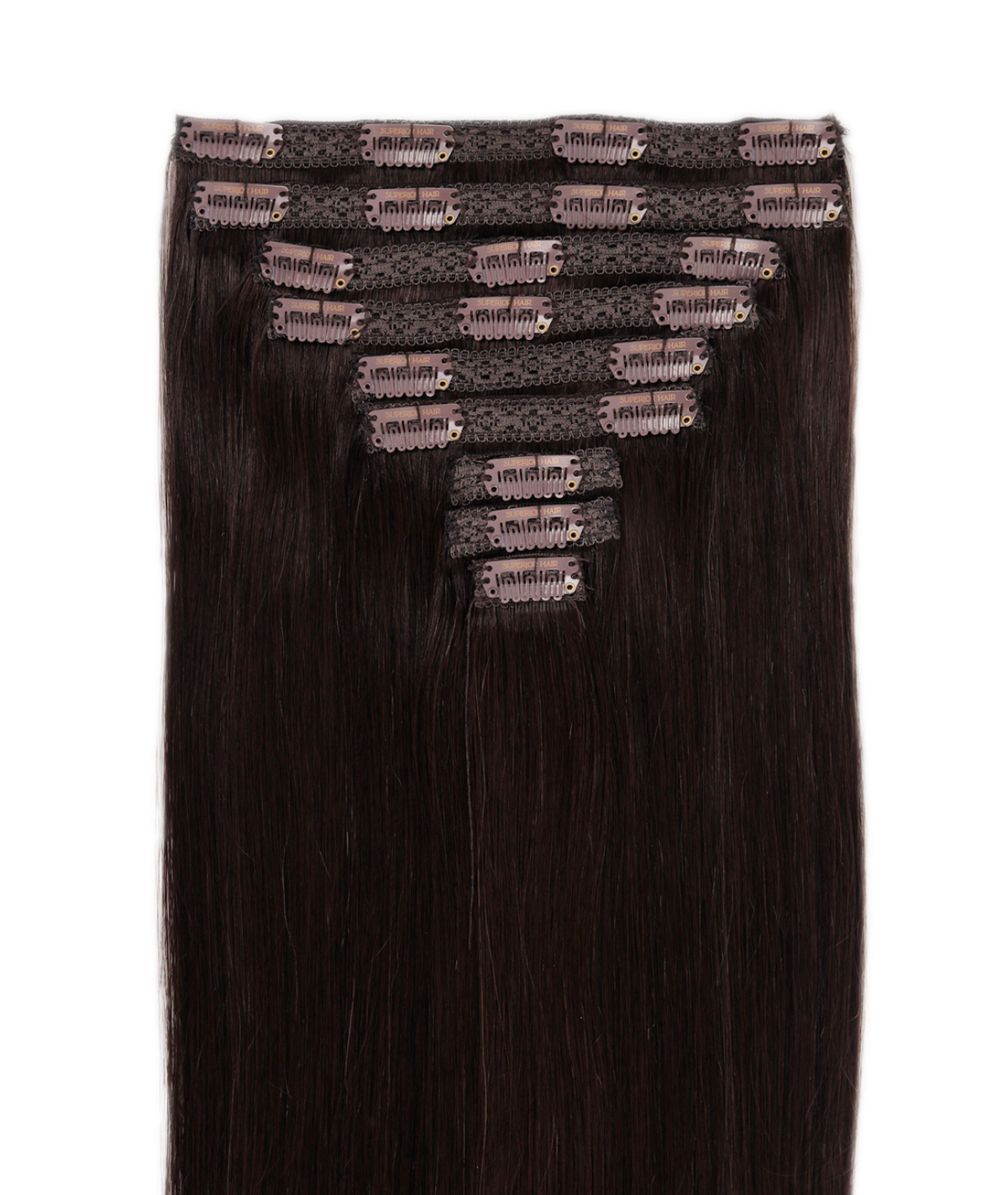
| Traditional machine weft | Beaded row plus stitching, two to three hour install | 50cm per track | Medium to thick hair that can carry a larger bond |
The honest trade-off is customisation. A Genius hand-tied weft comes as an 80cm bundle that can be cut anywhere along the seam without unravelling, so a stylist can build rows to the exact shape of your head. A butterfly weft arrives at a fixed 36cm with the holes already placed, which is what makes it fast but also less freely cuttable. Traditional machine wefts sit at the other end again: sturdy, reusable, and the most visible bond of the three, which is why they suit denser hair.
Not sure of your shade?
Butterfly wefts come in over 40 shades, so the shade number matters more than the method here. The colour guide shows every option side by side, including the darker roots and blended tones.
See the butterfly weft colour guide
Butterfly wefts work across all hair types, but they are a particularly good answer for a few situations.
They tend to suit you if:
- Your hair is fine or fragile and you have felt a bulky track before.
- You wear your hair up often and want the row to disappear when you part it.
- You want length and volume without adhesive, heat or keratin at the root.
- You want a shorter appointment than a full sew-in requires.
Another method may serve you better if:
- You want extensions for a single event. Clip-ins do that job at a fraction of the commitment.
- You need highly customised row shapes around a fringe, a cowlick or previous breakage, where a cuttable hand-tied weft gives your stylist more freedom.
- You cannot commit to a move-up appointment every four to six weeks. Wefts left in past that point start to migrate down the hair shaft and put tension on the root.
- You are dealing with sudden or patchy hair loss. That is worth discussing with a doctor first, and then with a stylist about coverage options rather than added length.
Density is the deciding factor more often than length. You need enough of your own hair through the row to conceal the beads. A good stylist will tell you honestly if your hair will not hide the row yet, and that conversation is worth having before you buy hair.
Lengths, weights and colour matching
Butterfly wefts come in two lengths: 20 inch at 50g and 24 inch at 60g, both 36cm wide. Most people need more than one weft to build a full head of rows, and the number depends entirely on your density and how much length you are adding. Your stylist works that out at consultation rather than from a chart.
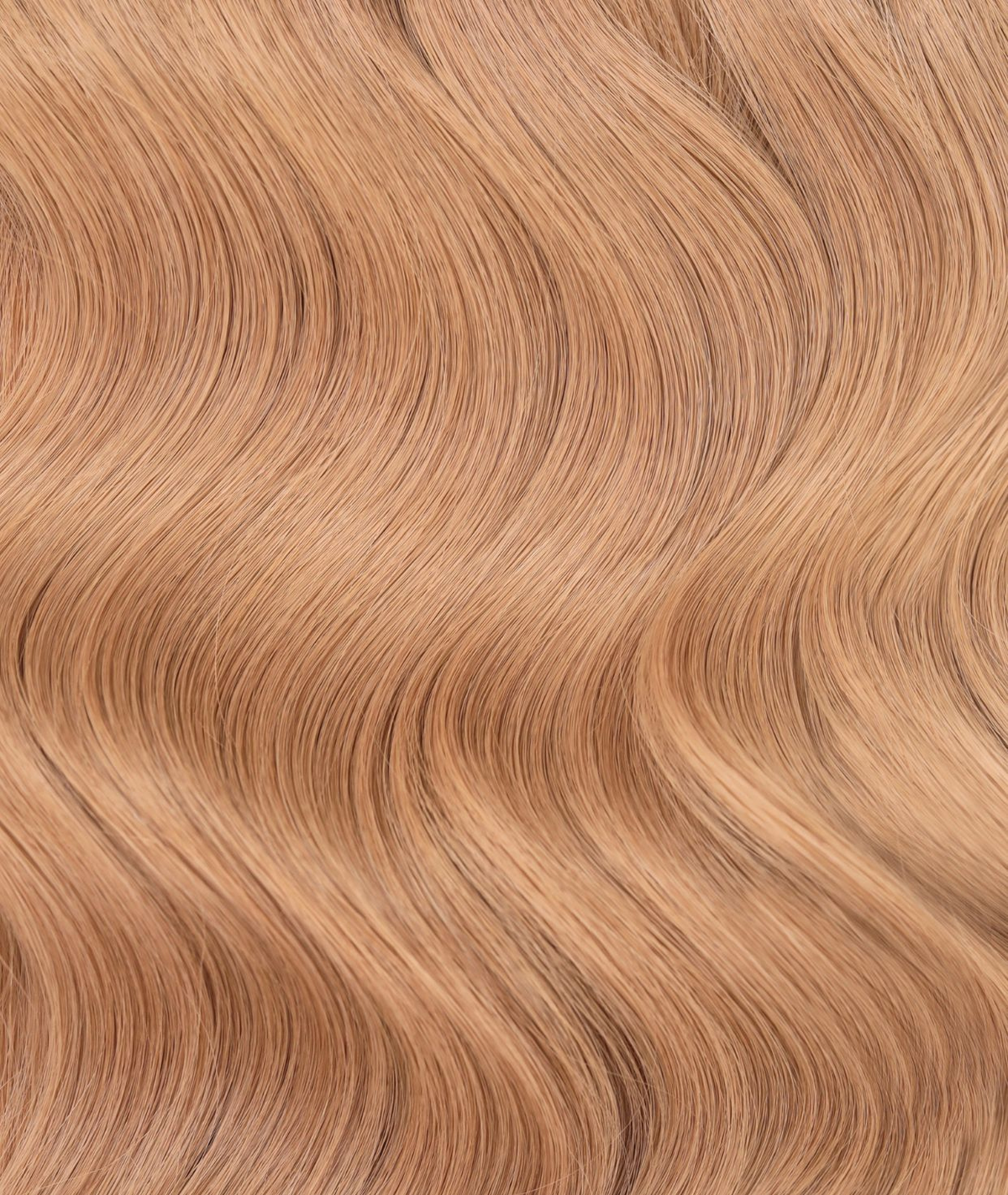
Colour is where sets are usually made or ruined. With over 40 shades in the butterfly range, the temptation is to match to your mid-lengths, but you should be matching to the ends, where the extension hair actually sits beside your own. If you have a shadowed root or a balayage, the blend comes from the ends up, not the root down. Bead colour is a separate decision and should follow your natural root shade.
If you are between two shades, order a colour ring or swatch before committing. Hair looks different in NZ daylight than it does on a screen, and a swatch costs a great deal less than a mismatched set.
What maintenance really looks like
Each install sits for four to six weeks before your hair grows enough for the row to need moving back up. That move-up is not optional. It is the appointment that keeps the beads sitting where they should and keeps tension off your roots.
Day to day, the rules are the ones that apply to any human hair extension. Wash with a sulphate-free shampoo and avoid washing daily. Keep conditioner away from the roots and the bead area. Use alcohol-free styling products and an extensions-friendly brush, working from the ends upward. Never brush the hair while it is wet, because that is how wefts get pulled. Apply heat protectant before styling and keep the tools off the roots and beads entirely.
Coconut oil products are the one to watch, since they soften bonds over time. Argan oil is fine. At night, loosely braid or tie the hair back so it is not twisting against the row while you sleep. The full Superior Hair care guide covers the washing and drying routine in more detail.
How long a set lasts and what that means for cost
Two numbers get confused constantly. The install lasts four to six weeks. The hair itself lasts much longer than that, because it comes out at the move-up, gets cleaned and refreshed, and goes straight back in. With proper care, a set of butterfly wefts can be maintained and reused for up to a year.
That is the part worth thinking about when you compare the upfront cost against clip-ins or a cheaper non-Remy set. You are buying hair once and paying for reapplication after that. Cuticle-aligned Remy hair holds up to that cycle. Hair with the cuticles stripped or reversed does not, which is why cheap wefts tangle and matt after a couple of months. The Superior Hair post on how the Genius Weft came about is a useful read on why the base construction matters as much as the hair.
Ready for butterfly wefts?
Butterfly wefts are fitted by a trained stylist, and a proper consultation sorts your density, shade and row plan before any hair is ordered.
Book your extension installation →Butterfly weft extensions FAQ
What are butterfly weft extensions?
Butterfly weft extensions are semi-permanent human hair wefts on a flat silk base with small holes punched through it. A stylist threads silicone-lined microbeads through each pair of holes to anchor the weft, then flips it flat against the scalp. They are also sold as butterfly hole wefts or invisible silk hole wefts, and they use no sewing, glue or tape.
How long do butterfly weft extensions last?
Each install lasts four to six weeks before the row needs moving back up as your hair grows. The hair itself is reusable, so with sulphate-free washing, careful brushing and regular move-up appointments, a set of butterfly wefts can be maintained for up to a year before it needs replacing.
Can I install butterfly weft extensions myself?
No. Butterfly wefts are a professional semi-permanent method and must be installed by a trained stylist. The install needs correct sectioning, a hook needle, a loop needle, pliers and correctly sized silicone-lined microbeads. If you want extensions you can apply at home, clip-ins, halos or ponytails are the DIY options.
Are butterfly weft extensions suitable for fine hair?
Yes, and fine hair is where the design helps most. Because each microbead passes through two holes, the weight of the weft is spread along the row instead of loading a single anchor point, which reduces tension. The flat base also sits close to the scalp so the row is harder to see through finer hair.
What is the difference between the Genius Butterfly Weft and the Invisi Butterfly Weft?
The install method is identical. The difference is the base. The original Genius Butterfly Weft is built on the Genius hand-tied base, while the newer Invisi Butterfly Weft uses the Invisi tape base, re-engineered to sit smoother, stronger and more discreetly against the scalp. Both come in 20 inch at 50g and 24 inch at 60g.