
Butterfly Weft vs Genius Weft: Which Weft Suits Your Hair?
Quick answer
In the butterfly weft vs genius weft comparison, the difference is the base. A butterfly weft has a flat silk base with pre-punched holes that threads straight onto silicone-lined microbeads, no sewing. A genius weft is an ultra-thin machine-woven track under 0.7mm that your stylist cuts to width and beads or sews in.
Both of these sit in the same category on paper: professionally installed, 100% Remy human hair, worn for months rather than hours. But they behave differently once they are on your head, and the right answer depends on how much hair you already have, how your scalp tolerates weight, and how long you want to sit in the chair. Here is what actually separates them.
In this guide
New to semi-permanent extensions?
Wefts are one of several professional methods, alongside tape-ins, nano tips and hot fusion U-tips. It helps to see how they sit next to each other before you commit to one.
Browse the semi-permanent professional range →What a butterfly weft actually is
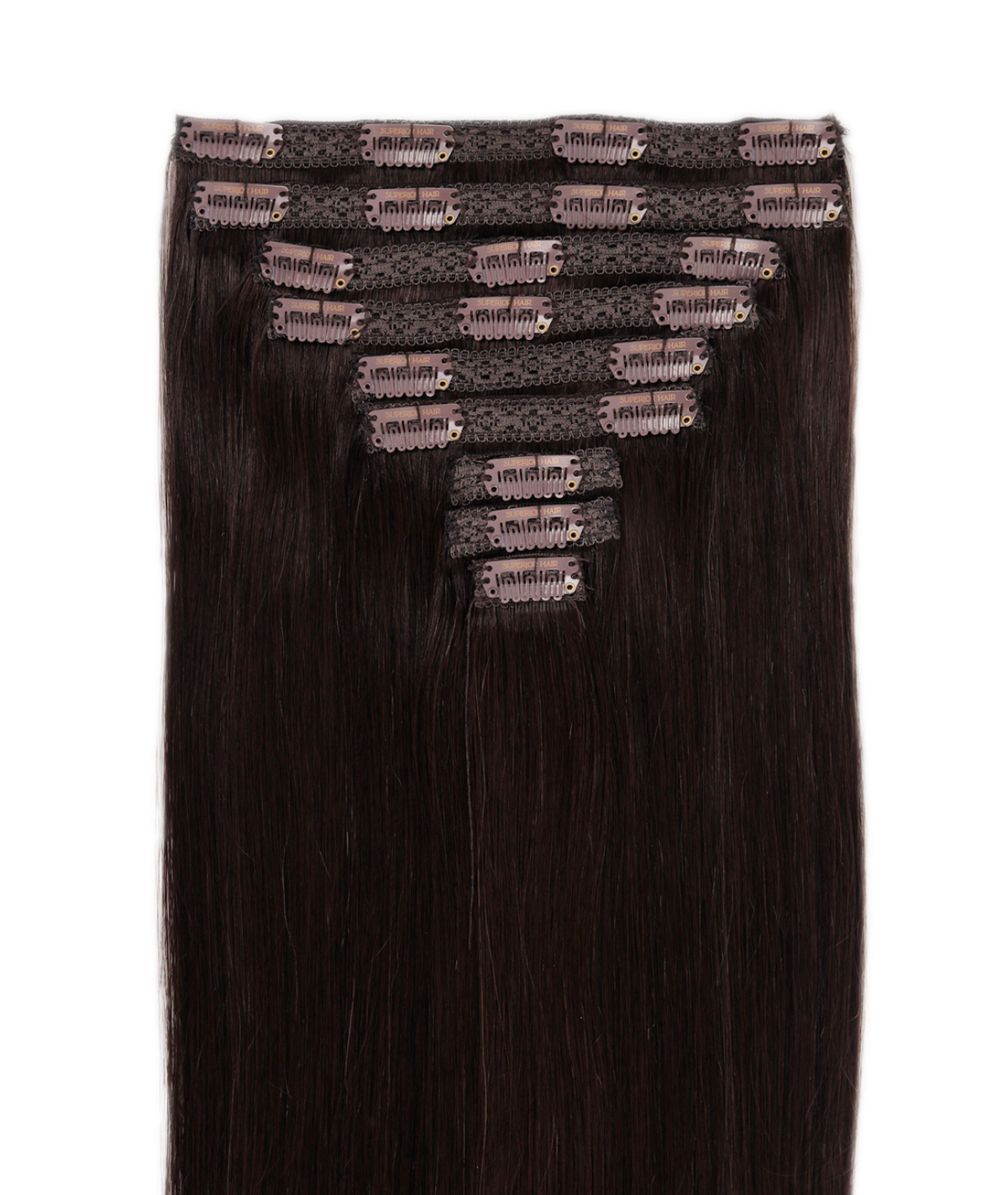
A butterfly weft is built on a flat, flexible silk base with a thin polyurethane foundation, and that base has small holes punched through it at set intervals. Those holes are the whole point. Your stylist sets a row of silicone-lined microbeads on your own hair, threads the weft onto them through the pre-punched holes, then flips the weft over so the beads sit hidden underneath against the scalp.
No sewing. No glue. No tape. That is unusual for a weft, and it is why the install is so much faster than people expect.
The band is bendable, so it follows the curve of your head rather than sitting as a rigid strip across it. Superior Hair supplies butterfly wefts in 20 inch (50g) and 24 inch (60g), each weft 36cm wide. There is also a refined version, the invisi butterfly weft, re-engineered to sit even flatter for clients who want the row undetectable when their hair is up.
The trade-off is that the holes are placed for you. A butterfly weft can be shortened, but the pre-punched spacing has to be respected, so a stylist works within a fixed pattern rather than cutting freely.
What a genius weft actually is
A genius weft solves a different problem. For years stylists had two imperfect options: a traditional machine weft, durable and cuttable but with a visibly thicker seam, or a hand-tied weft, beautifully thin but impossible to cut without unravelling, and prone to shedding return hair.
The genius weft uses a tighter method of machine weaving that removes the return hair entirely while keeping the track under 0.7mm thin. Crucially, it can be cut anywhere along the seam without unravelling. That is the feature stylists actually care about, because the row can be sized exactly to the section rather than folded over or doubled at the ends.
Superior Hair's genius weft range comes in 20 inch (50g) and 24 inch (60g), on an 80cm track, in over 30 shades. Because the track is so long and fully cuttable, one weft often covers more of the head than the width suggests, and multiple wefts can be stacked to build density or blend two shades through the mid-lengths.
There is one specific aftercare warning worth knowing before you buy: the active ingredients in Olaplex can break down the band on a genius weft. It is fine on the hair itself, but it should not be worked into the track.
Butterfly weft vs genius weft at a glance

| Butterfly weft | Genius weft | |
|---|---|---|
| Base | Flat silk base with polyurethane foundation and pre-punched holes | Tightly machine-woven track, under 0.7mm, no return hair |
| Attachment | Threaded onto silicone-lined microbeads, then flipped. No sewing, glue or tape | Beaded foundation, sewn or beaded on by a stylist |
| Cutting | Limited, must work with the pre-punched hole spacing | Cut anywhere along the seam without unravelling |
| Weight and length | 20 inch 50g, 24 inch 60g, 36cm wide | 20 inch 50g, 24 inch 60g, 80cm track |
| Typical install time | Around 15 minutes per weft | Roughly 2 to 3 hours for a full head |
| Move-up interval | 4 to 6 weeks | 6 to 8 weeks |
| Best for | First-time weft wearers, fast appointments, clients who want minimal fuss | Fine to medium hair, custom colour blends, stacked density |
How each one goes in, and how long it takes
Neither of these is a DIY method. Both are installed by a qualified stylist, and that is not a sales line, it is a tension issue. A weft applied at the wrong angle or pulled too tight at the root puts sustained load on a small number of your own strands, which is how traction damage starts.
The practical difference is chair time. A butterfly weft threads onto a prepared bead row in roughly 15 minutes per weft, so a partial head can be done in one short appointment. A full head of genius wefts usually runs 2 to 3 hours, because each row is measured, cut to the section, and beaded or sewn individually.
That extra time buys precision. If you have an uneven hairline, a cowlick at the nape, or you want two shades blended through the mid-lengths, the cuttable genius track lets your stylist build exactly what your head needs. If you mostly want length without a long appointment, the butterfly system is the more efficient route. Our breakdown of the permanent installation methods we work with covers how wefts compare to bonded methods.
Not sure of your shade?
Weft rows sit close to the scalp, so the shade has to be right at the root, not just at the ends. Send us a photo in natural light and we will match you before you order.
Get a free colour matchWhich weft suits your hair type

Fine hair
Fine hair is the clearest case for a genius weft. Under 0.7mm means the track disappears against the scalp, and because there is no return hair there is nothing loose to catch the light or irritate a sensitive scalp. Your stylist can also cut shorter rows and spread the weight across more of the head, which matters when each of your own strands can only carry so much.
One honest caveat: very fine or sparse hair may not support a full head of wefts at all. If you can see scalp through the top or your ponytail has thinned noticeably, a topper or a scalp fill-in is usually the better answer than a weft row, and a stylist should tell you that before taking your deposit.
Medium to thick hair
Both work well here. Medium hair hides either base easily, so the decision comes down to the appointment itself. Thick hair benefits from the genius weft's stackability, since two wefts on one bead row build density through the mid-lengths without adding more rows to the scalp.
Wavy and curly hair
Texture is forgiving of both bases, because the movement in your own hair breaks up any line at the row. Watch the length instead. Curl shrinks, so a 20 inch weft will not read as 20 inches once it dries, and your stylist may need to size up or cut the weft into your natural shape.
First-time wearers
If you have never worn semi-permanent extensions, the butterfly weft is the gentler introduction. The install is short, nothing is glued or sewn into your hair, and if you decide after six weeks that extensions are not for you, the beads come out without adhesive residue. You can see both ranges together in the butterfly and genius weft collection.
Colour matching and blending at the root
Wefts sit higher on the head than most people expect, which makes root colour the deciding factor. A shade that blends perfectly at the ends but sits two levels lighter at the row will show every time you tuck your hair behind your ear.
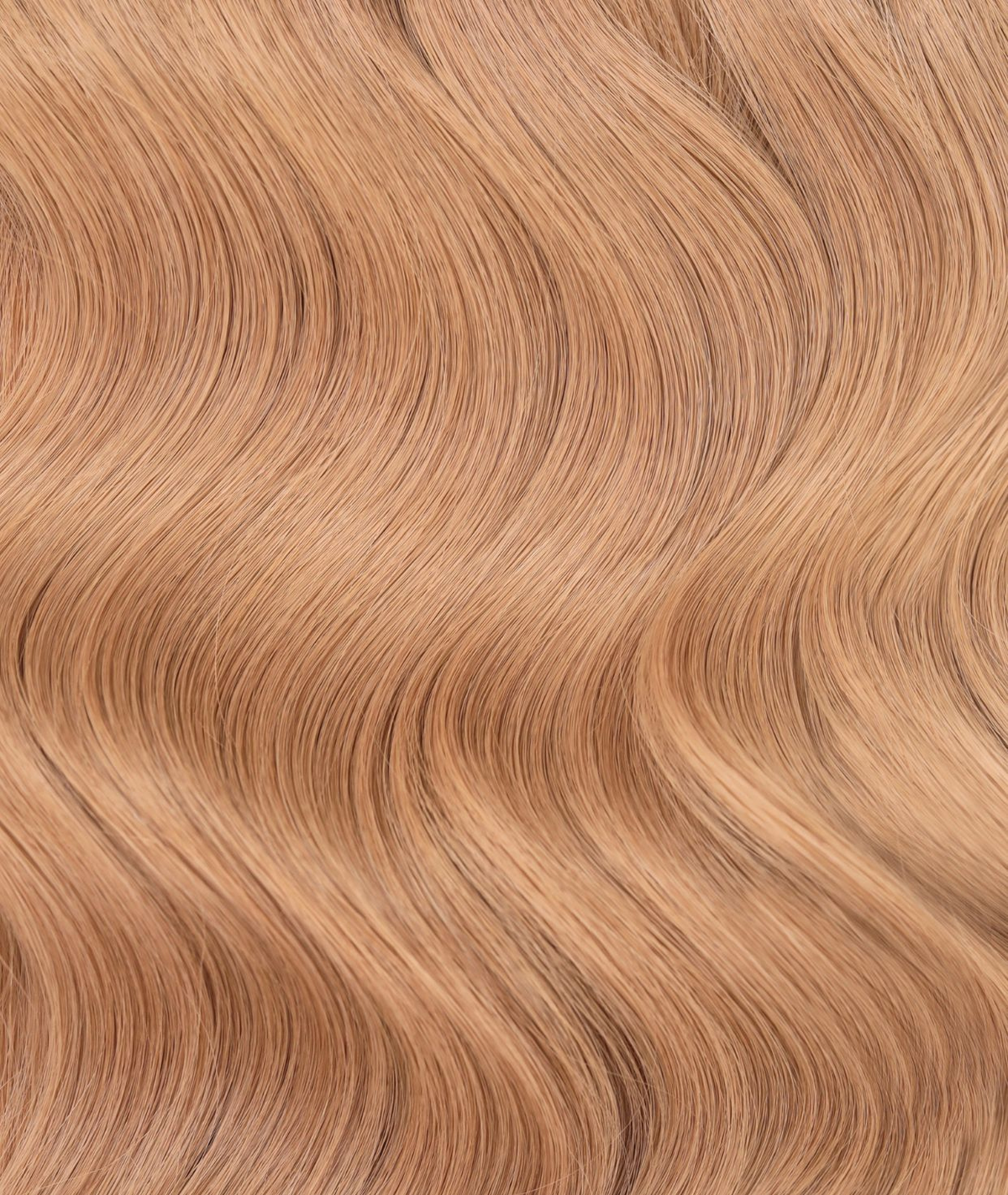
Three things to get right. Match to your root and mid-length, not your ends, since your ends are usually lighter from sun and heat. Account for a root shadow if you wear one, because a rooted or balayage weft will blend through a grown-out base far better than a solid block colour. And remember these are Remy human hair, so a stylist can tone or gloss them down toward your base, but lightening them is not recommended and will compromise the cuticle.
Each line has its own shade chart, because the two bases take colour slightly differently. Compare the butterfly weft colour guide against the genius weft colour guide before you settle on a number, and if you are between two shades, a colour ring is worth ordering first.
Maintenance, longevity and cost over time
Butterfly wefts need repositioning every 4 to 6 weeks. Genius wefts hold slightly longer at 6 to 8 weeks. Both intervals move depending on how fast your hair grows and how much oil your scalp produces, so an oily scalp will usually sit at the shorter end of the range.
The hair itself outlasts the install by a long way. A genius weft can be reused up to four times with proper care, and either line will give you up to a year of wear before the hair needs replacing. That reframes the cost. A 20 inch weft starts around $289 NZD, and once you divide that across a year of wear the recurring expense is really your move-up appointments, not the hair.
Aftercare is the same discipline for both. Wash two to three times a week with a sulphate-free shampoo. Keep conditioner and treatments off the attachment points and along the mid-lengths only. Never brush wet hair, and never sleep on it wet. Avoid coconut oil and alcohol-based products, which loosen bonds and beads over time. Keep heat tools moderate and off the row entirely. Our hair care guide has the full routine, and the one extra rule for genius wefts is to keep Olaplex away from the band.
If you want the fuller background on how the genius weft came about and why stylists moved to it from hand-tied, we wrote about that when the genius weft joined the range.
Ready to have your wefts put in properly?
Wefts are a professional method, and the install is what decides whether they sit flat, hold their tension and last the full interval.
Book a professional installation →Frequently asked questions
Which is better, a butterfly weft or a genius weft?
Neither is better outright. A butterfly weft installs in about 15 minutes with no sewing, glue or tape, which suits first-time wearers and short appointments. A genius weft is under 0.7mm thin and can be cut anywhere along the seam, which suits fine hair and custom colour blends. Your hair density and how long you want to sit in the chair decide it.
Can I install a butterfly weft or genius weft myself?
No. Both are semi-permanent professional methods that require a qualified stylist. Sectioning, bead placement and root tension all have to be correct, because a row set too tight puts sustained load on your own strands and can cause traction damage. Clip-ins and halos are the methods designed to be fitted at home.
How long do butterfly wefts and genius wefts last?
Butterfly wefts need repositioning every 4 to 6 weeks and genius wefts every 6 to 8 weeks, as your own hair grows out from the row. The hair itself lasts much longer. A genius weft can be reused up to four times, and with correct aftercare either line gives up to a year of wear before the hair needs replacing.
Can genius wefts and butterfly wefts be cut?
A genius weft can be cut anywhere along the seam without unravelling, which is its defining feature and why stylists can size each row exactly to the section. A butterfly weft can be shortened, but the base has pre-punched holes at set intervals, so any cut has to respect that spacing to keep the weft usable.
Are wefts suitable for fine or thinning hair?
Fine hair often does very well with genius wefts, because the ultra-thin track lies flat and carries no return hair. Genuinely sparse or thinning hair is different. If scalp is visible through the top, a weft row may not have enough anchor hair to hold safely, and a topper or scalp fill-in is usually the better fit. A consultation will tell you which.
How many wefts do I need for a full head?
It depends on your natural density and the length you are adding. Each weft is 50g at 20 inches or 60g at 24 inches, and a genius weft's 80cm track can be cut into several shorter rows or stacked for density. Most full heads use two to four wefts, but your stylist should confirm that at consultation rather than online.